Fly-Fishing Equipment
The suggestions that follow are drawn from over two decades’ experience fishing the Rio Grande under a wide variety of conditions.
RODS
Two Handed & Switch Rods
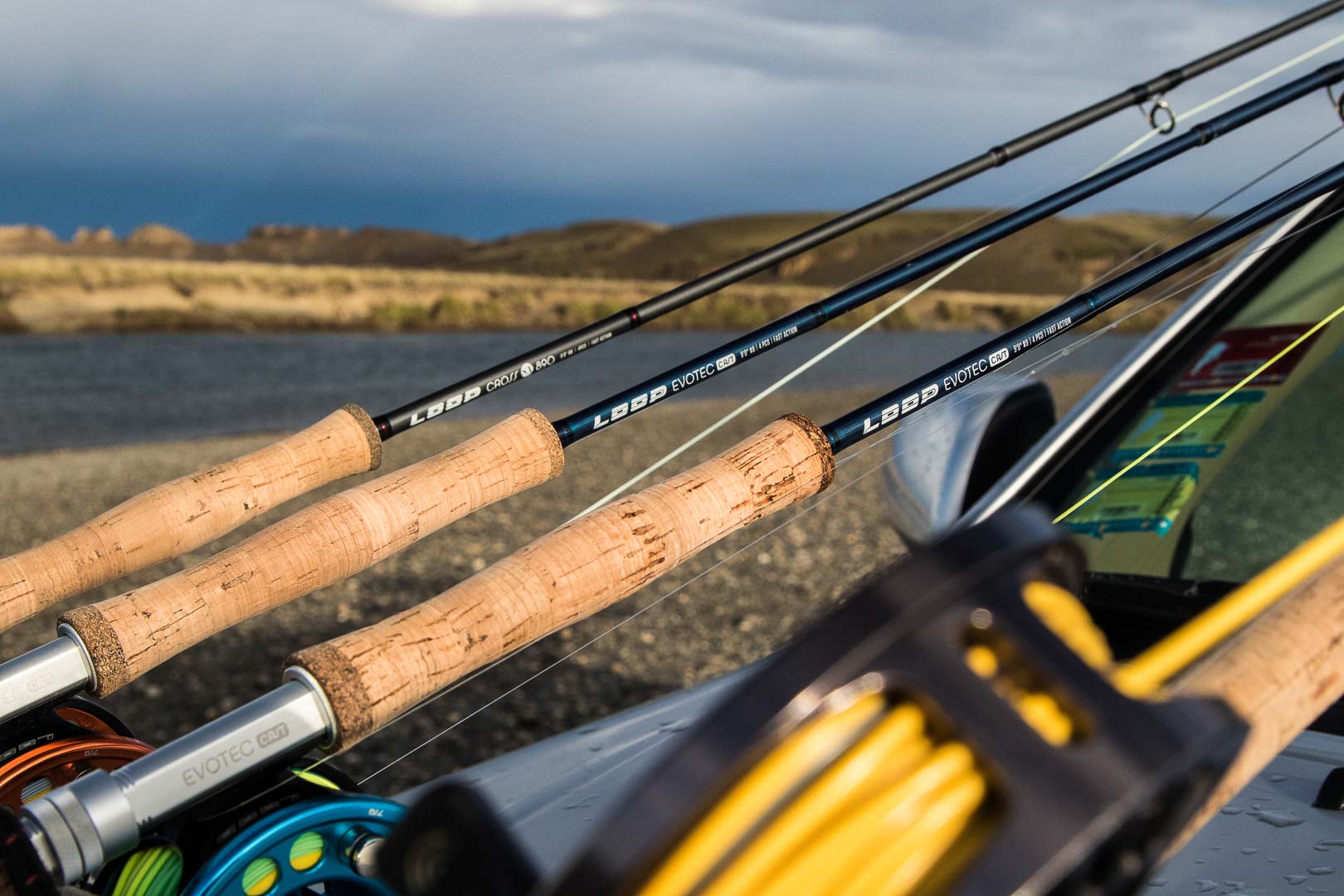
- 7-8wt – 2 Handed 12-14 ft. rods
- 4-7wt Switch Rods – 11-12 ft. rods
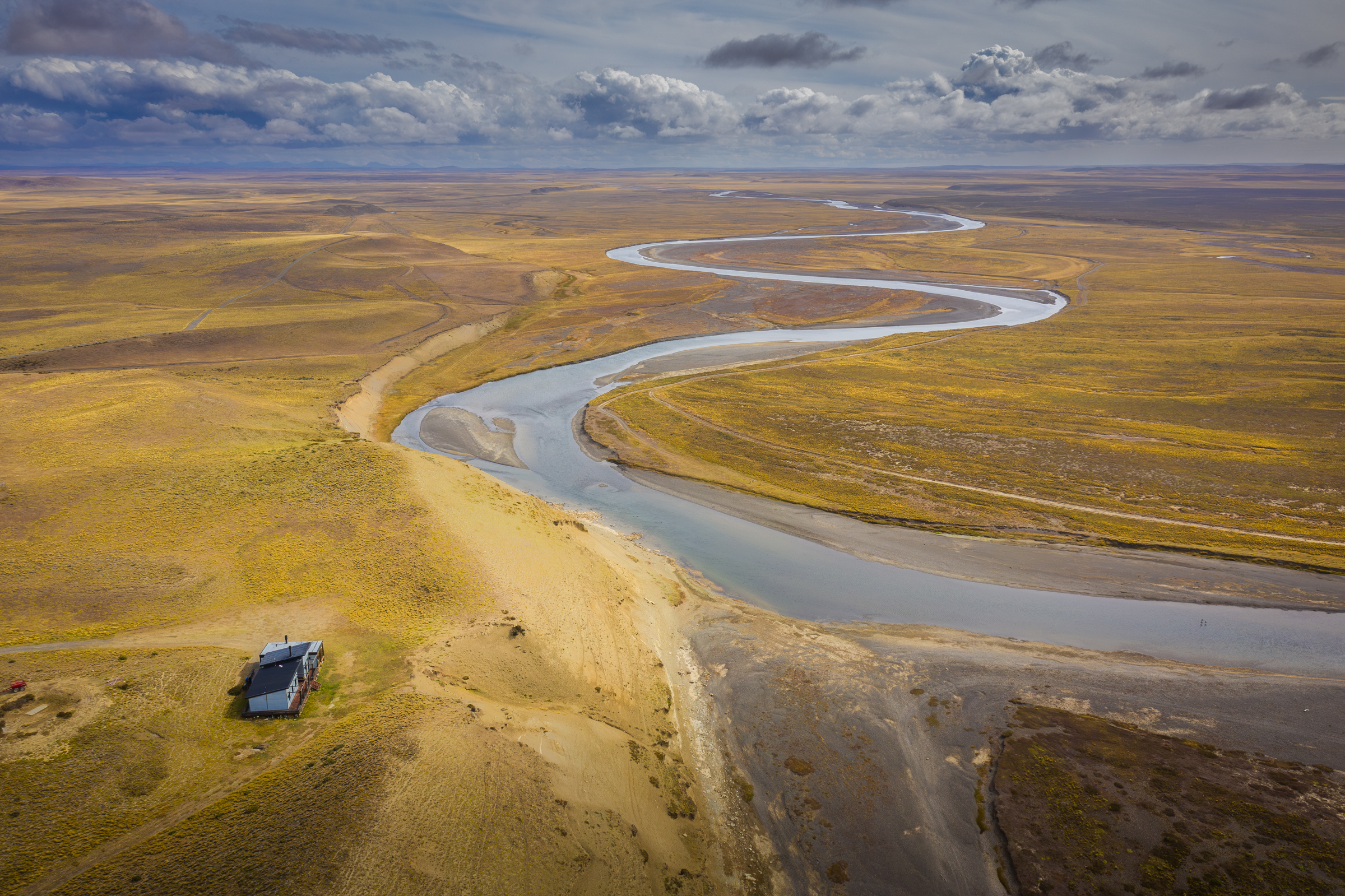
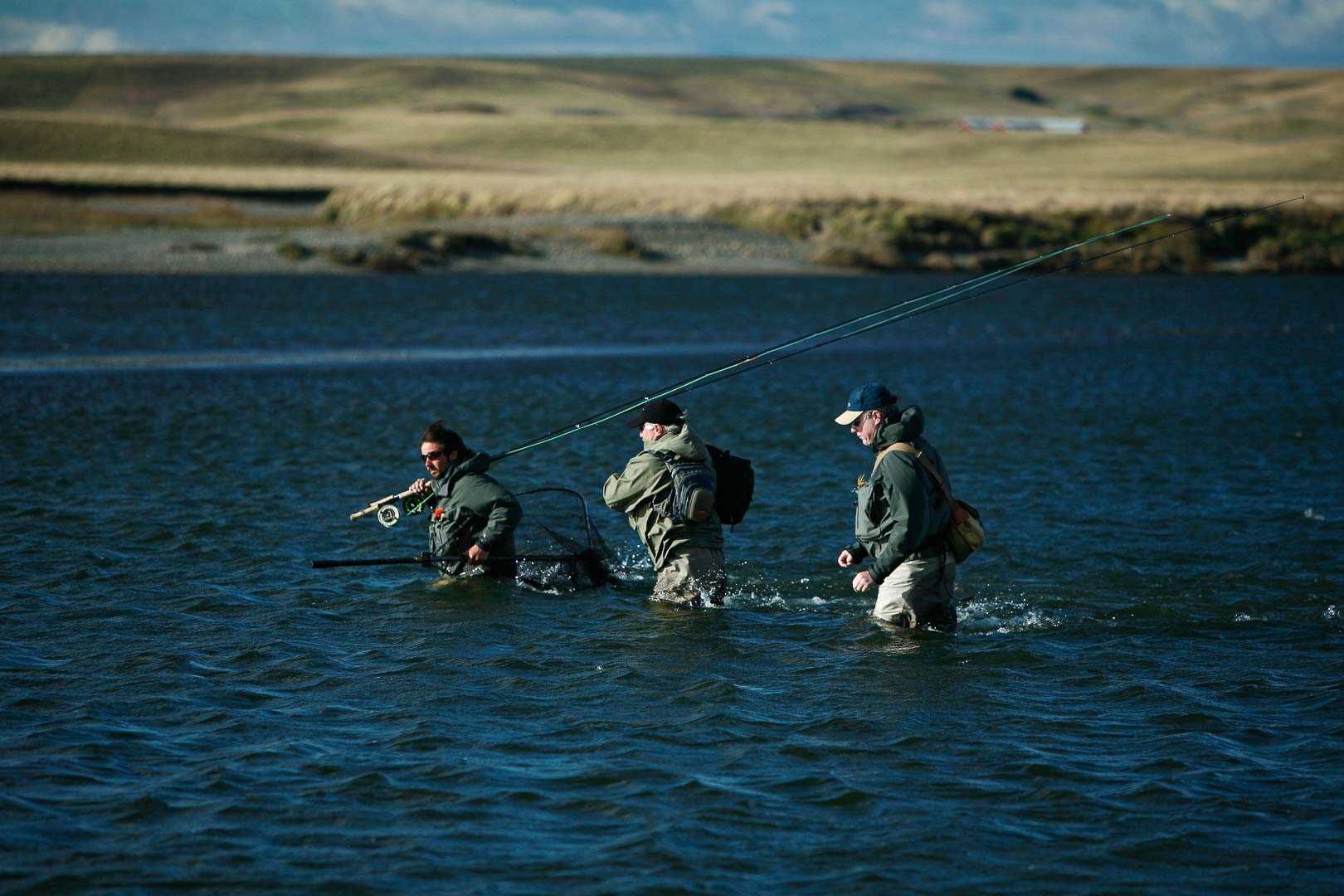
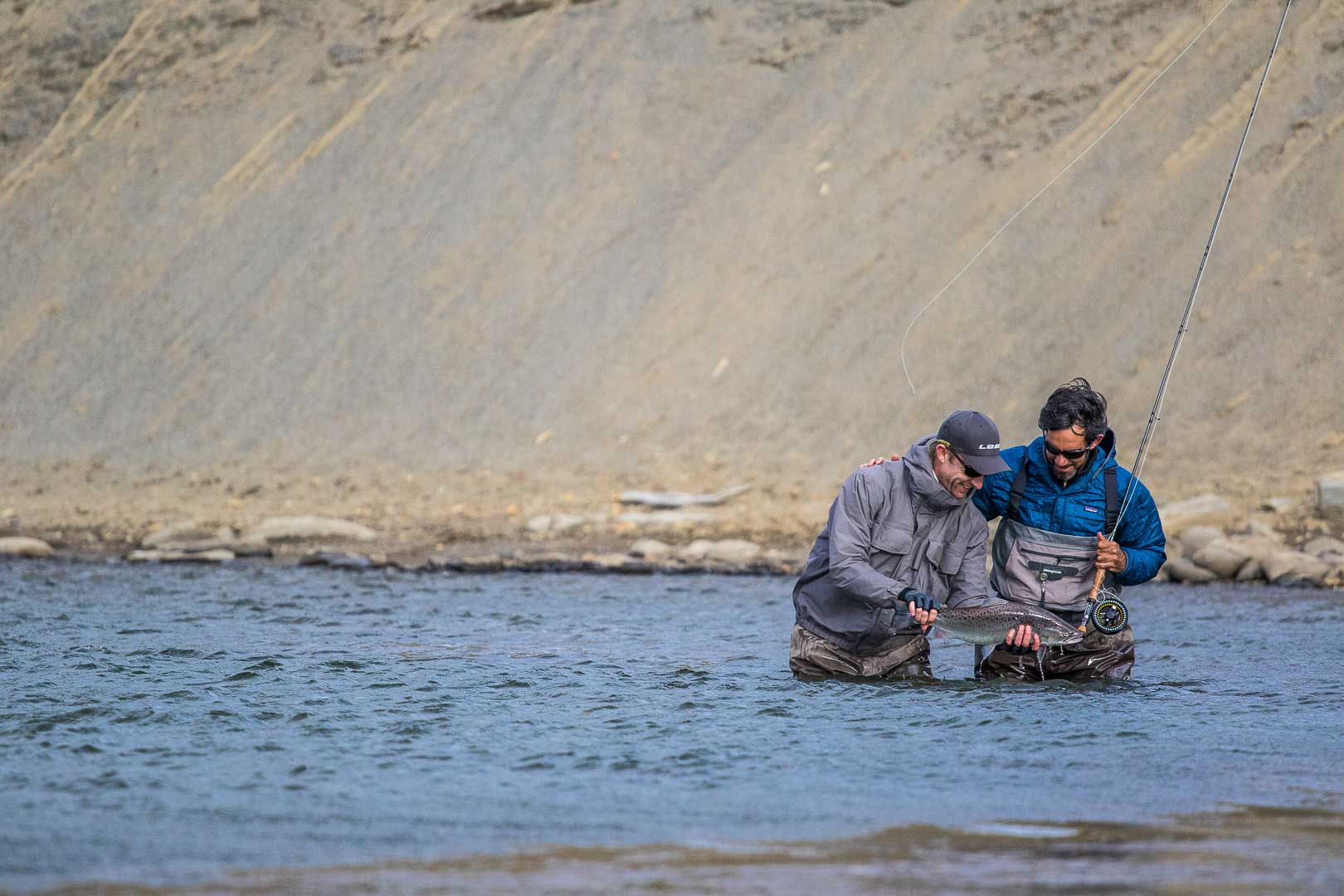
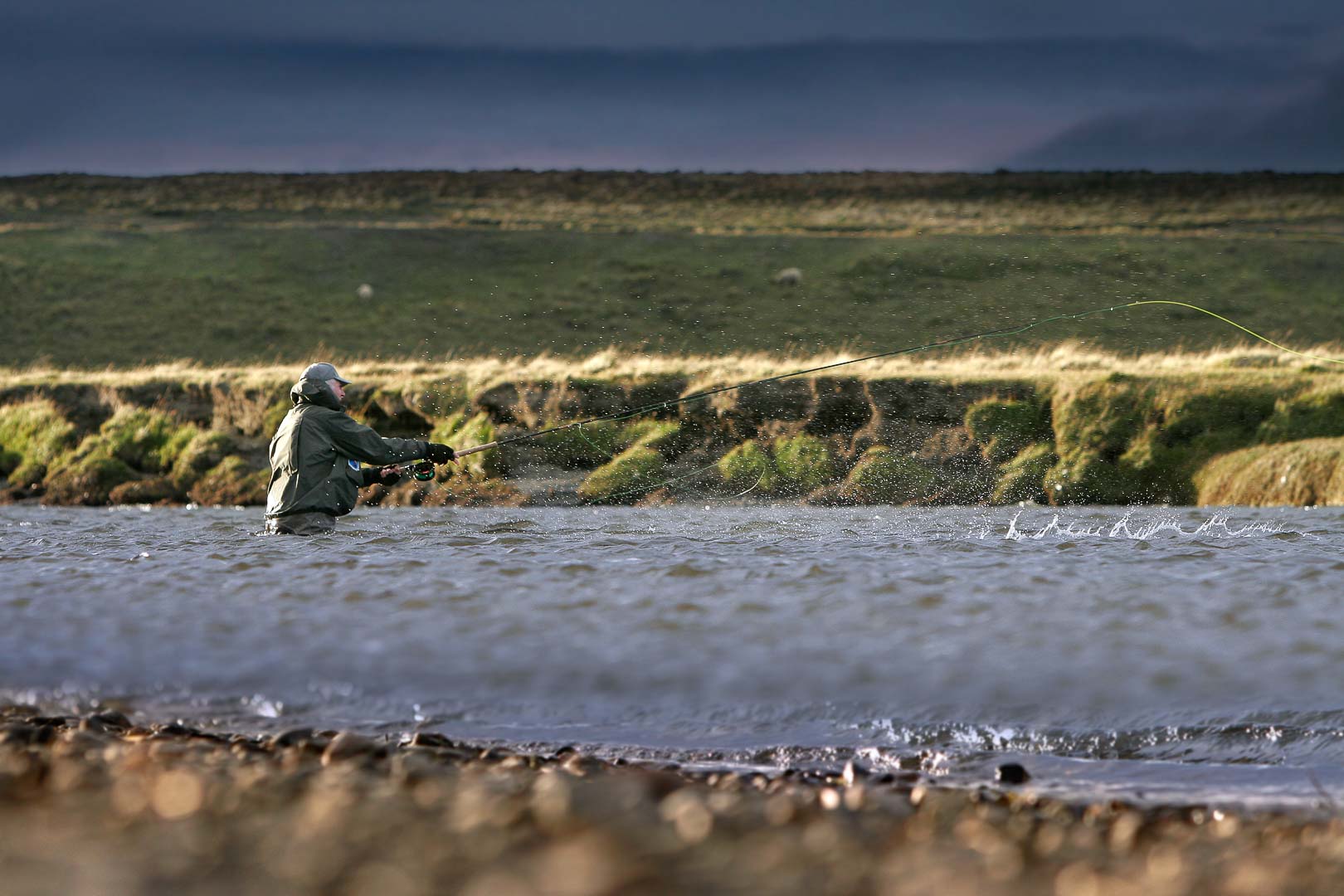
The Rio Grande features a natural design an instream architecture perfectly suited for Spey rods. Mending and controlling the line is also easier with a 2-hander. Use 7- to 9-weights from 12 to 14 feet long. If you’re new to Spey casting, our guides are expert instructors and will help you learn quickly. Lighter switch rods are also increasingly popular and allow anglers to cast a comfortable line with less effort, particularly on windy days.
When the Río Grande experiences low water levels—a small to medium-sized river—consider bringing lighter Switch rods, as they are smoother and easier to handle under these conditions. Switch rods are classified by weight number, like other rods, but are also rated in grams and/or grains.
In these situations, rods that can comfortably cast lines in the range of 19–34 grams (325– 550 grains) tend to perform exceptionally well, allowing for smoother, more delicate presentations in lower water.
Single Handed Rods
- 7-8wt – Single Handed 9.6-10 ft. rod
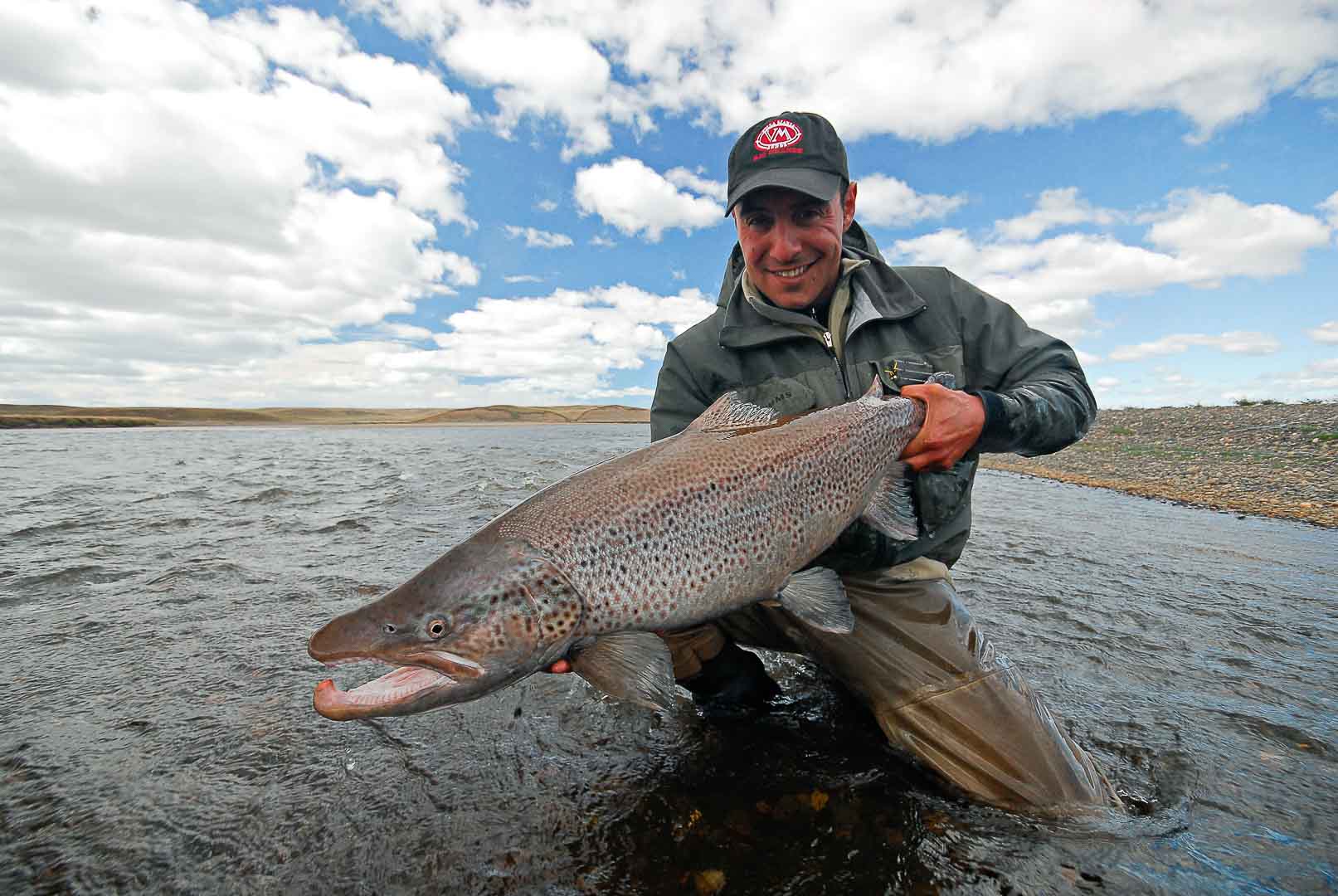
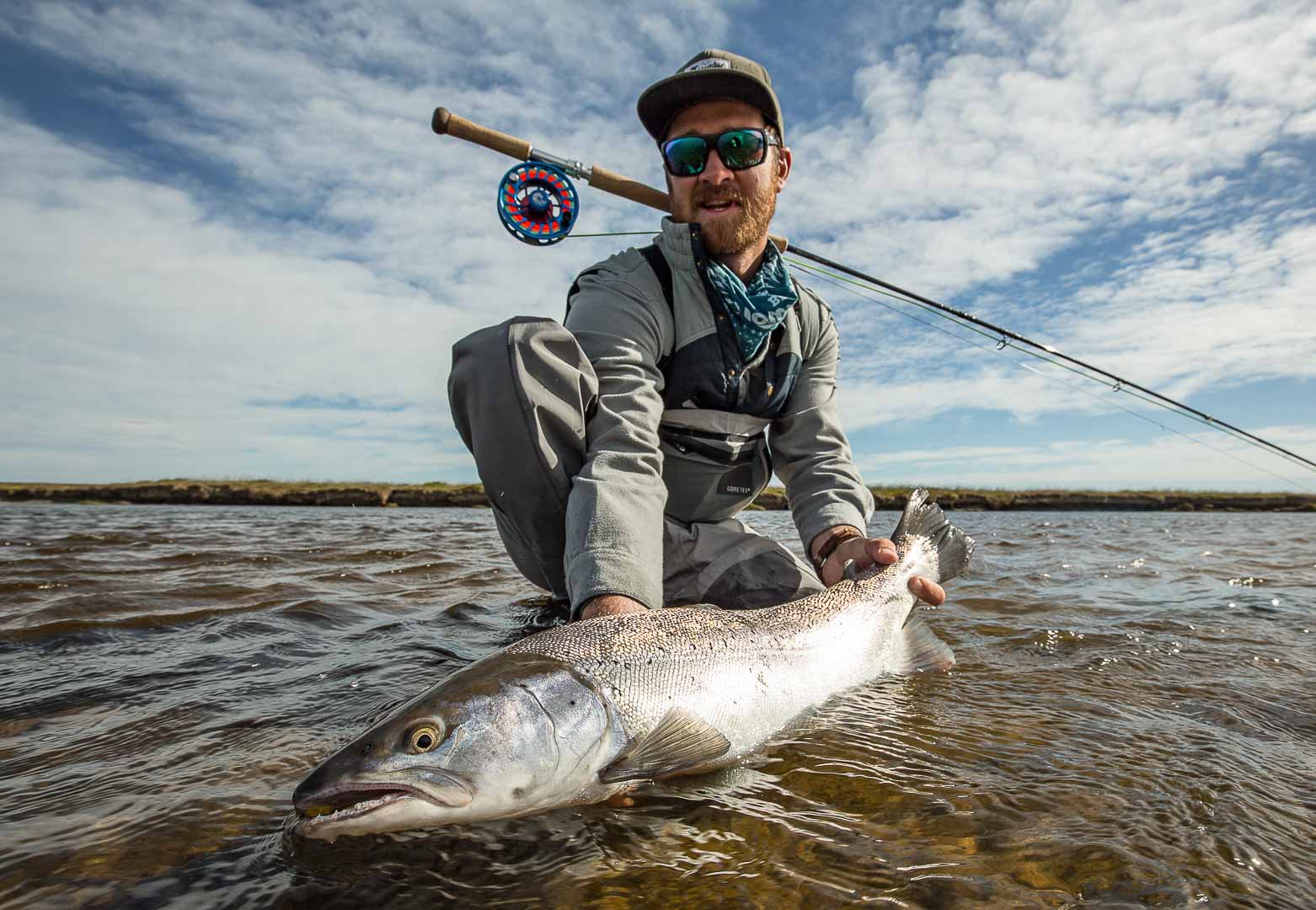
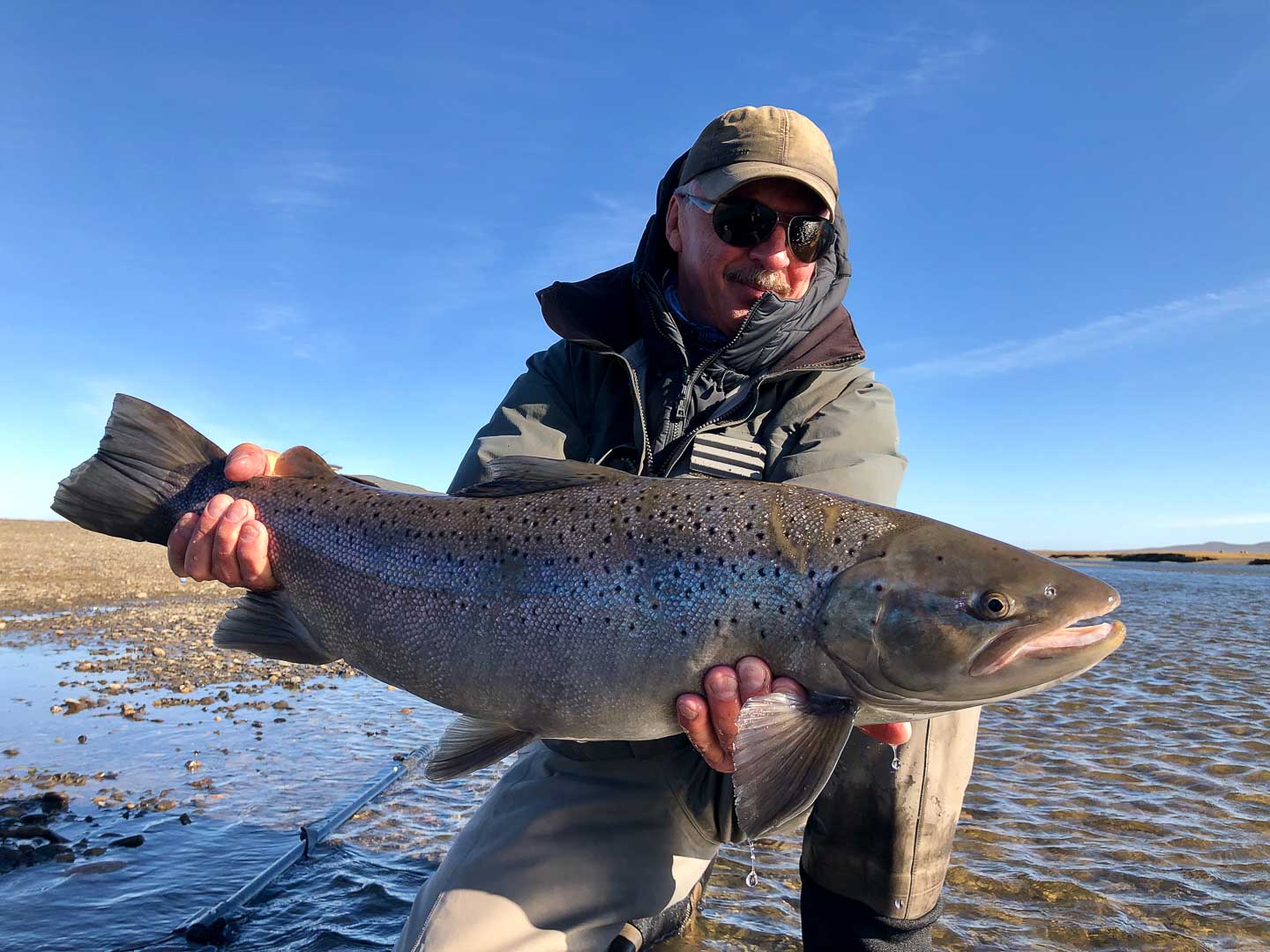
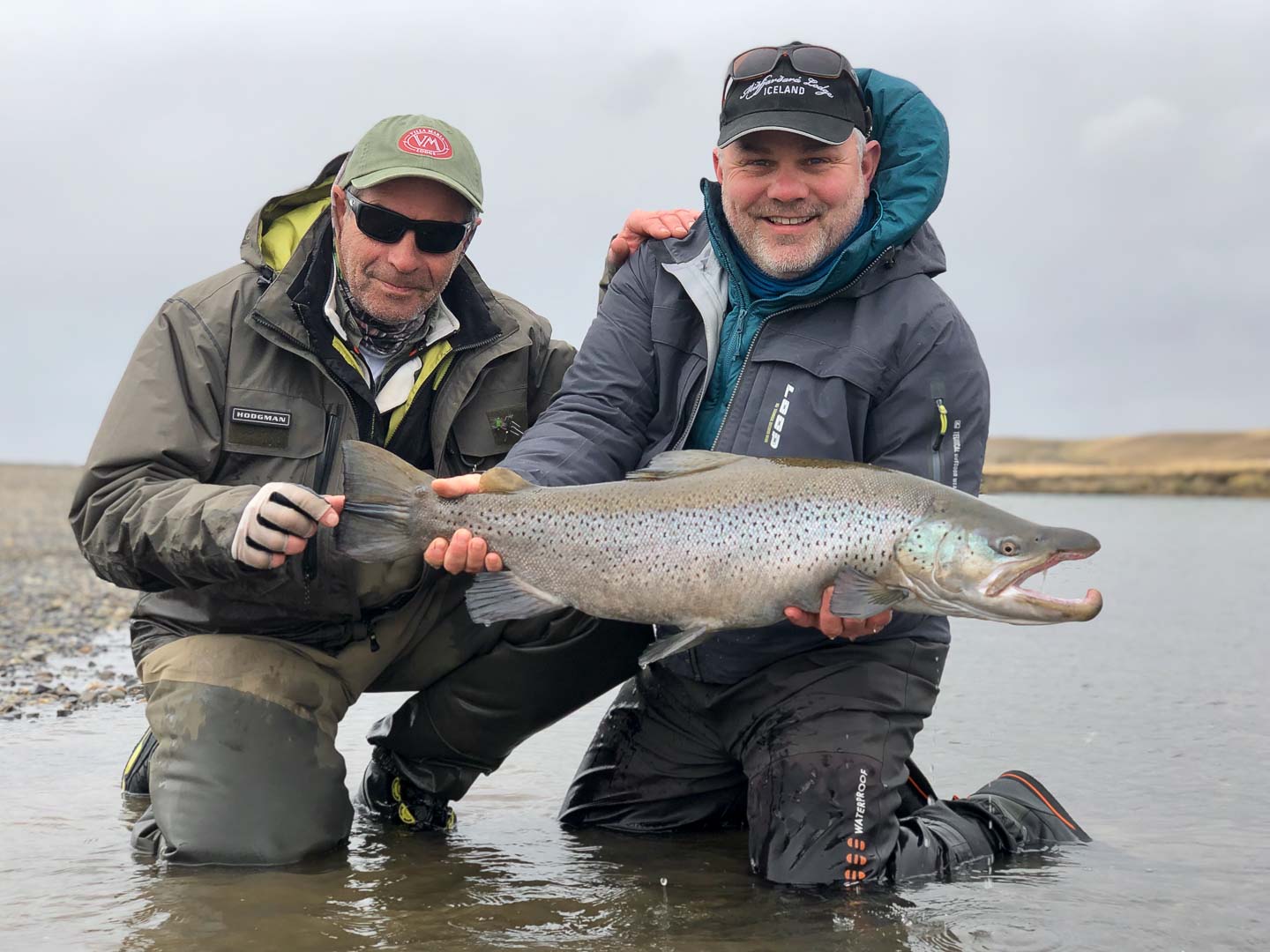
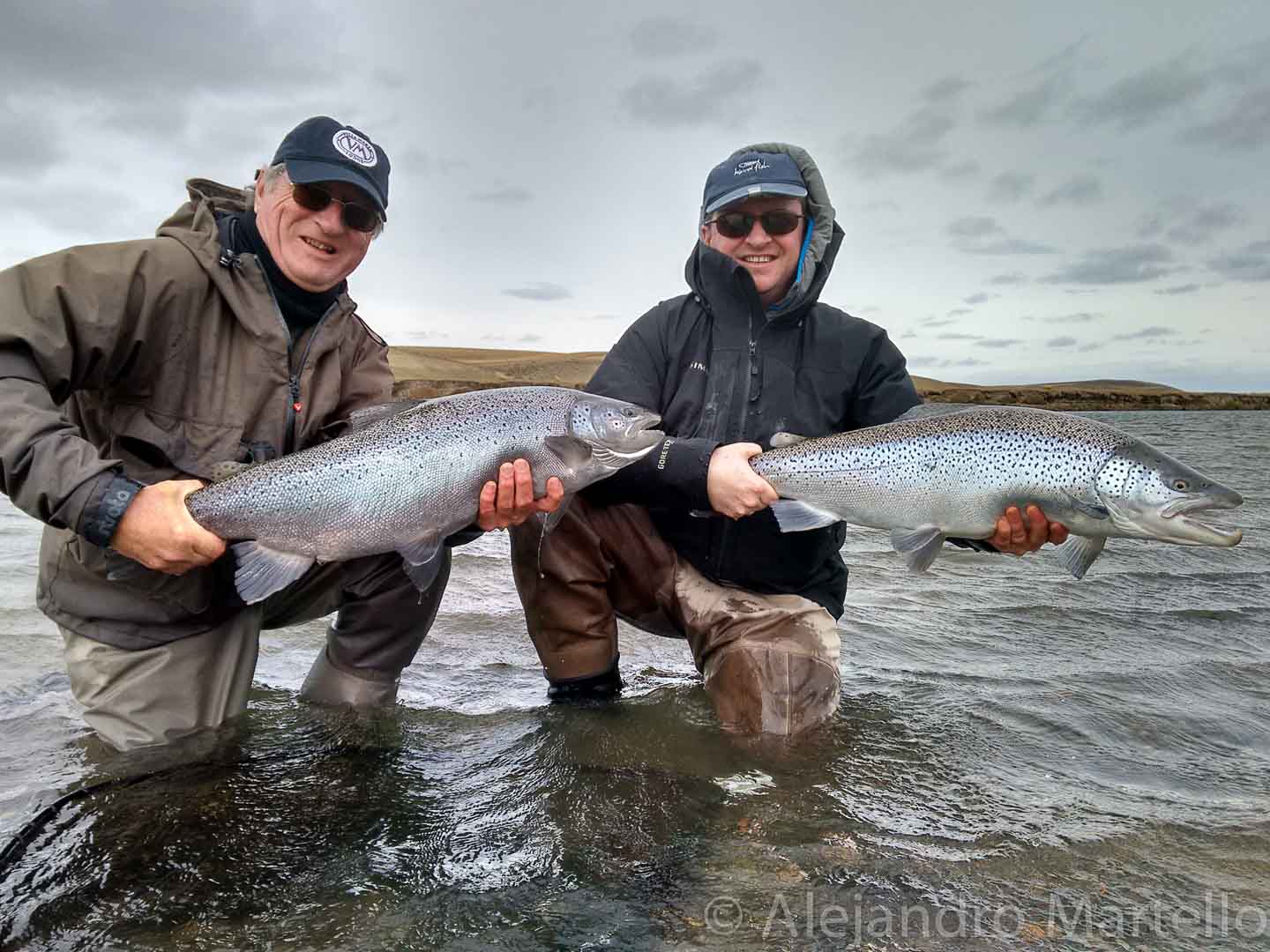
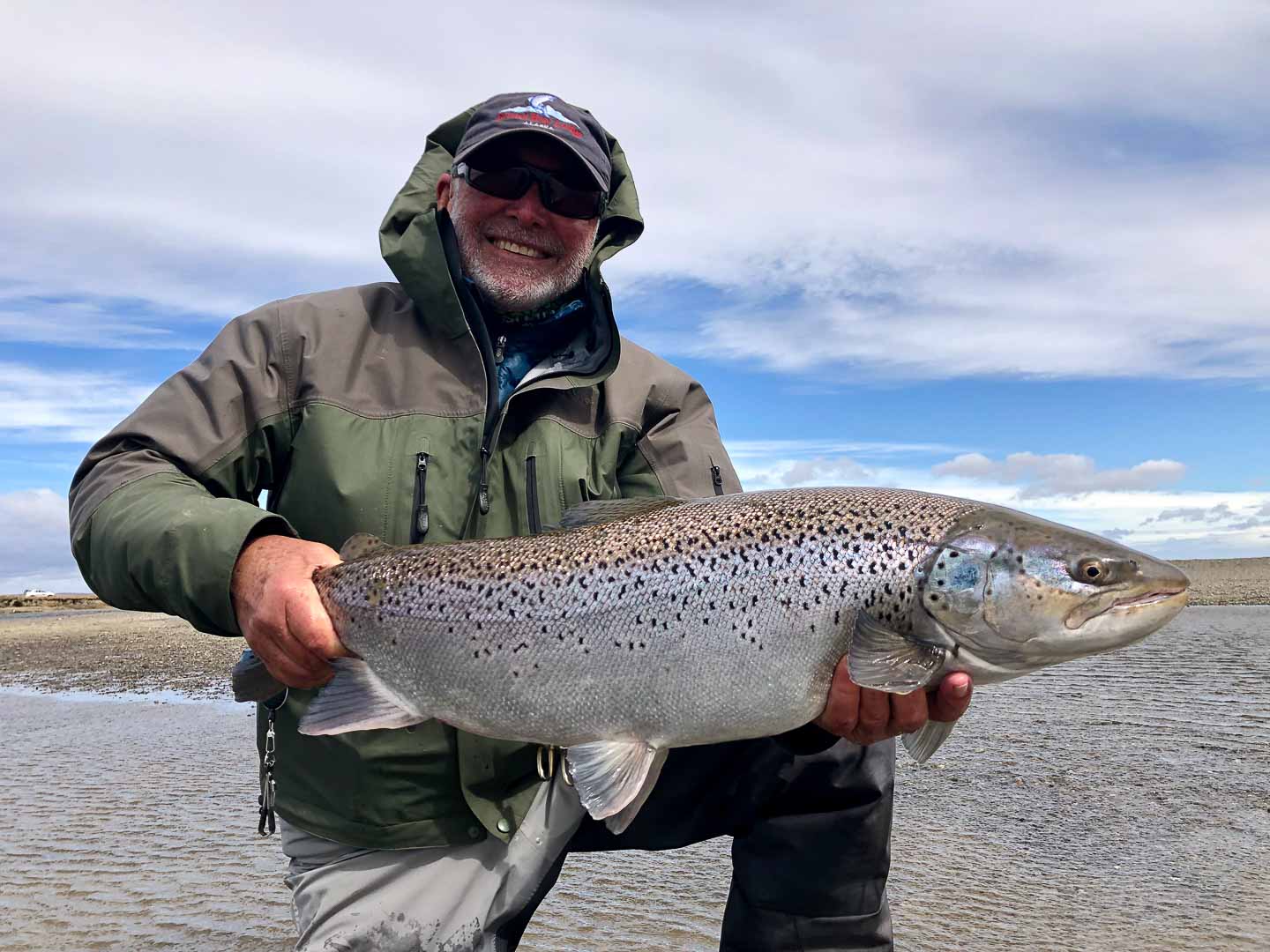
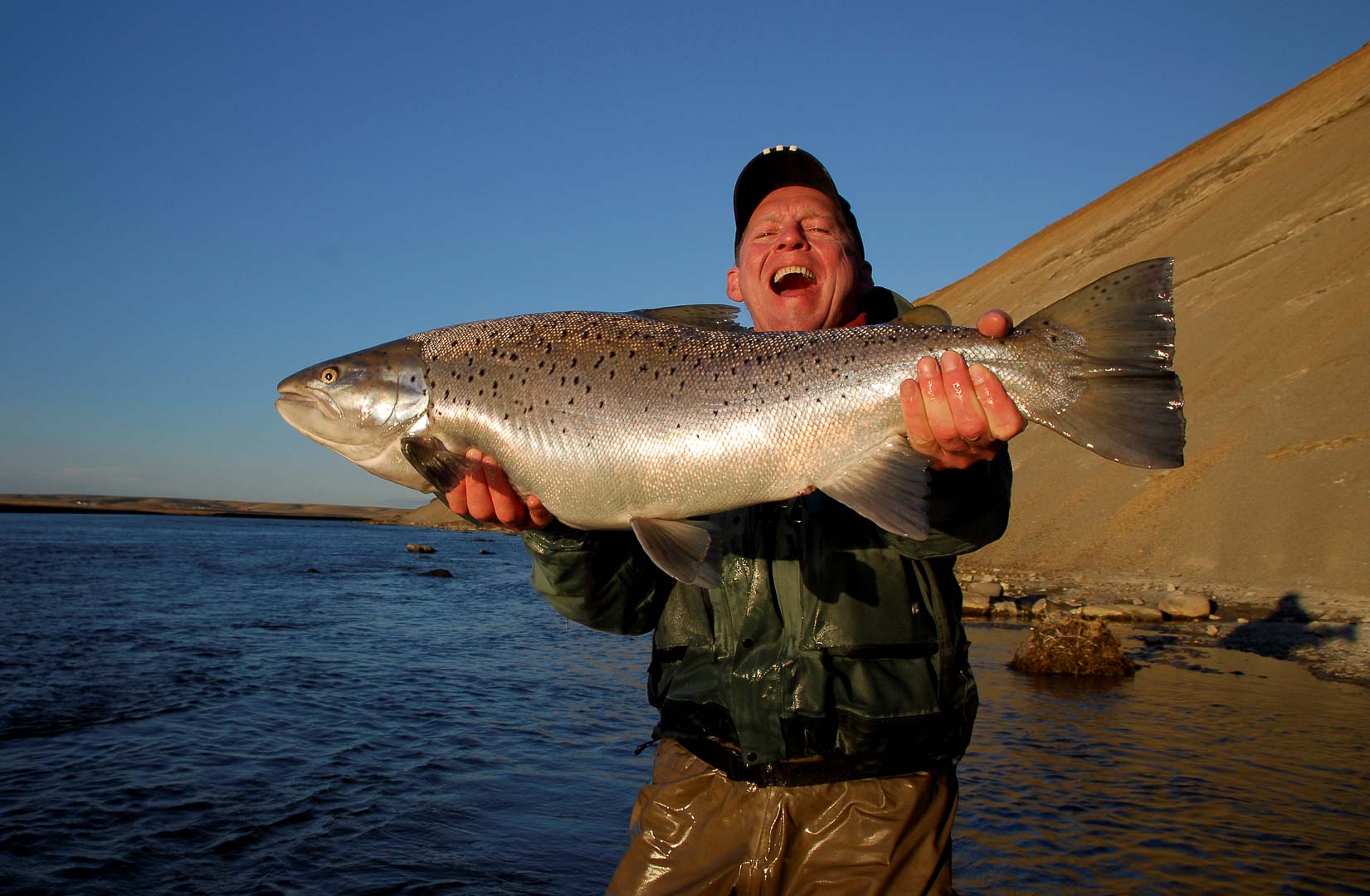
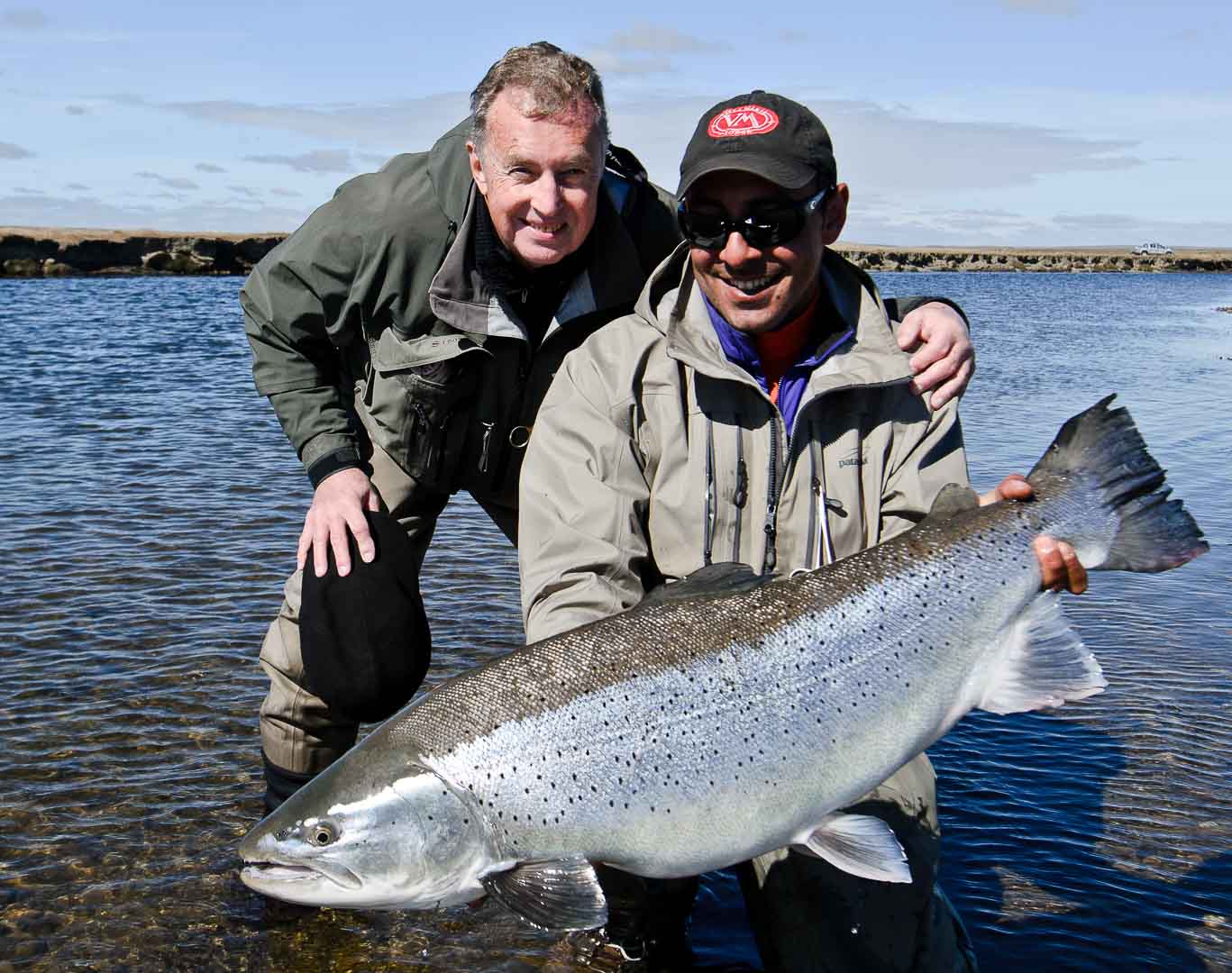
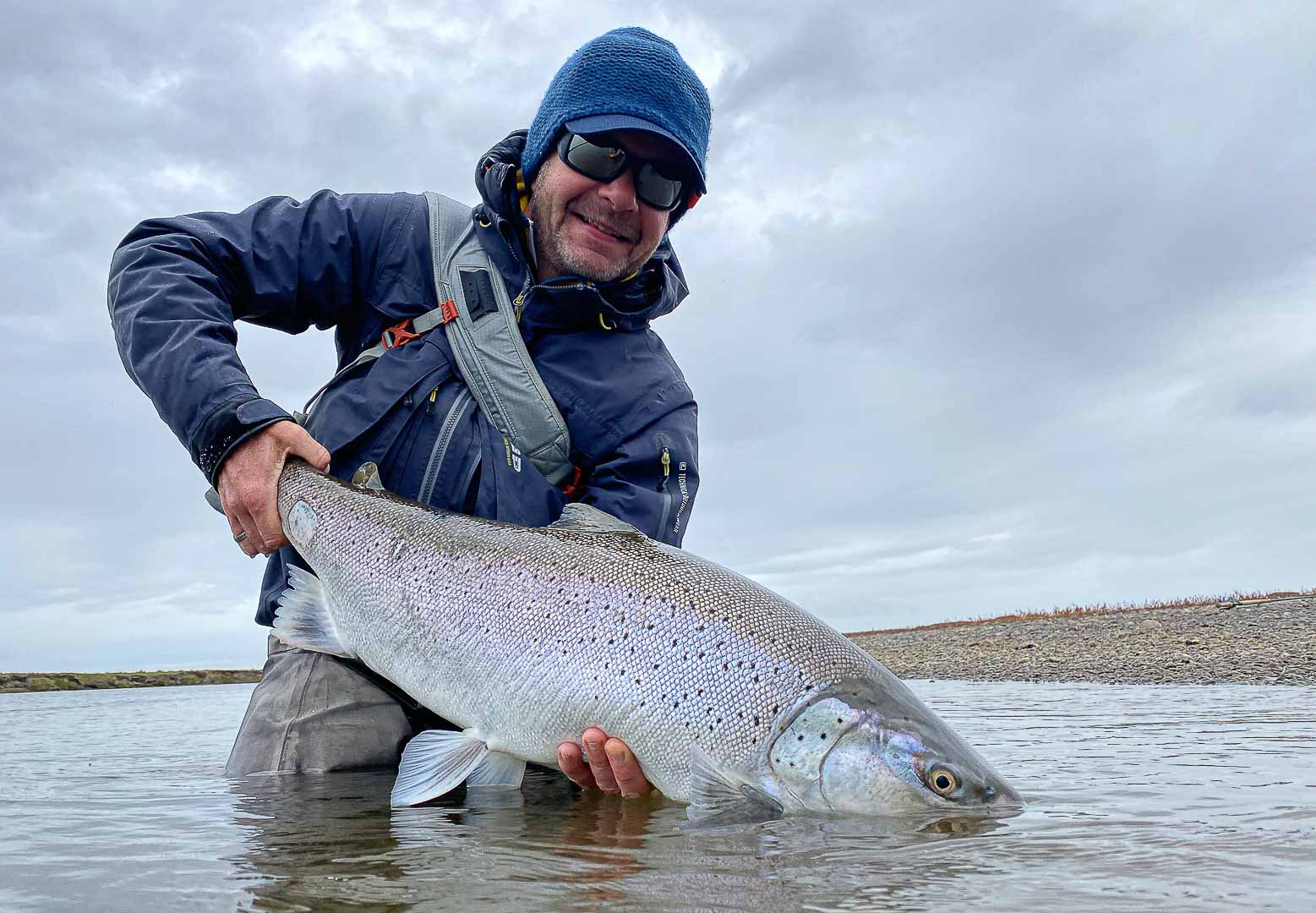
Single-handers in 7- to 8-weights—and up to 10 feet long—can also be effective in lightwind conditions on the Grande or for technical, close-range nymphing on the Rio Menendez tributary. Longer rods make casting easier with the normal downstream southwest wind, while an 8 weight helps you to drive your line into or across the wind when necessary. Given the Rio Grande’s moderate flow and generally even gravel bottom, you’ll find an 7 or 8 capable of doing battle with even the river’s largest sea trout (15 to 25+ pounds), while it ensures the most action with smaller sea trout (4 to 10 pounds).
REELS
All reels should be equipped with at least 100yrds of 20 lbs backing.
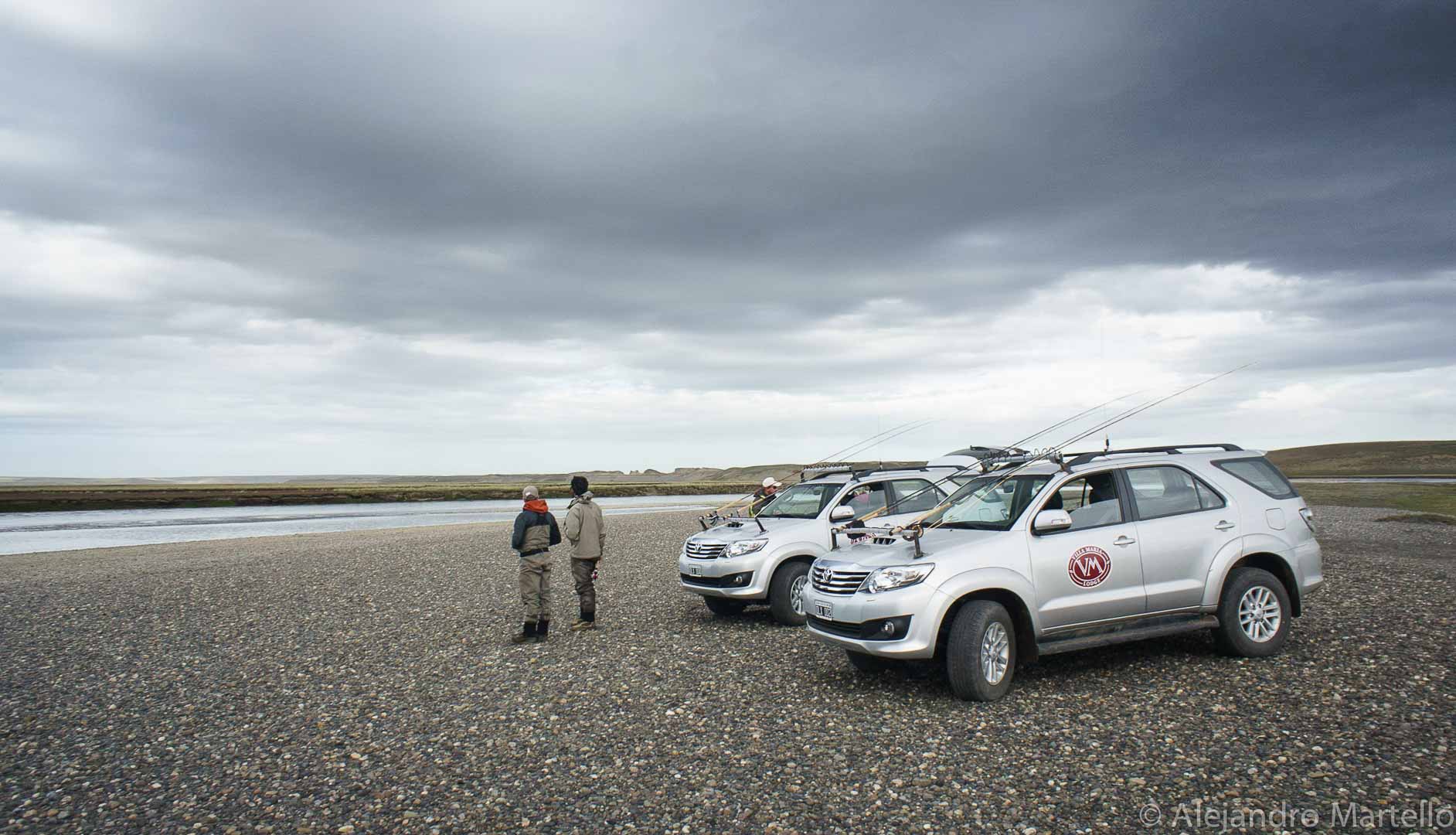
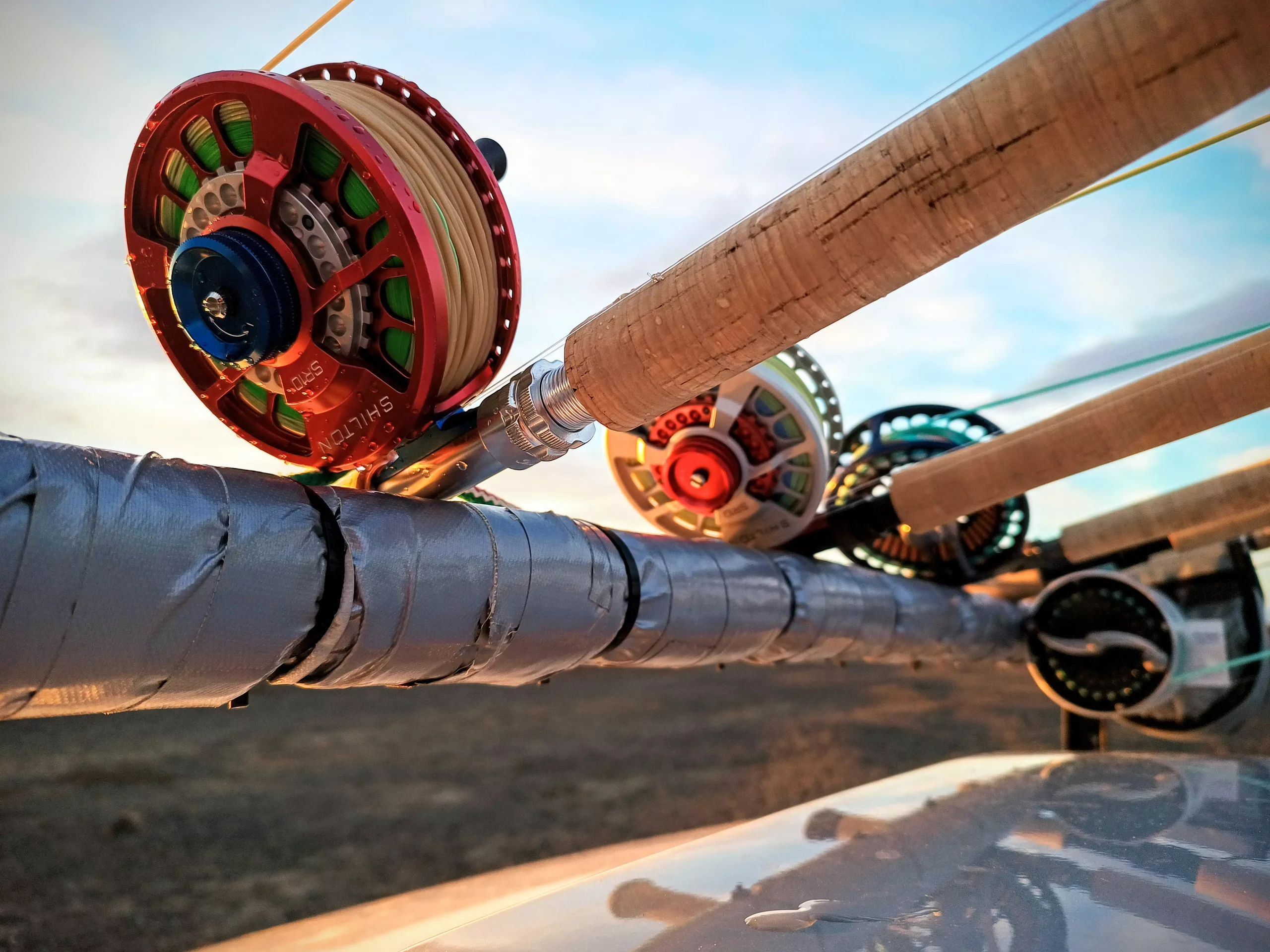
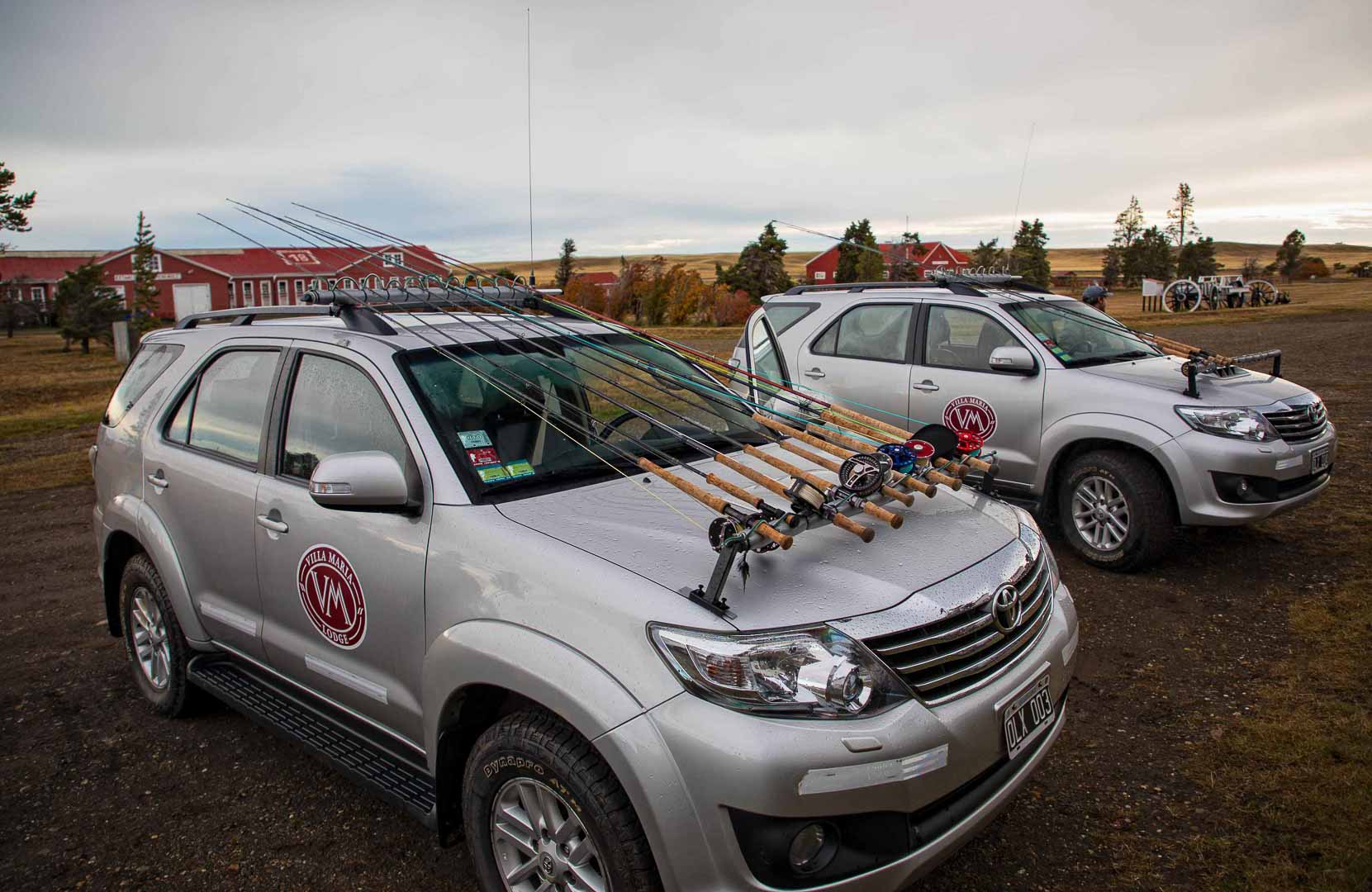
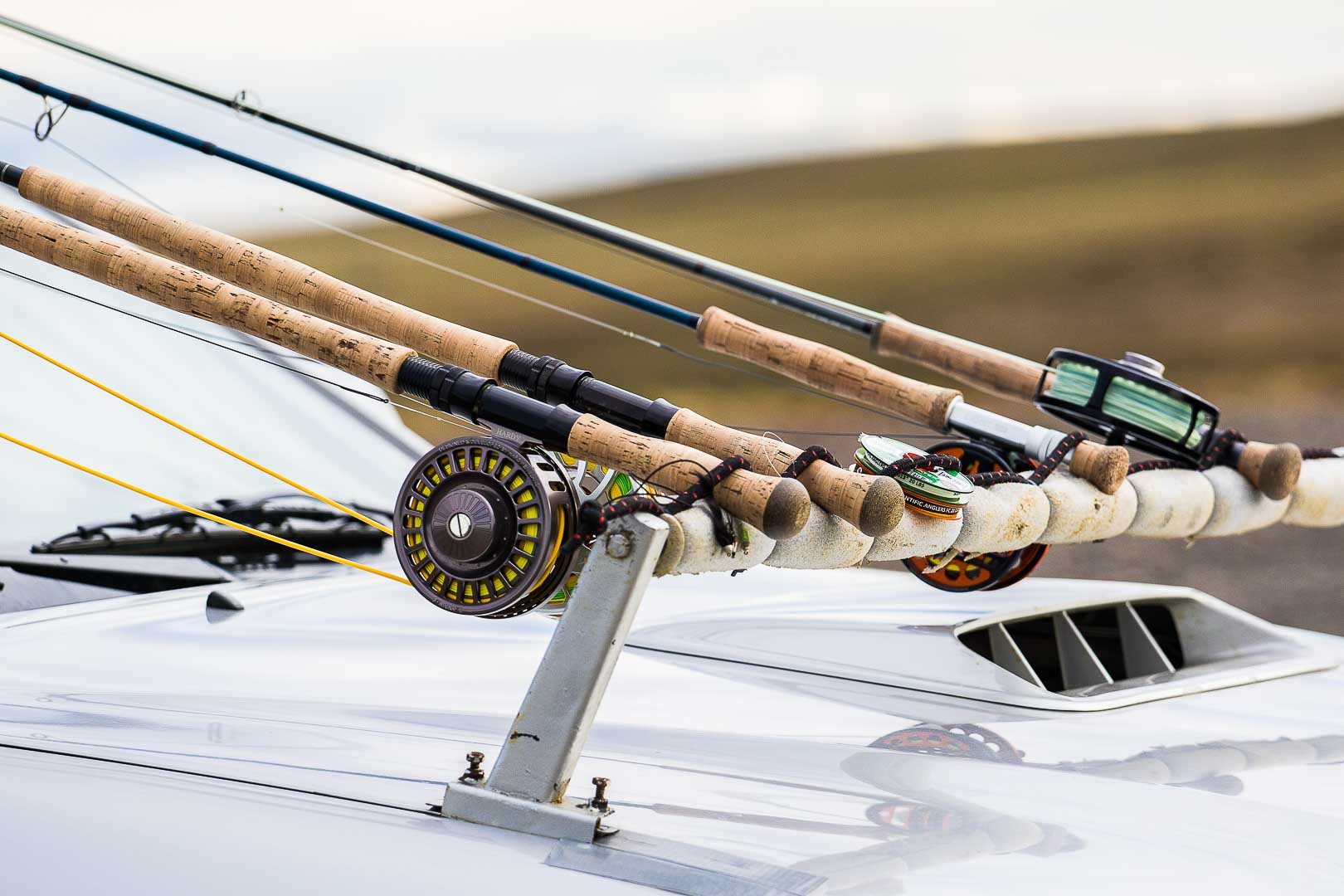
Rods and reels ride assembled on top of the vehicle to and from the river, and between beats each day, often in dusty conditions. To protect your valuable reels, bring neoprene or some type of close-fitting reel cover that can be easily removed.
LINES
For Two Handed Rods
- Regular Belly Skagit heads (or Scandi if preferred) floating line
- Variety of Tips: Float, Intermediate and Sink (T-8, T-11, T-14, T-17) 8-15ft.
To be well prepared for Tierra del Fuego, anglers should include at least three lines to accommodate varying water levels and wind conditions. Weight-Forward fly lines are generally used on the Rio Grande.
Floating lines are most useful during lowwater conditions and in the early morning and evening hours, when sea-run brown trout feed near the surface. Integrated sinking-tip lines also work great, while intermediate lines are also effective in some conditions.
When using Spey rods, we primarily fish with Skagit (or Scandi) heads, ranging from floating to fast-sinking (S4). Generally speaking, Skagit lines perform better on very windy days or when casting larger flies, while Scandi lines offer smoother presentations. Most shooting heads are paired with sink tips, allowing you to target different depths effectively. RIO produces several versatile lines that work well with both Skagit and Scandi setups. Be sure to bring a selection of sinking tip leaders for these lines—Floating (F), Hover/Intermediate (H/I), Intermediate/Sink 3 (I/S3), and Sink 3/Sink 8 (S3/ S8)—to adapt to changing river conditions. Depending on your rod, use shooting heads in the 350–600 grain range for optimal performance.
It is also good practice to bring 30-foot spools of T-8, T-11, T-14, and T-17 so that guides can custom-cut the perfect tip on-site for your rod and line, ensuring the setup is precisely matched to the day’s water levels, current speed, and the grain weight required to balance the rod and head.
Even experienced anglers often find their running line snarls when buffeted by wind. Prevailing southwest winds can be “harnessed” by roll casting or spey-casting, which eliminates the need to back cast—difficult to do with a trailing wind. We found that a simple roll cast carries even large streamers 35 to 50 feet across and downstream, or far enough to cover the holding lies. Weight-forward lines can be rolled effectively by stripping and shooting line during the cast.
For Switch Rods
- 7 to 8wt Front Floating Taper Head (depending on rod weight)
- Variety of Tips: Float, Intermediate and Sink (S2, S3, S4, S5, S6 & S7) 5-10ft.
Switch rods (as well as Spey rods) are classified by line weight. Generally speaking, the line weight of a rod is determined by the grain or gram weight (different units of measurement) that the rod is designed to handle for the head line.
The ideal type of Switch rod to use depends on the angler’s skill level, as well as river conditions (low or high water) and weather (calm versus windy). The Río Grande can be effectively covered, even at medium to low water levels, with Switch rods in the 6- to 8-weight range, or rods that can handle 325 to 550 grains of head line. These heads should be paired with interchangeable tips in varying sink rates— typically 5 to 10 feet long—to adapt to changing water depths and flow conditions.
For Single Handed Rods
- 7 or 8wt Floating Line (for skating flies or nymphing on your single hand rod)
- 7 or 8wt Interchangeable tip fly line
- 7 or 8wt Sink (200-400gr lines)
For anglers who prefer using single-handed rods, consider including at least three lines to accommodate varying water levels and wind conditions. Weight-forward fly lines are generally used on the Rio Grande. Floating lines are most useful during low-water conditions and in the early morning and evening hours, when sea-run brown trout feed near the surface. Integrated sinking- tip lines (200 to 400 grain) also work great. And intermediate sinking lines can be effective in some conditions. Also consider bringing some of the new interchangeable-tip fly lines for single-handed rods. These lines are extremely versatile and perform well in all conditions. They come with a range of interchangeable tips offering different sink rates—from Intermediate to Sink 8 (7–8 inches per second).
LEADERS & TIPPET
- 10 to 20lbs – 9’-12 ft. Knotless Tapered Leaders (Qty: 4)
- Tippet Spools: 8, 10, 12, 16 & 20lbs
Experience on the Rio Grande indicates that sea run brown trout are not particularly leader shy. While reasonable stealth should be exercised, your chief concern is to bring monofilament in sizes that will turn over the array of fly sizes and patterns you’ll be using. While fishing sinking lines, a few feet of straight (not tapered) monofilament will do fine. Maxima Ultra-green is a good choice as it has plenty of stretch, a factor worth considering when the sea run of a lifetime hits your fly! For floating lines it’s good to use knotless tapered leaders from 9 to 12 feet long (10 to 20 lbs)
FILES
Villa María Lodge offers a wide selection of flies for purchase (approx. from $4 to $8.50 per fly). However, our guides will provide all the flies you need at no additional cost.
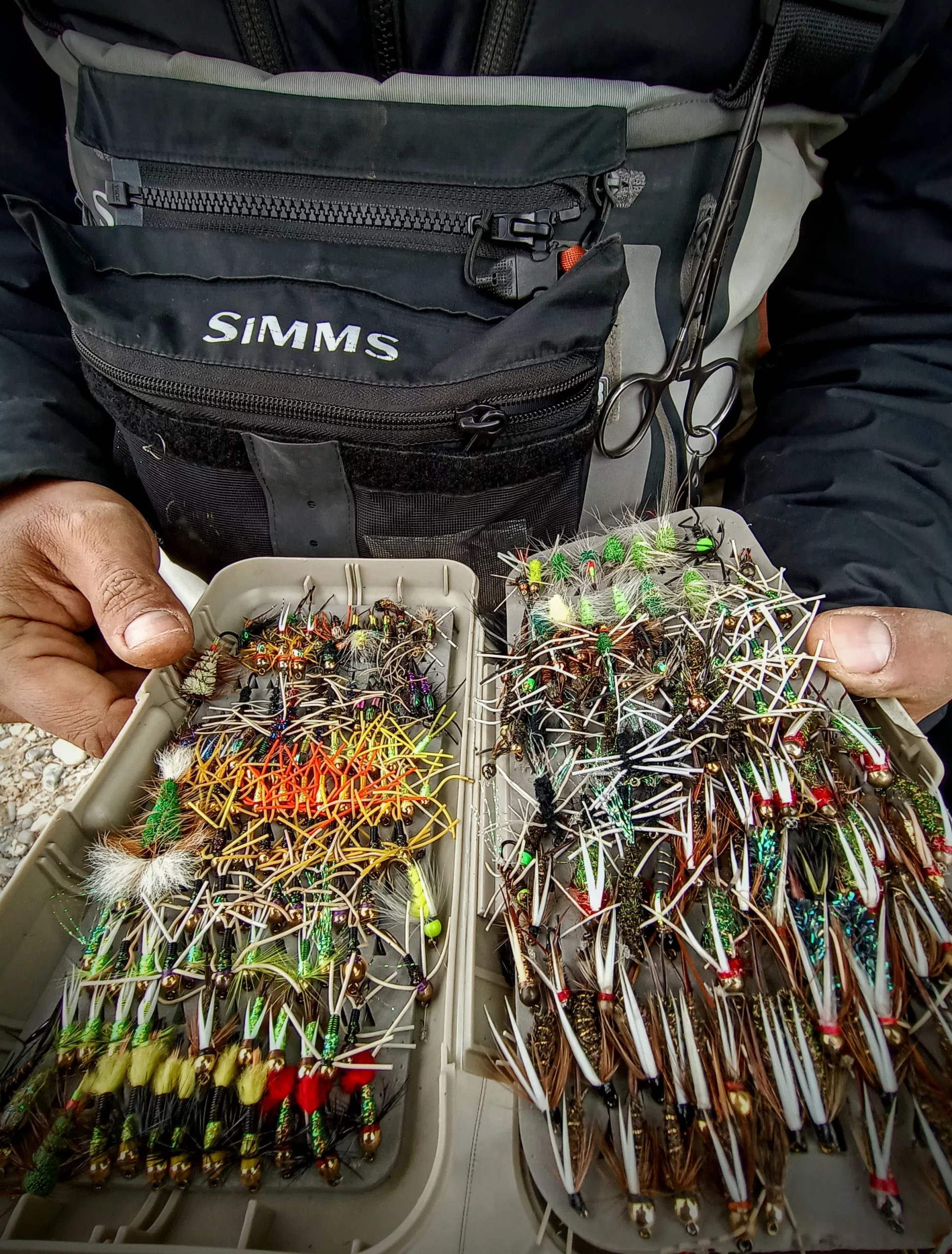
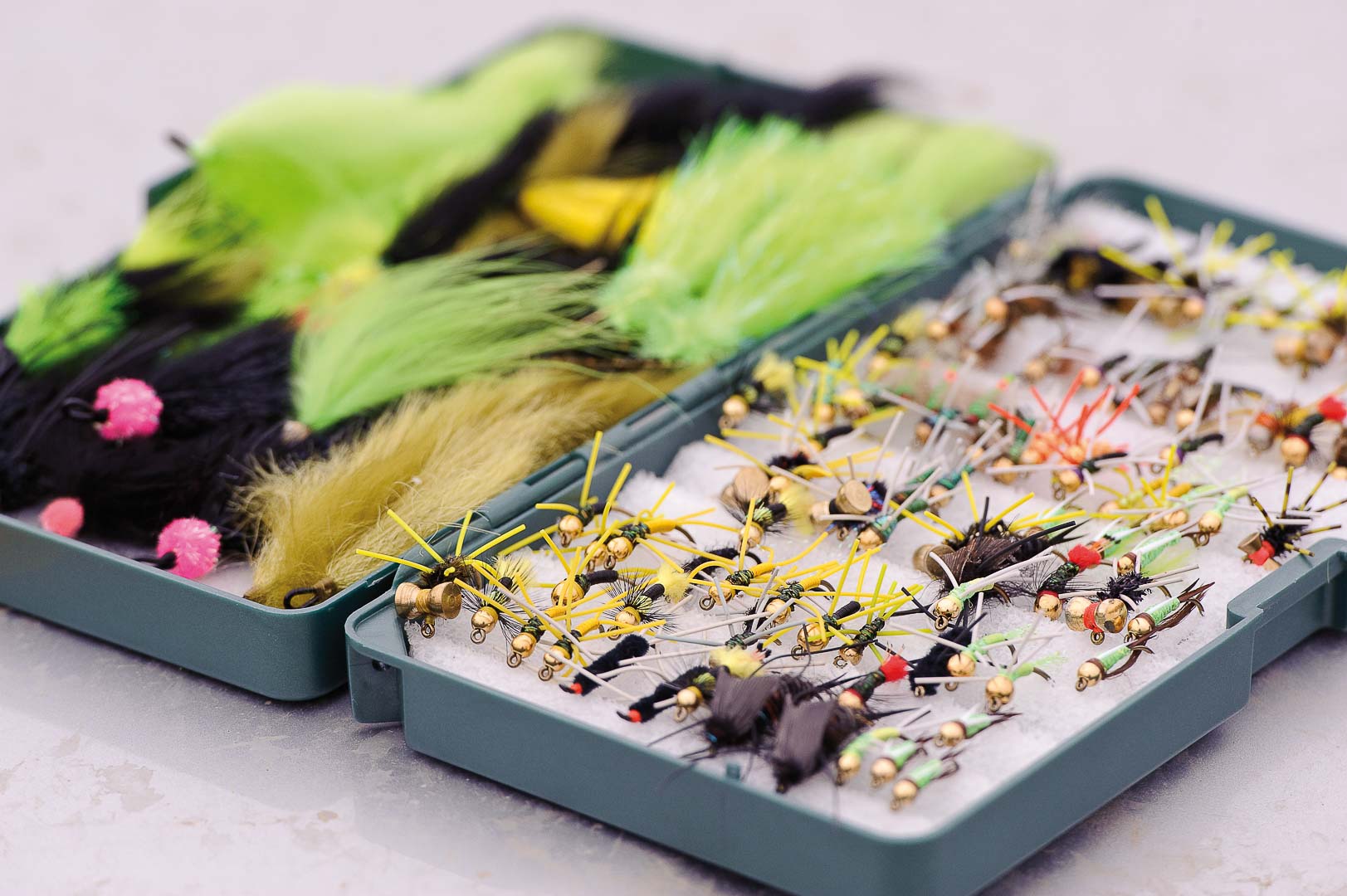
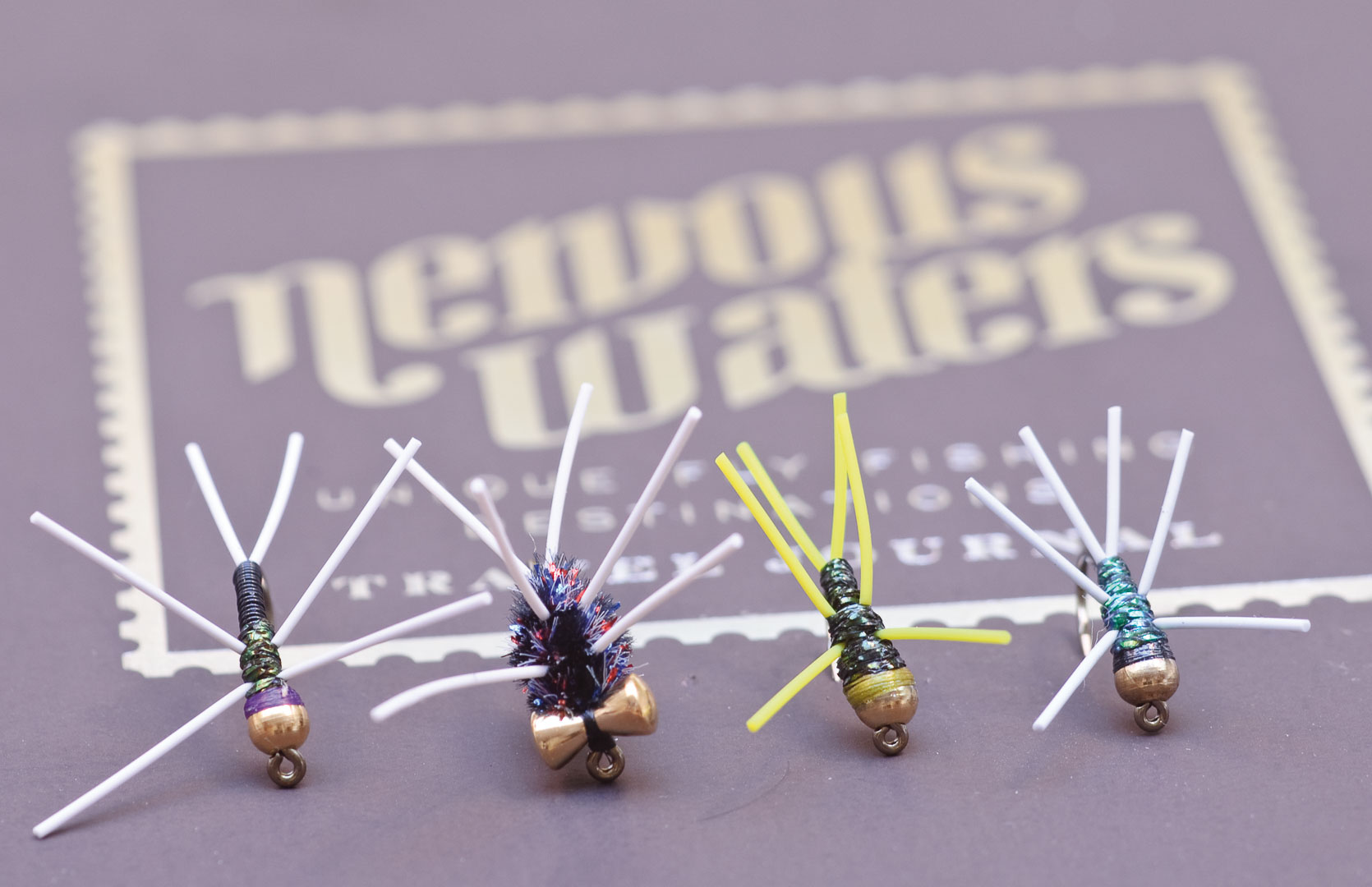
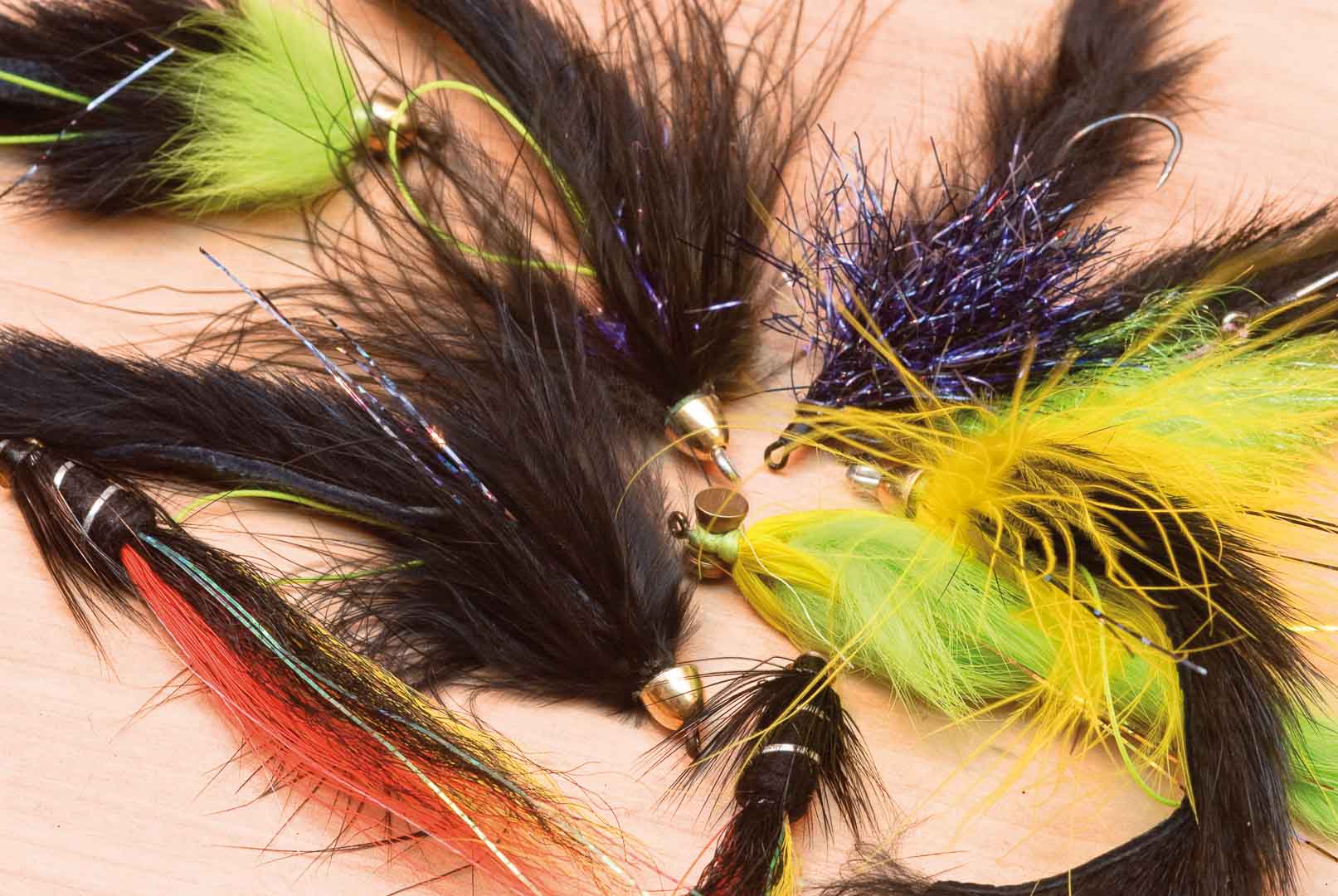
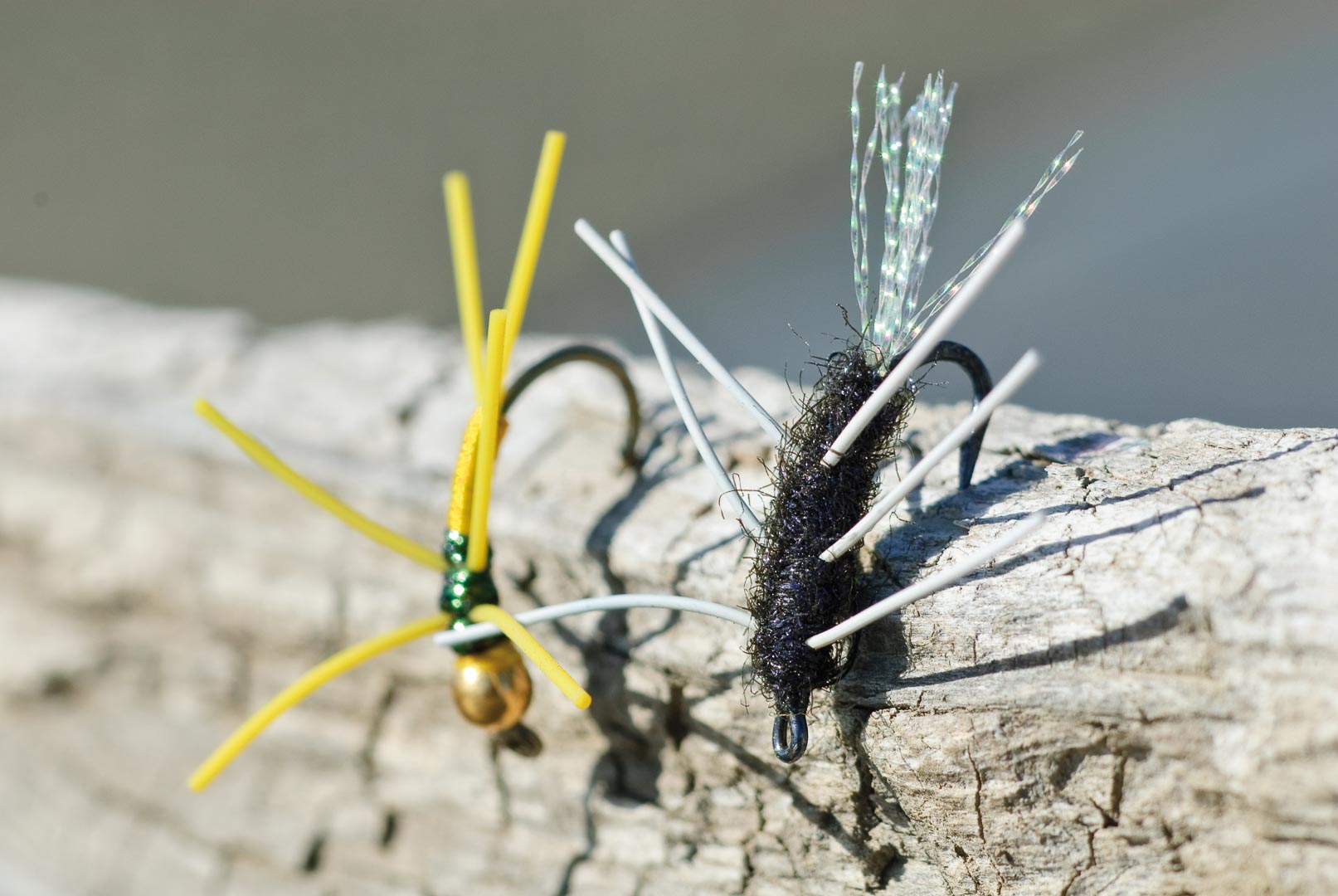
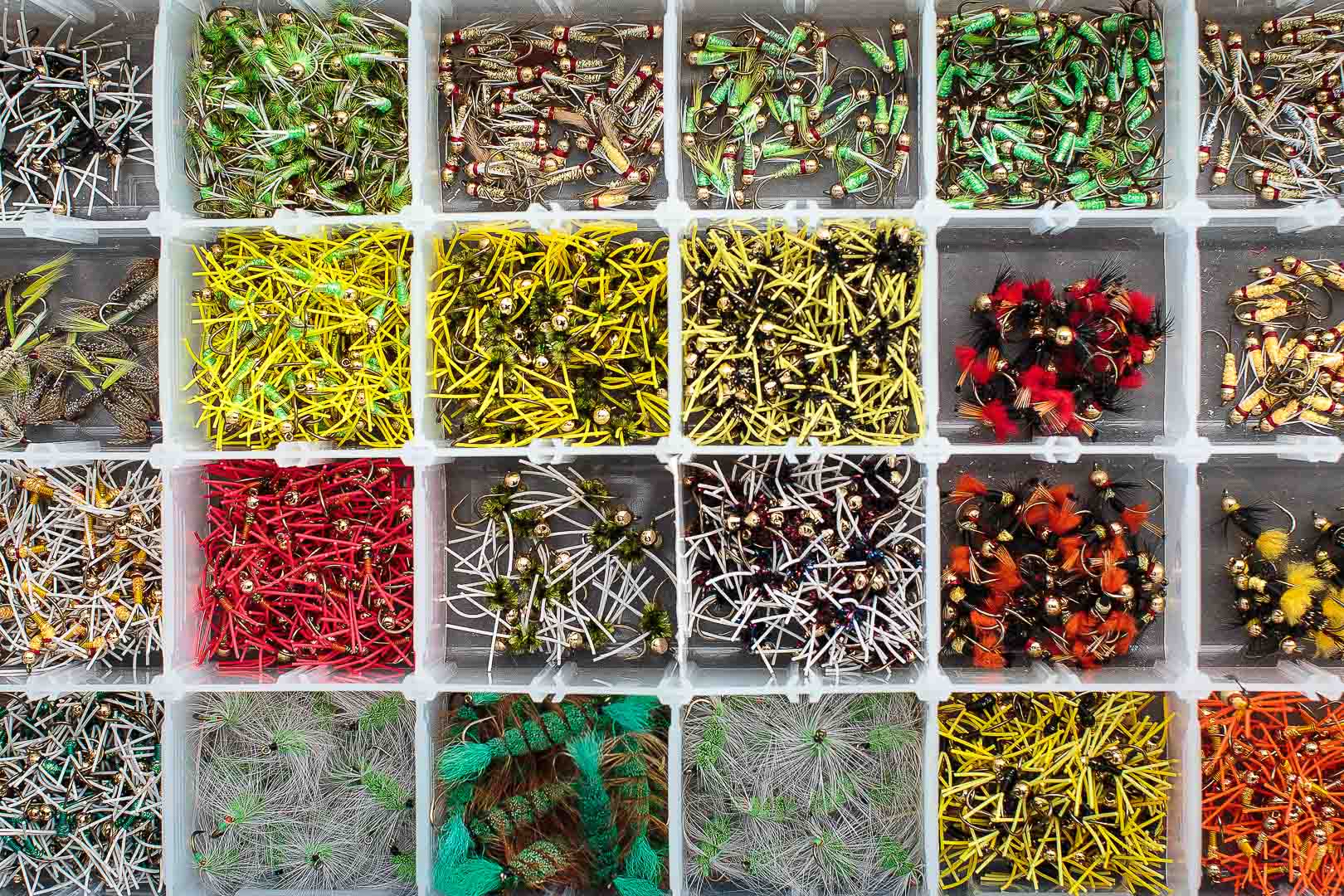
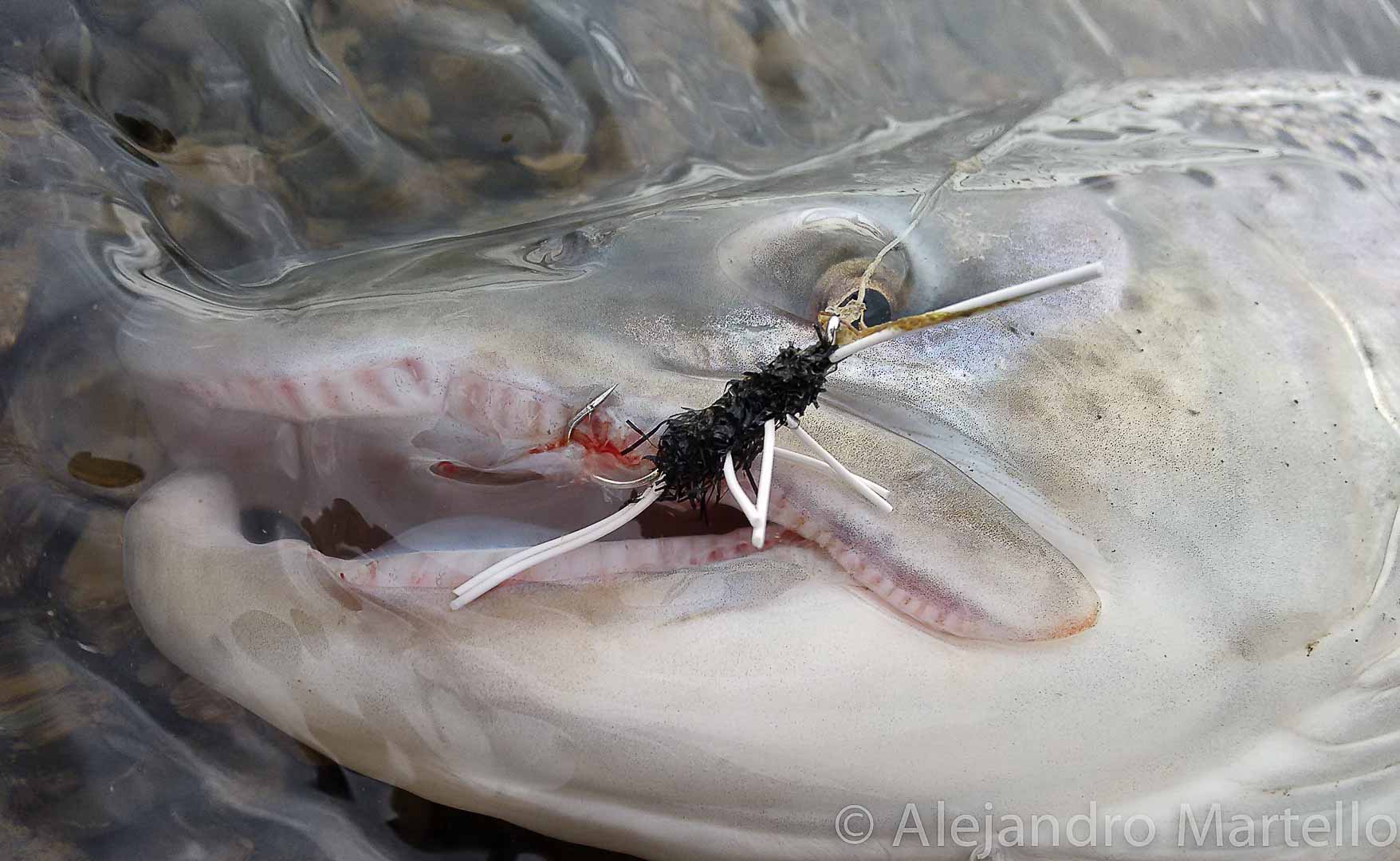
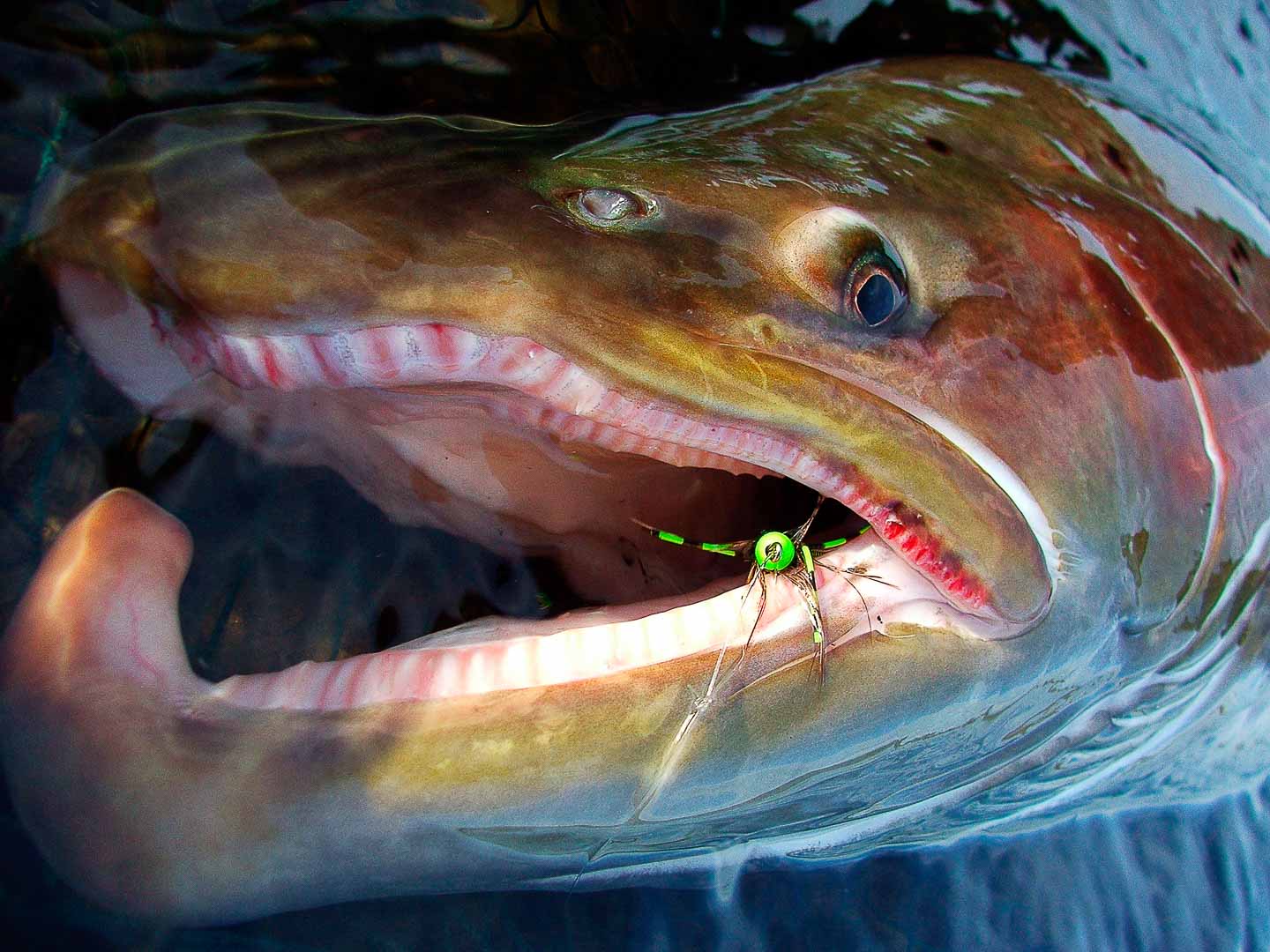
If you wish to bring your own flies, please be sure to pack a good variety. Sea-run brown trout are notoriously unpredictable—perhaps the only constant in their preferences is a penchant for black. The trout that eagerly takes your small salmon pattern one day may demand a fly with white rubber legs the next! Historically, most Río Grande fish were caught on large streamers, likely because those patterns were most commonly used. However, during low-water conditions, many large sea trout are taken on smaller wet flies, nymphs, and dry flies in sizes 6 to 12. We recommend bringing a diverse selection of flies in different patterns and sizes, and changing them frequently when a particular combination isn’t producing results. Your guide will help you determine the most effective options based on light conditions, water levels, and daily fish behavior. Please note that barbless hooks are strongly encouraged.
Here are some of the most productive flies to use on the Río Grande:
- Collie Dog tube flies (3 1/2 – 4 1/2” long, both aluminum and copper bodies, with hard plastic tubing and #4 wide-gape hooks)
- Sunray Shadow in different sizes.
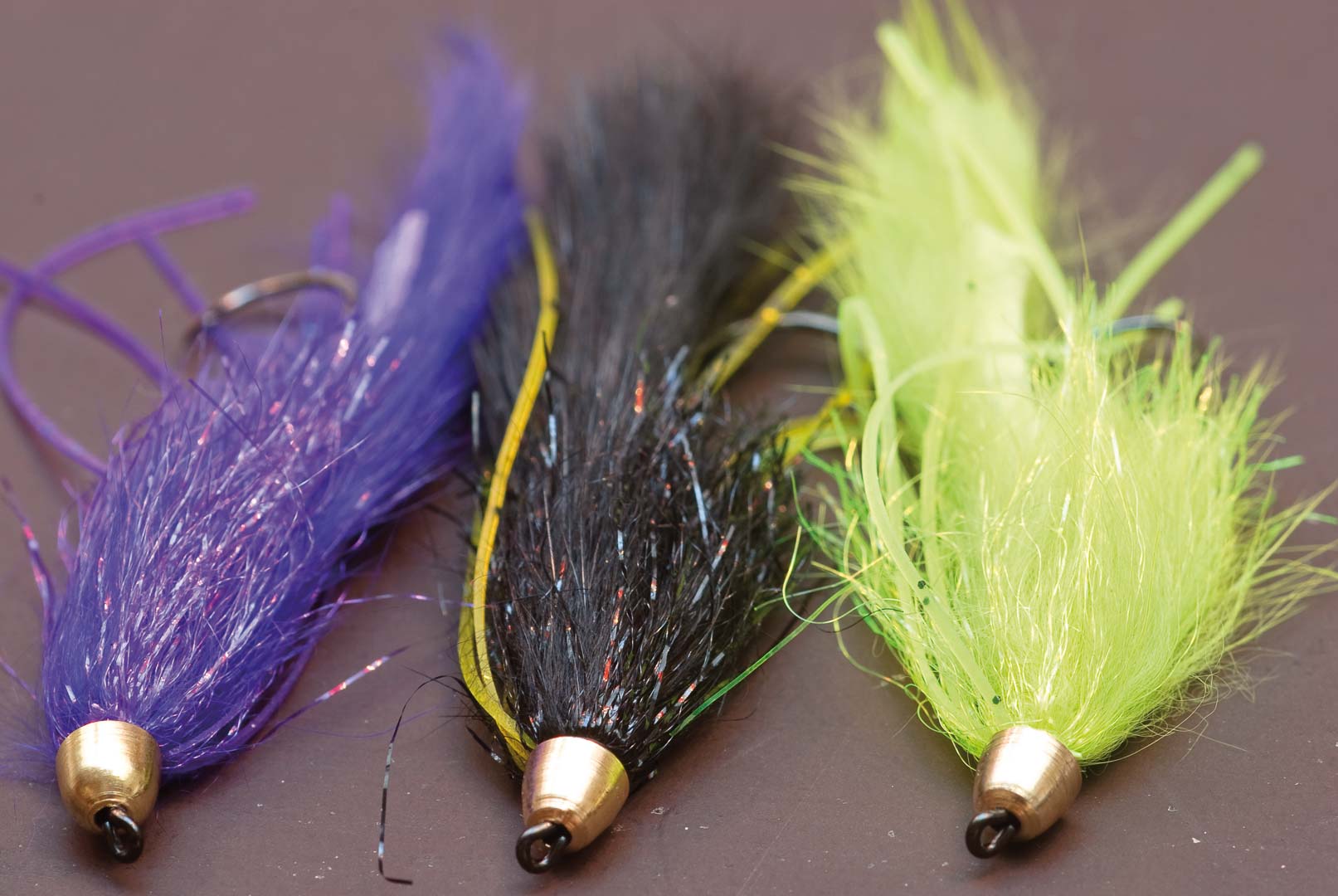
- Bunny Leech, Zonker, Woolly Bugger (black/ olive), articulated string leech types, with electric blue flash, intruders (#2-4, wide gap and short shank hooks). Favorite color variations for the Rio Grande and the Menendez include Black/Chartreuse, Blue/Chartreuse, Black/Silver, or simply chartreuse.
- Peacock (now a staple on Rio Grande, tied on #2-4 hooks)
- Girdle or Yuk Bug rubber legs (#4-12) § Bitch Creek Nymphs (orange and black, #4- 12) § Bead Head Nymphs, Prince, Hare’s Ear (#6- 12) § Traditional Atlantic Salmon flies
- Bombers or other waking dry flies (#4-8 natural deer hair, black & green), for use drifted or with a Portland hitch
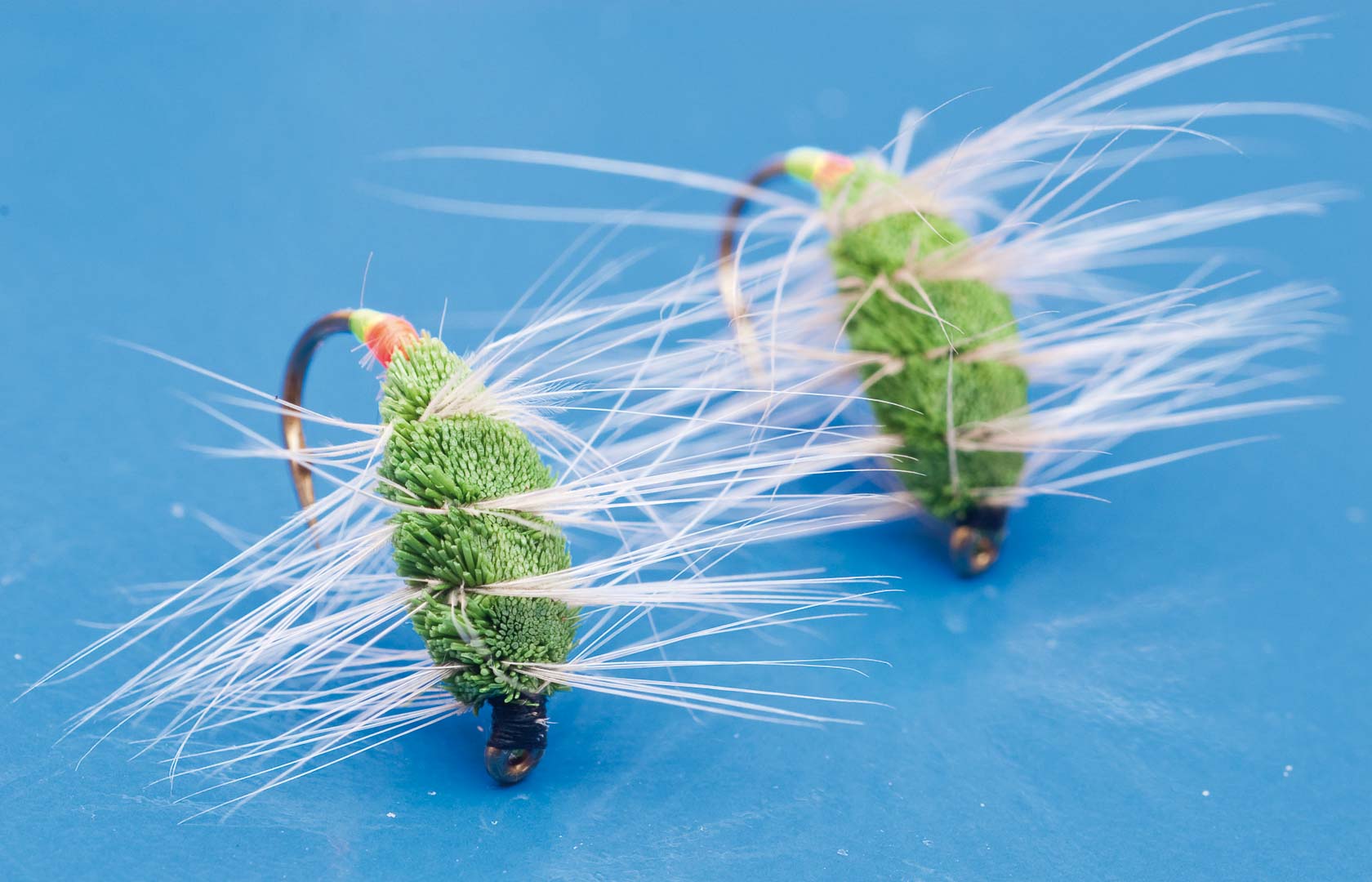
- Green Machine (both brown hackled & white hackled green machine work fine)
Include 1- to 2-inch tube flies if you have them, as tubes can be effective on the Rio Grande. Also, take any large dark trout or salmon fly in which you have confidence. Fishing a fly that has worked for you in the past, and in which you have confidence in is half the battle.
Note: Larger streamers should be weighted tied on heavy hooks with good gapes. Treble & Double hooks are not allowed on the Rio Grande.