What Time of the year should I come?
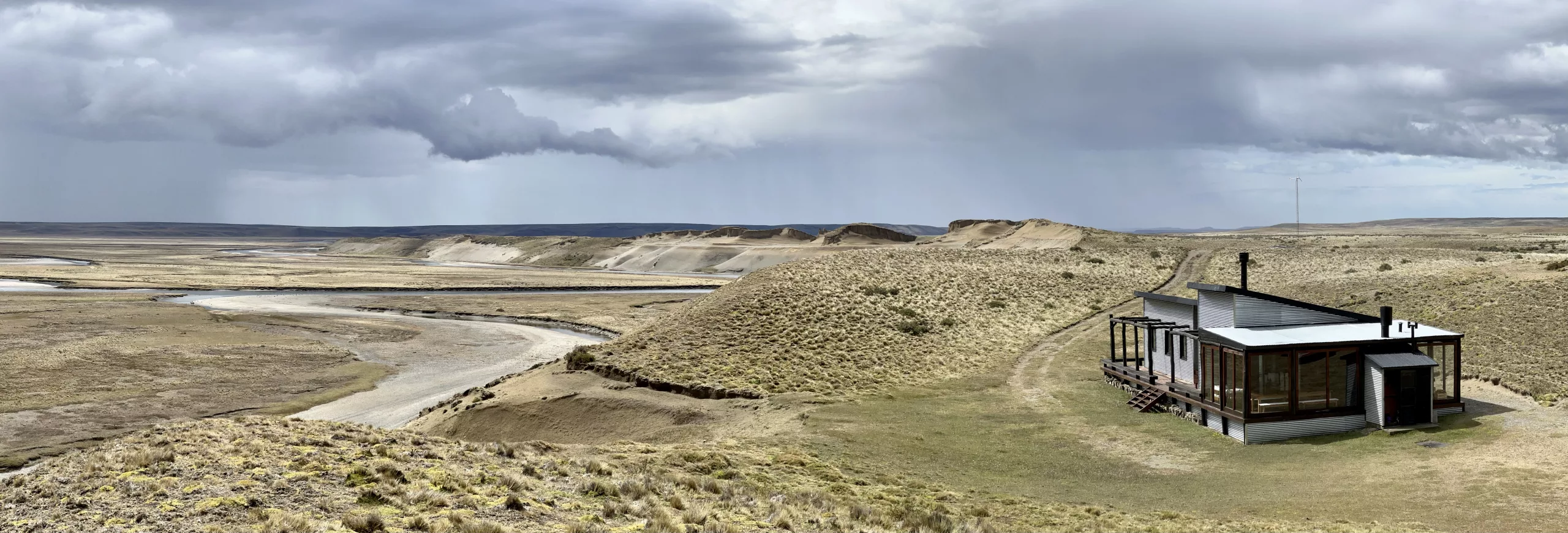
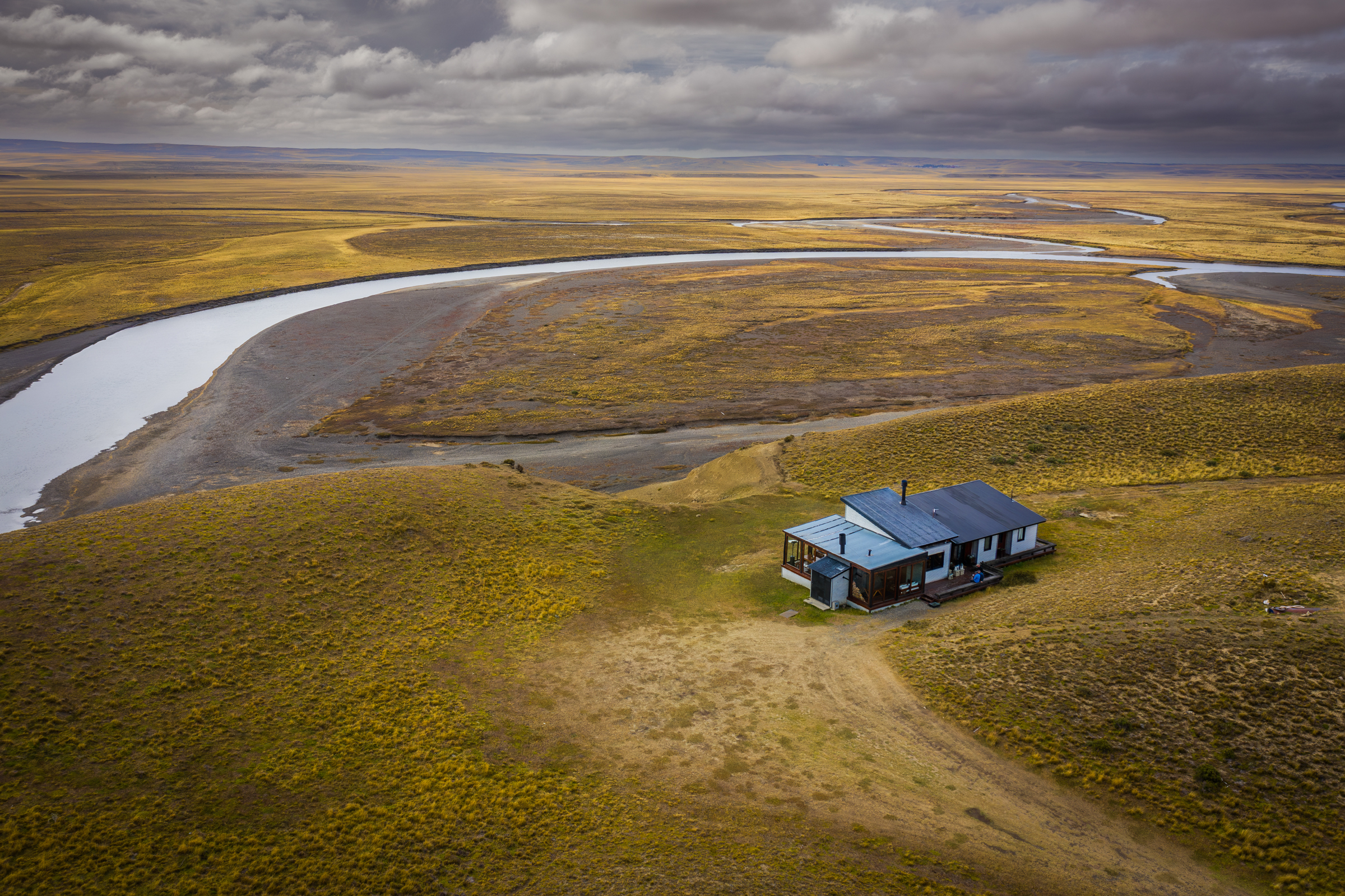
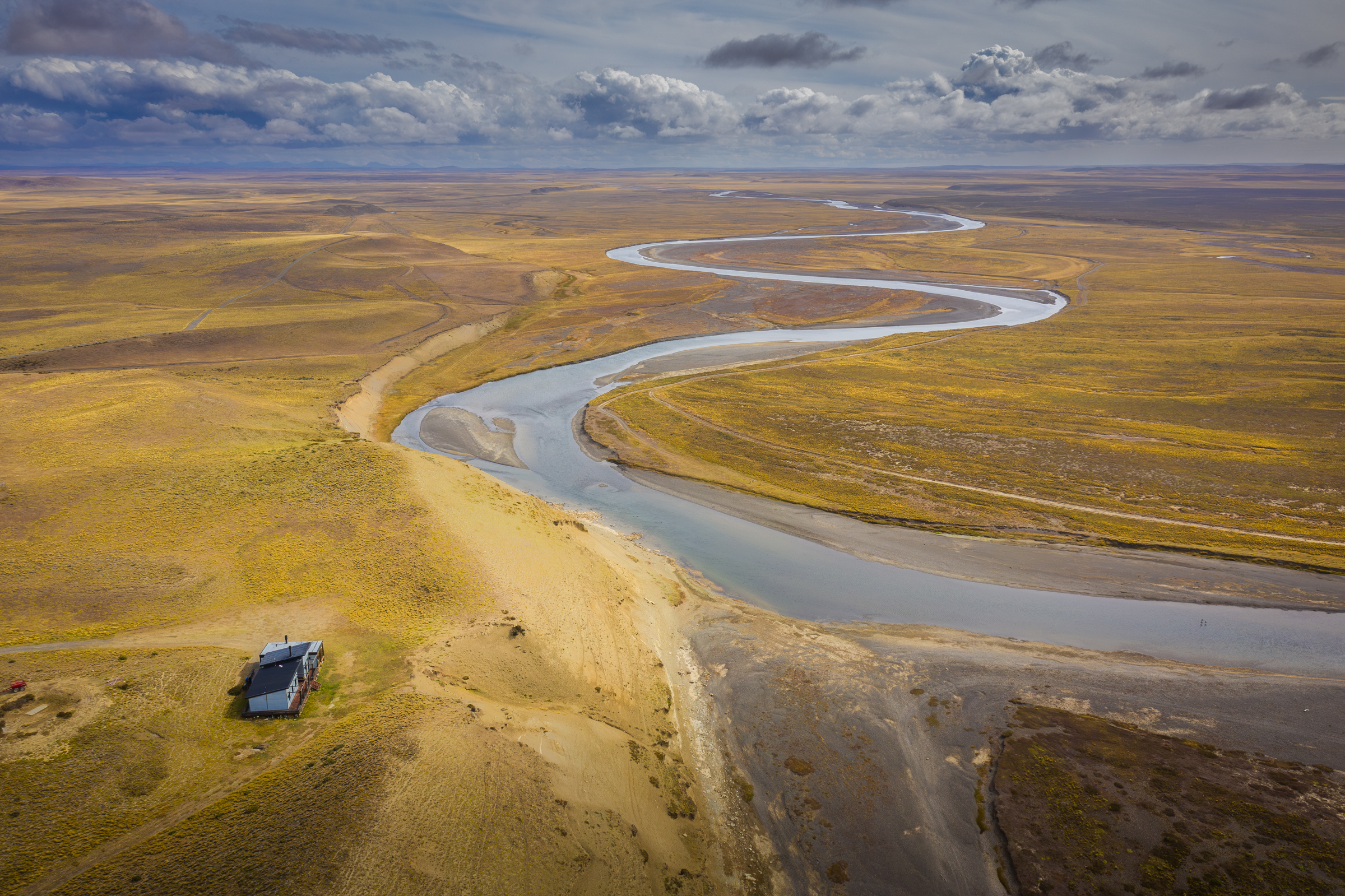
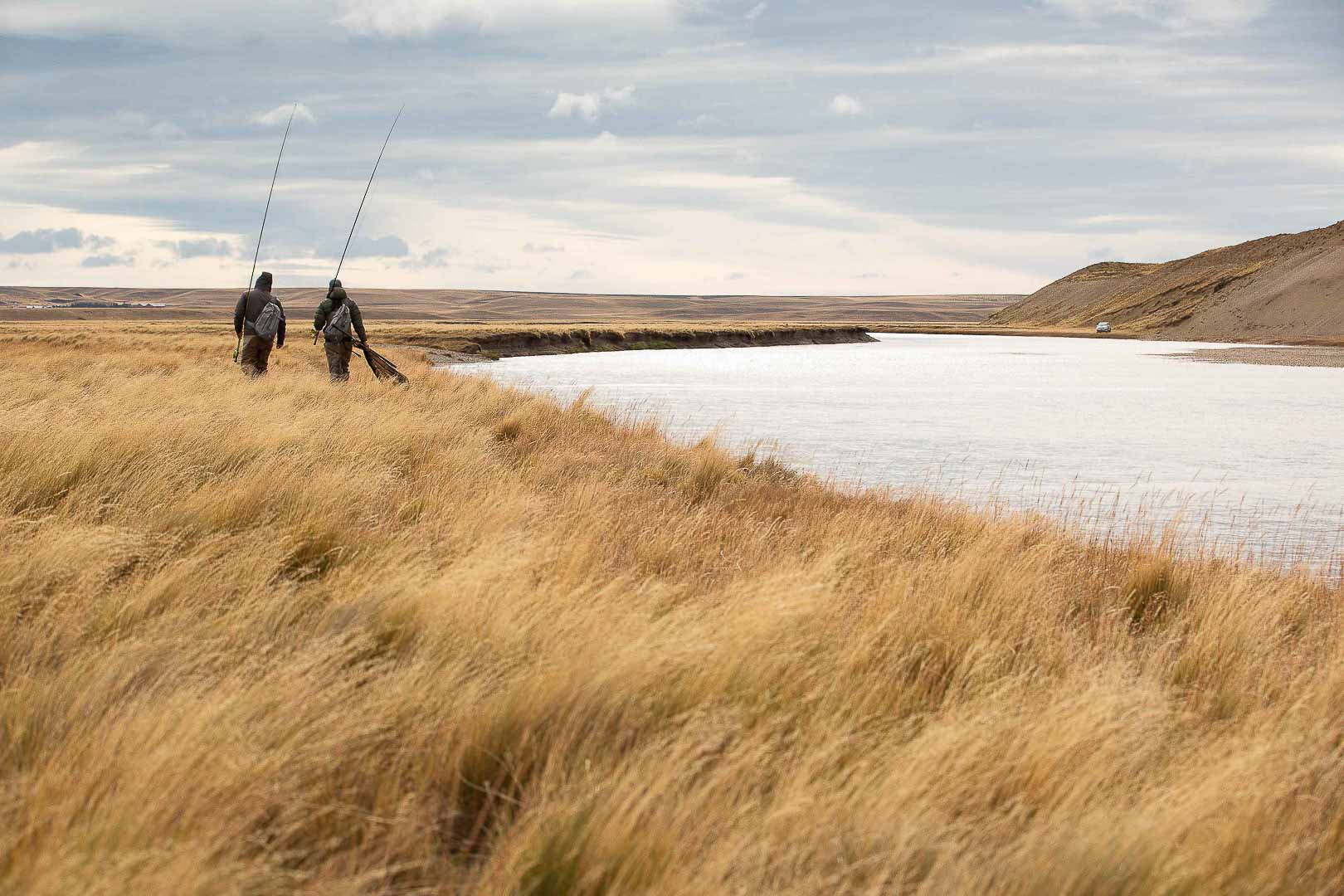
Villa María Lodge sits in the lowest stretch of the Río Grande, just above the tidal influence of the estuary. This unique position has a direct impact on both fish behavior and how our fishing evolves throughout the season.
While the Río Grande season officially runs from November 1st through April 15th, water level is the single most important factor shaping conditions in our section. Every rise in the system—whether from local rain or distant events high in the watershed—ultimately flows into the estuary, directly affecting our river. Early in the season and again toward April, higher and faster flows can limit access, reduce fishability, and require heavier tackle and more demanding techniques.
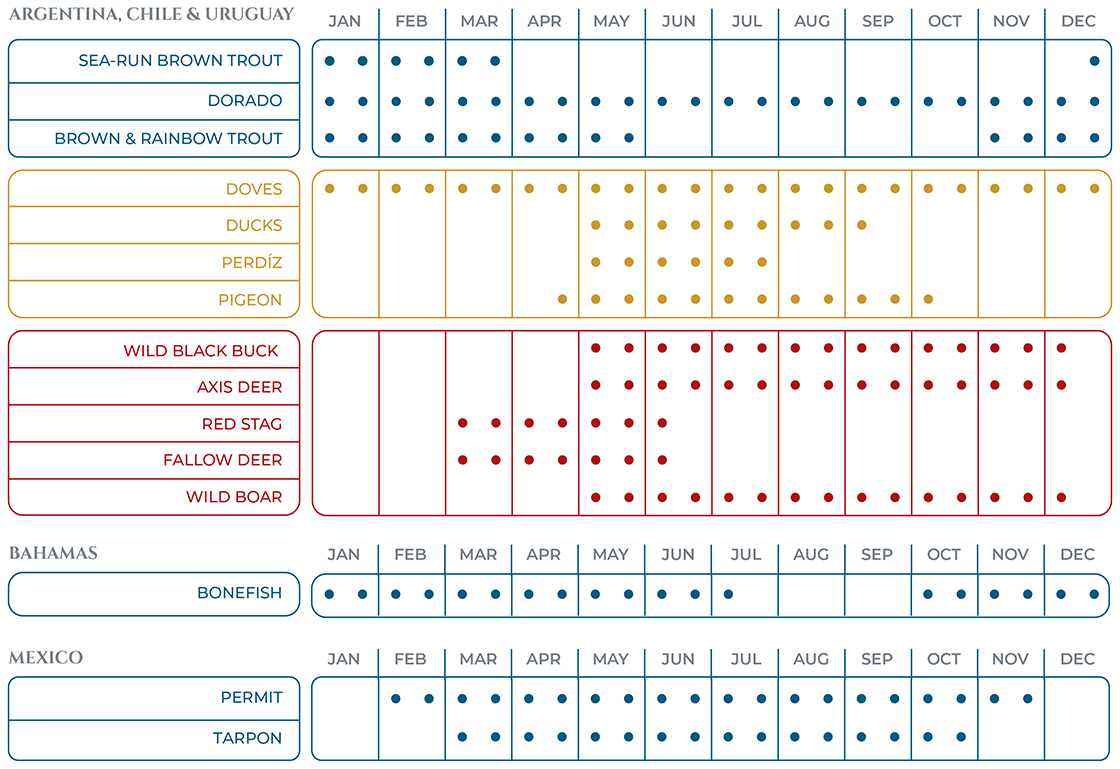
For this reason, Villa María focuses its season on January, February, and March, when river levels are typically more stable. During these months, anglers benefit from safer wading, more consistent fishing conditions, and the ability to fully explore each pool using a range of techniques suited to varying skill levels and conditions.
We think of our season in three distinct periods: Early Summer (January), Mid-Summer (February), and Late Summer (March).
EARLY SUMMER (January)
At the beginning of January, the river typically holds a healthy level with fair to good visibility. Most pools run with a consistent flow from head to tail, and as the month progresses, water levels gradually drop while clarity improves.
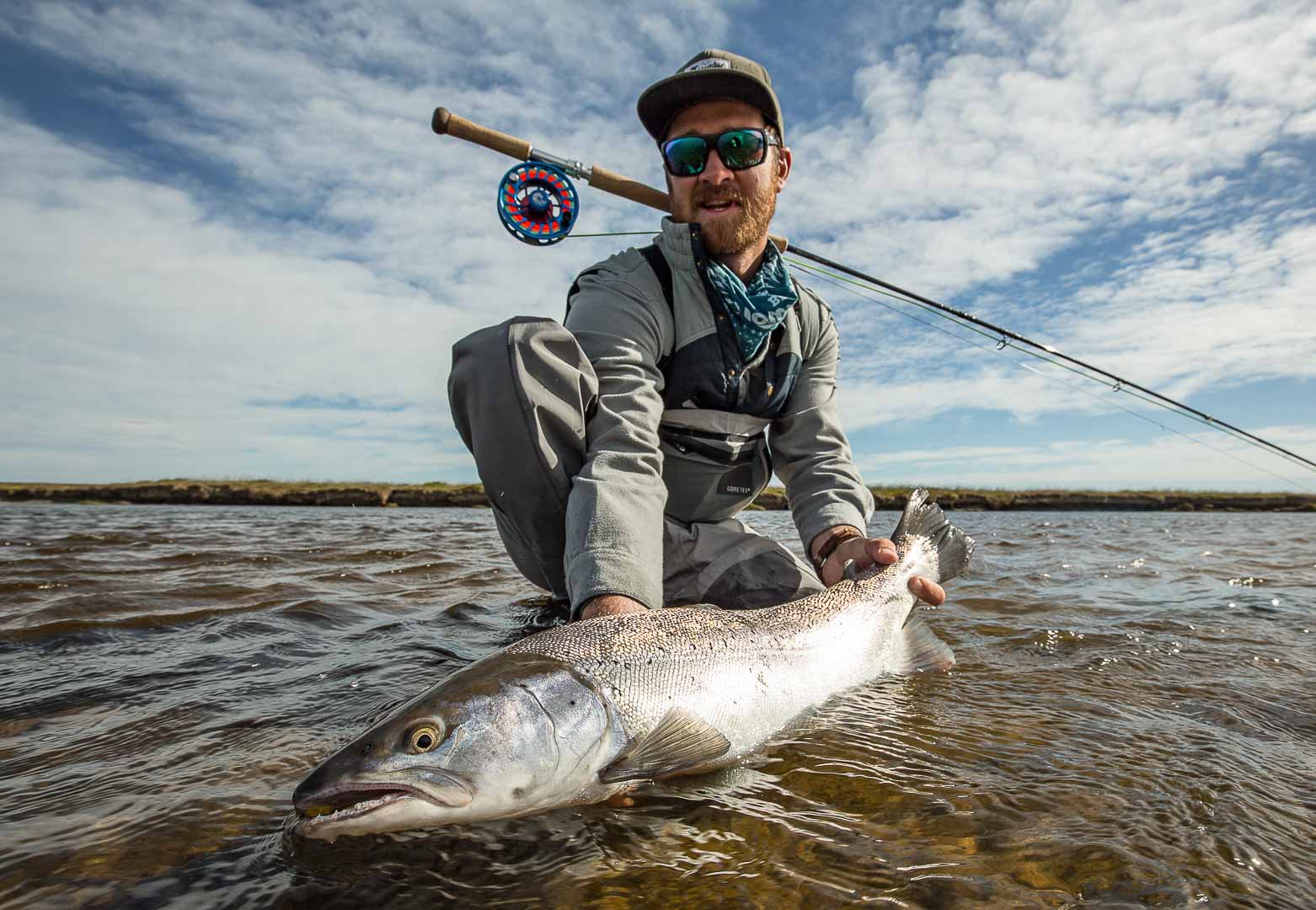
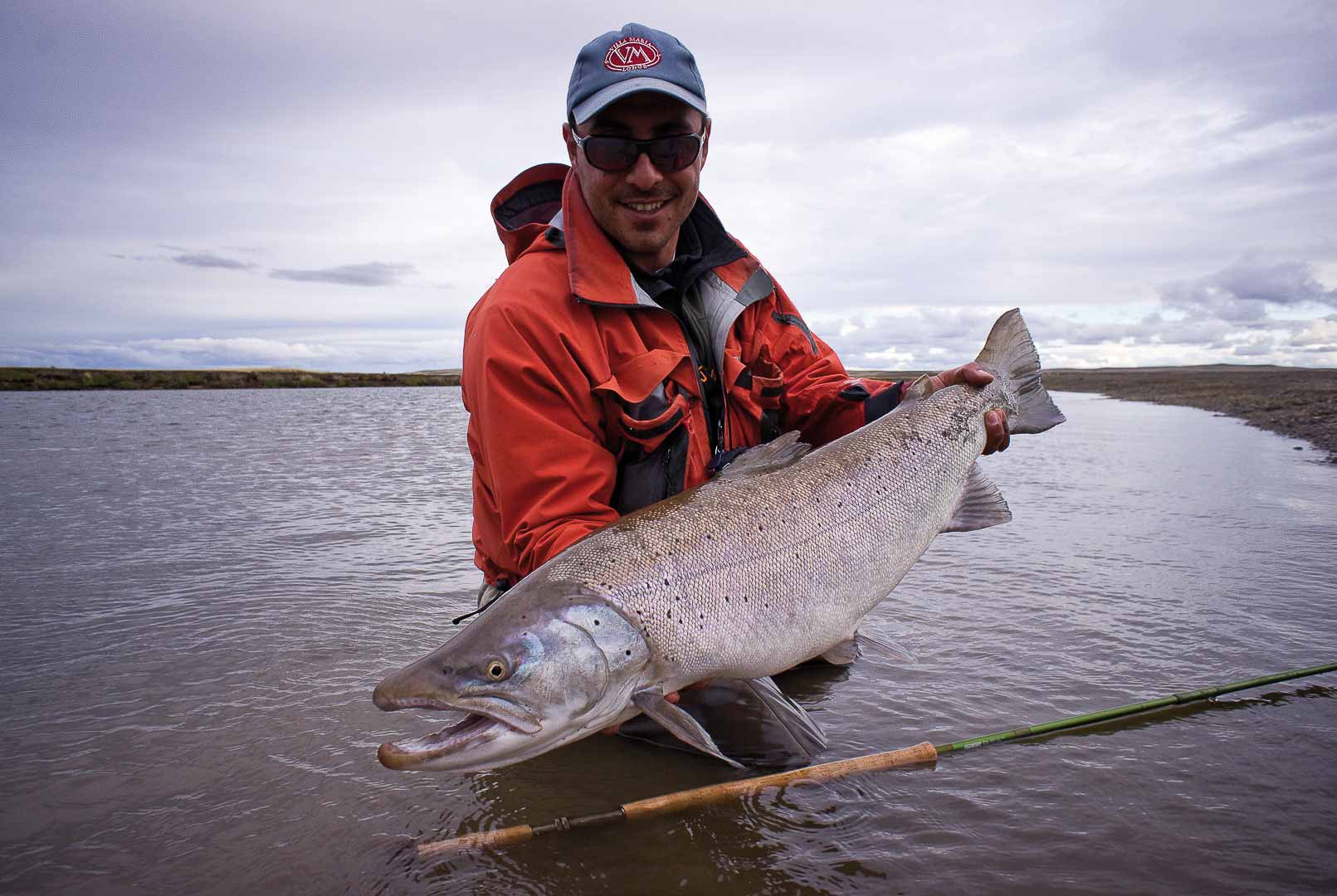
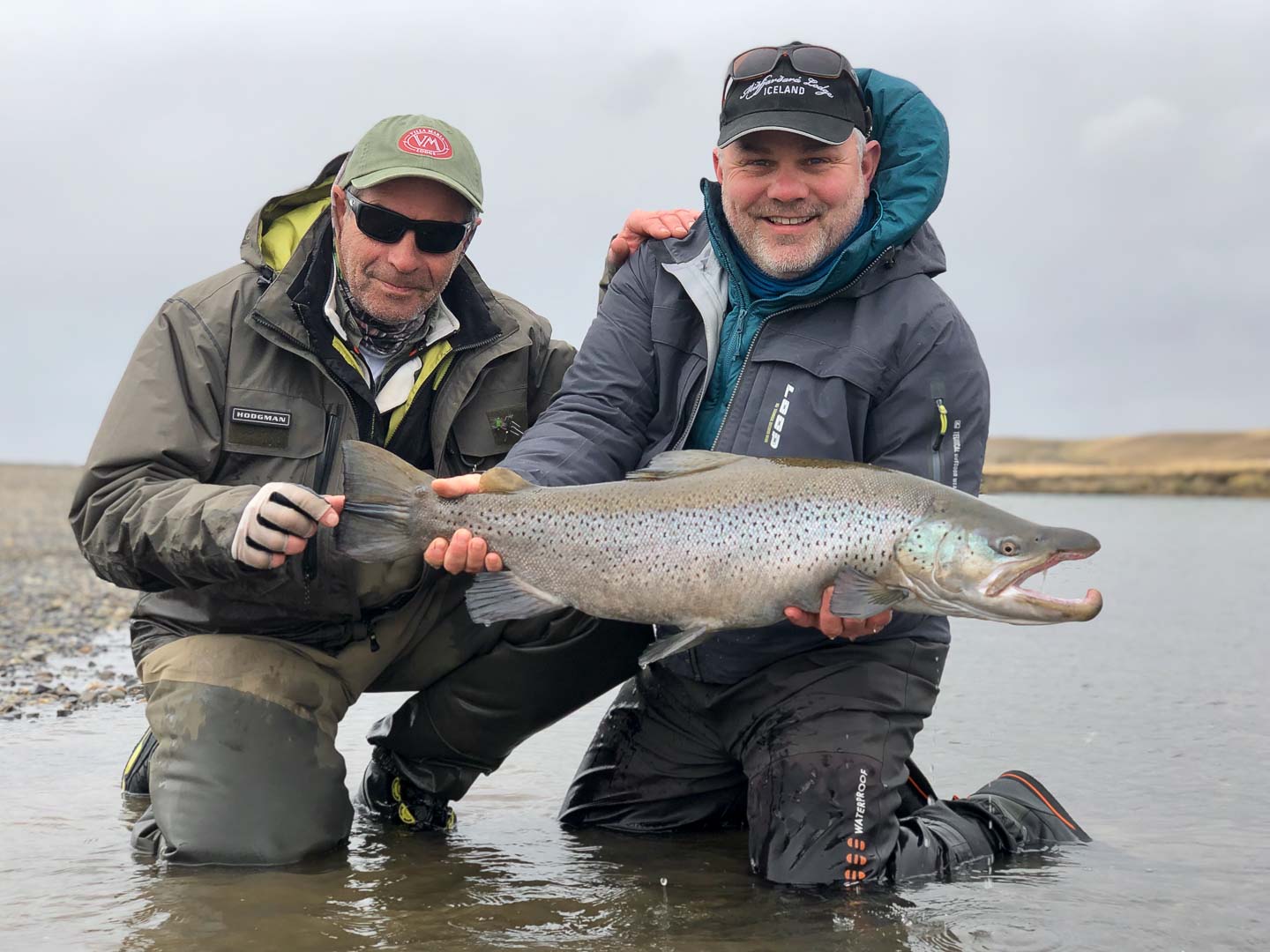
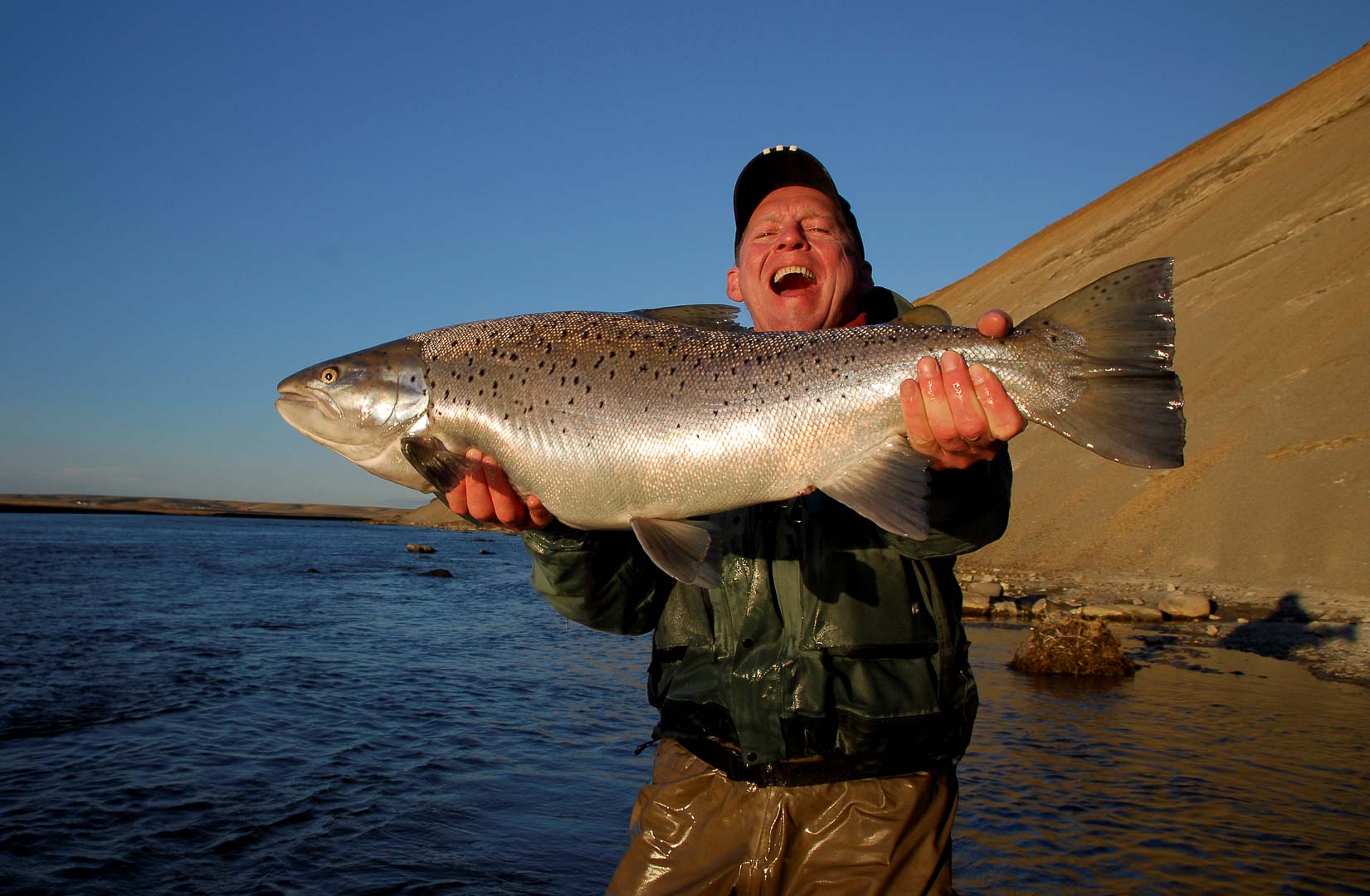
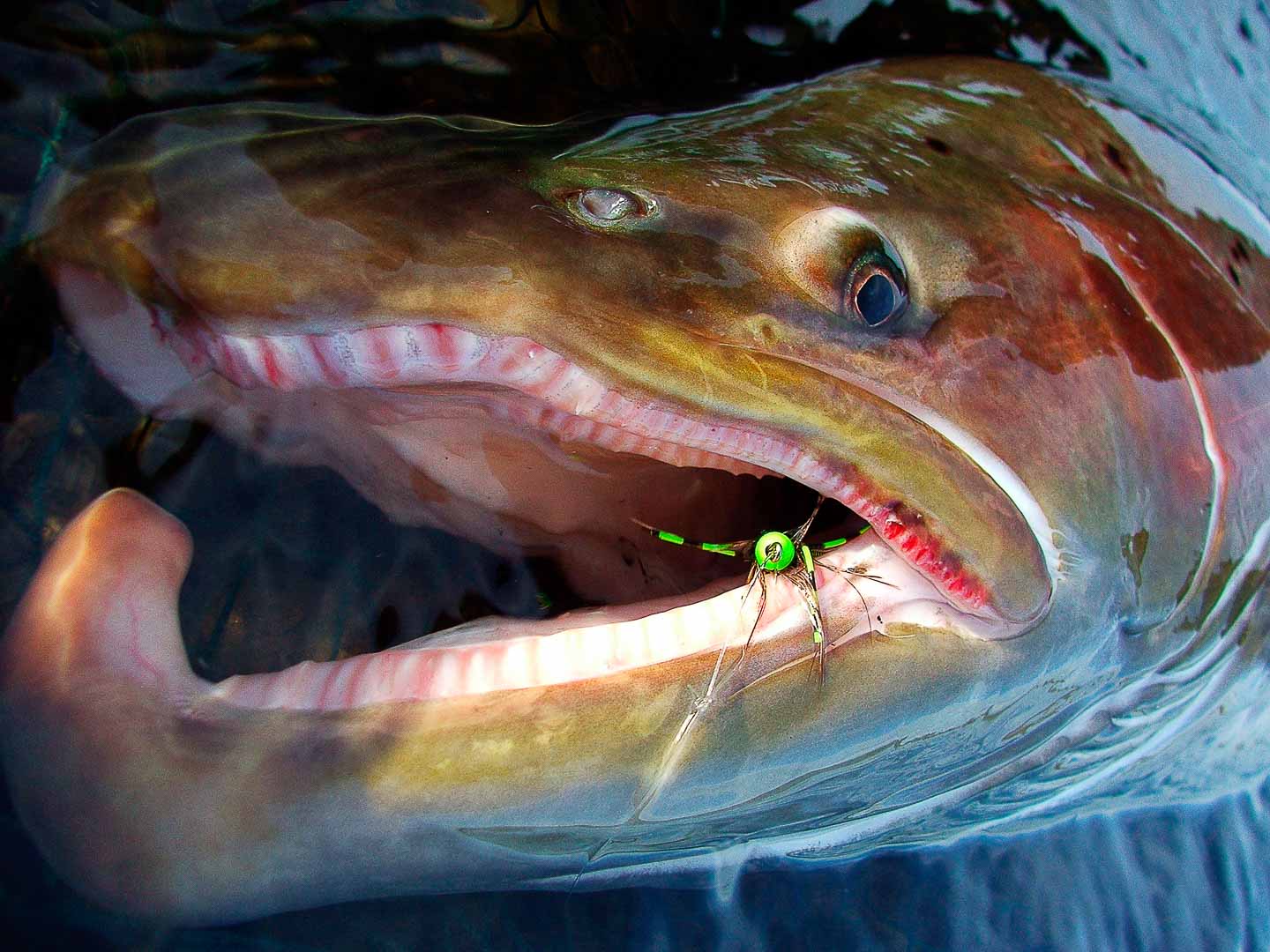
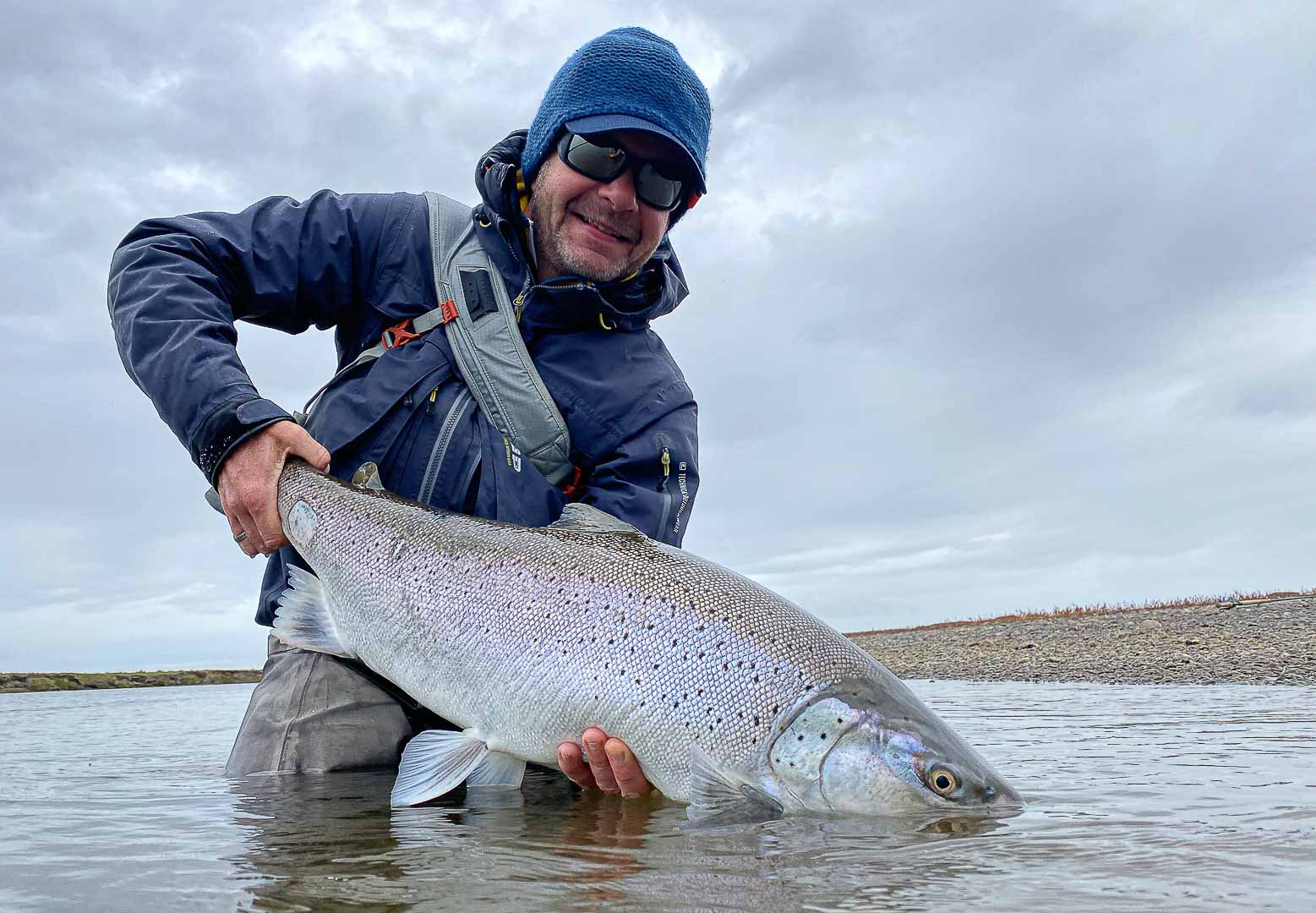
January is all about fresh fish. You will be targeting sea trout that have entered the river the very same night, along with others that have only been in the system for a few days. Medium to large chrome fish are the norm, and we often encounter a higher proportion of egg-laden females—sometimes at ratios of 10 to 1. Males are certainly present, but at this stage they tend to be less aggressive toward the fly.
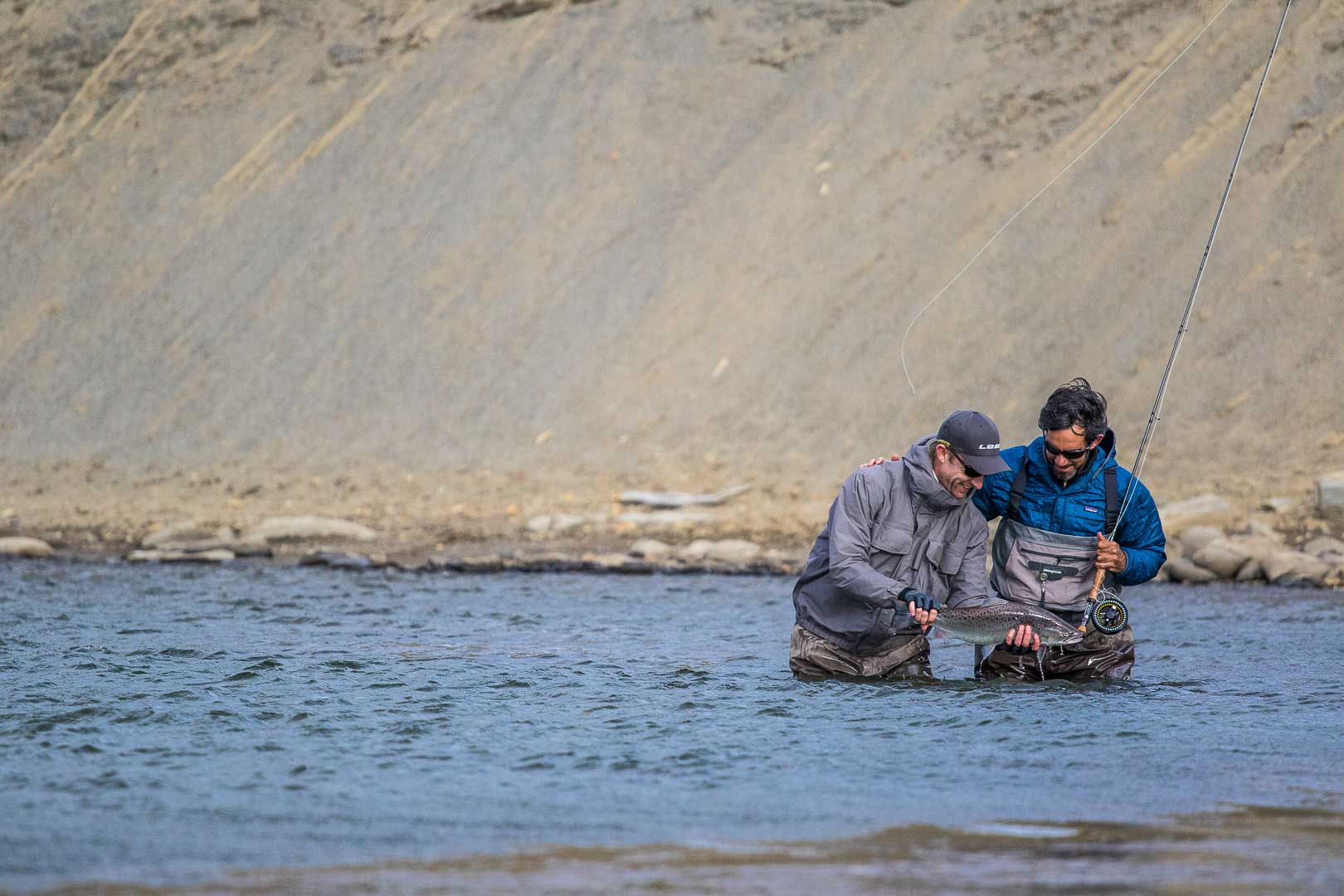
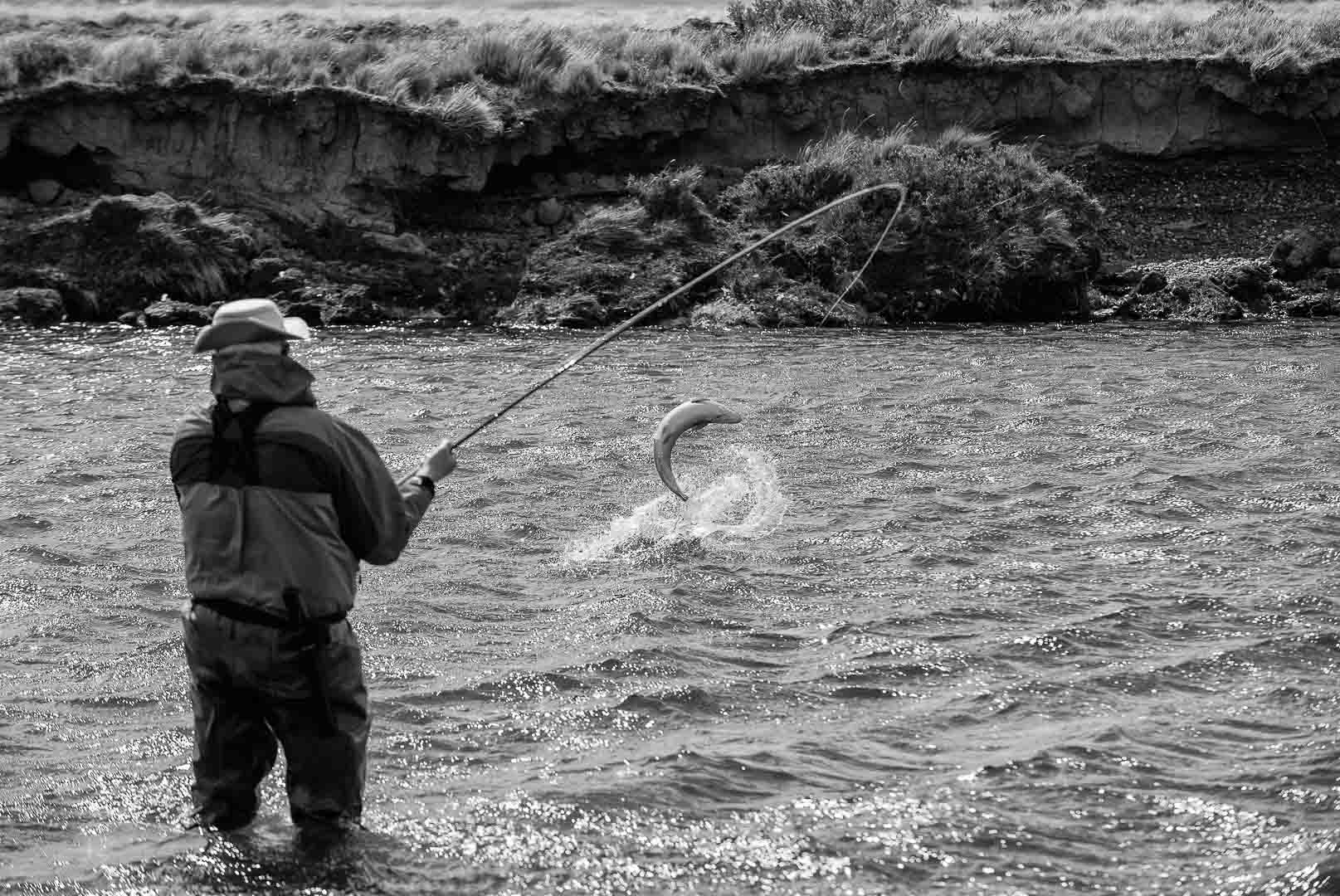
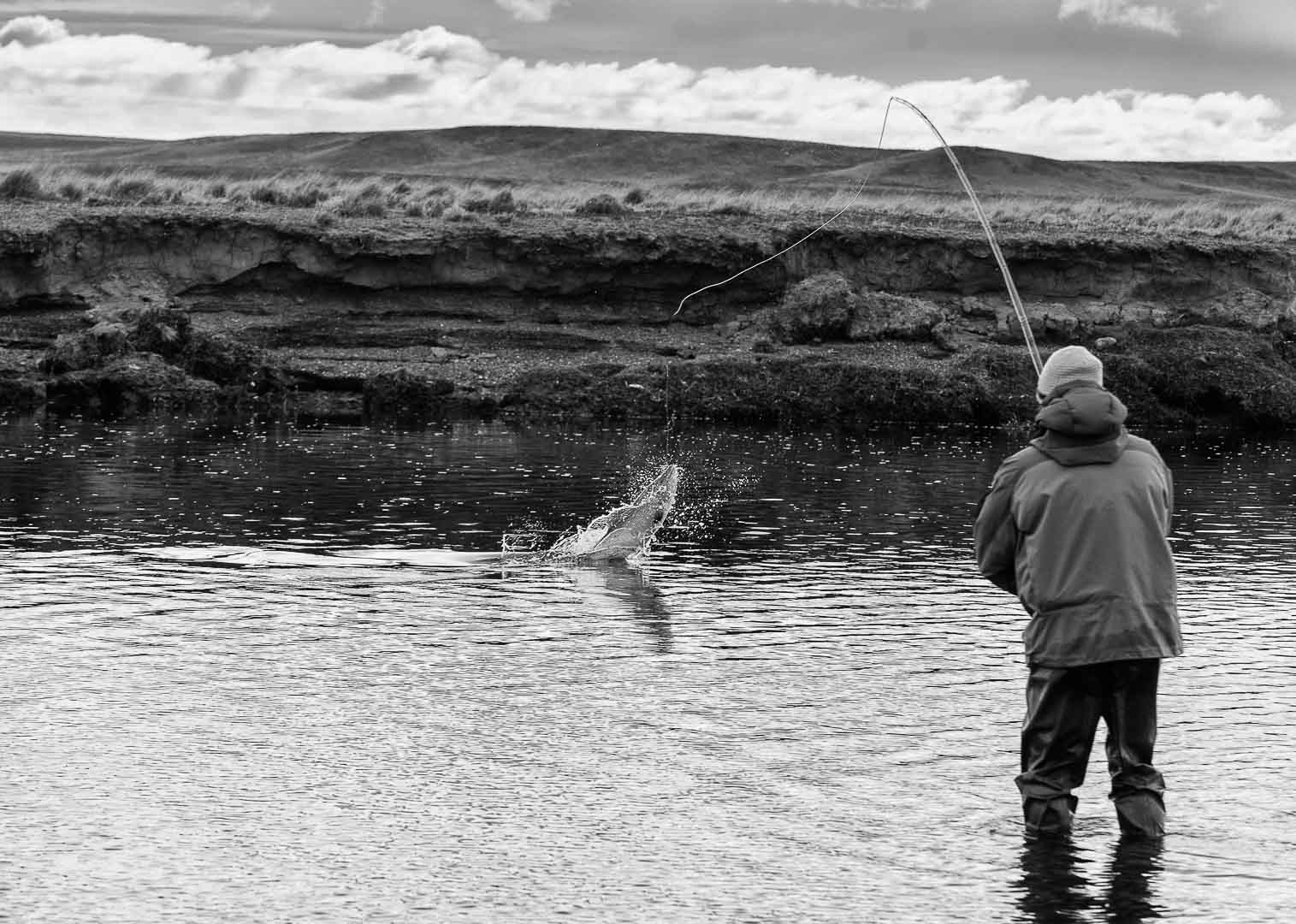
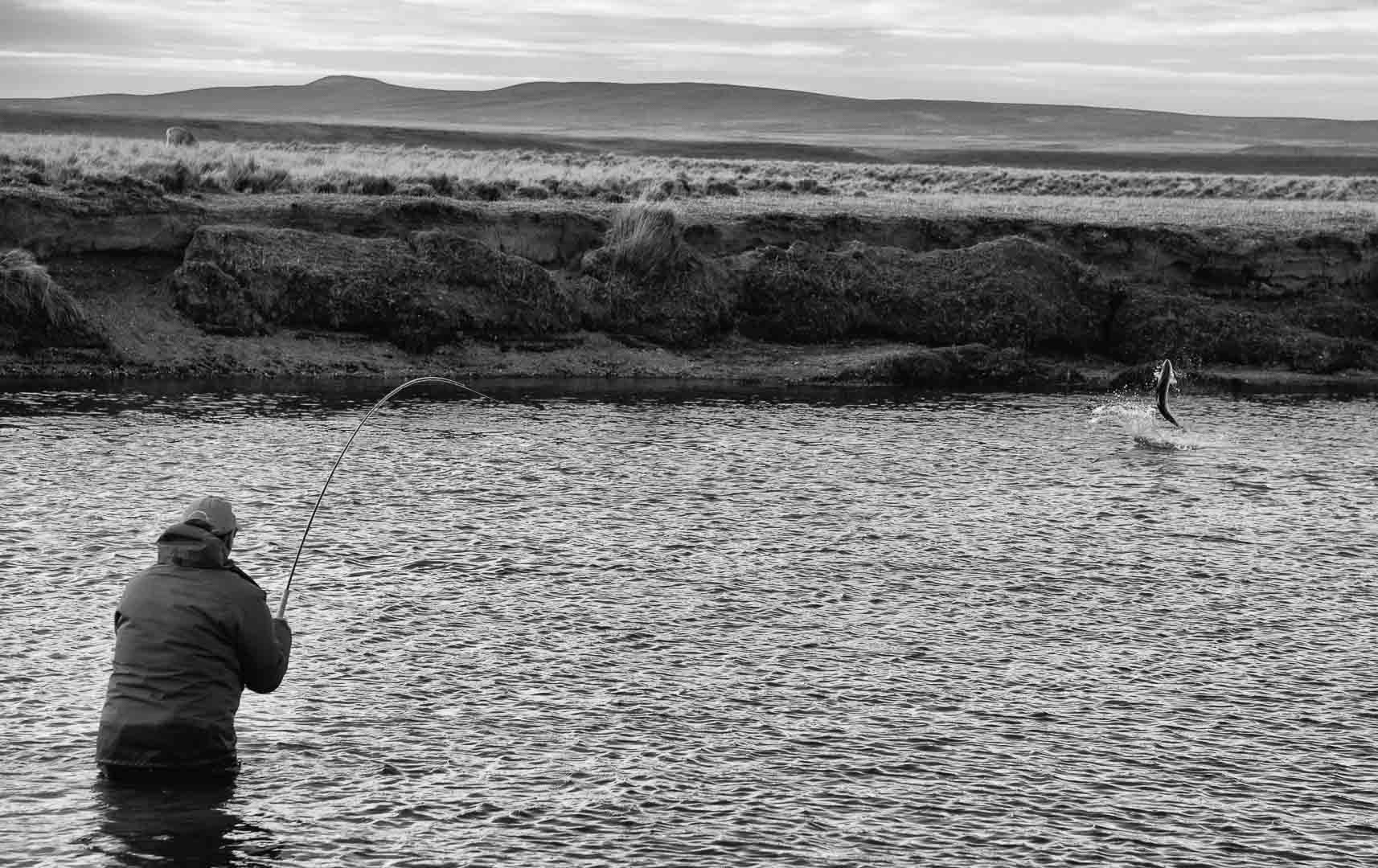
Fish are primarily found in the heads of pools, where they are active and willing to take a well-presented swing. Visually, this is one of the most exciting times of the season: watching fresh fish porpoising into new water, rooster-tailing through riffles, and moving in schools from pool to pool is simply unforgettable.
During the first weeks of January, fish are highly mobile and push upstream quickly. A pool that is full in the morning may appear empty by evening, while previously quiet water can suddenly come alive. For this reason, guides cover a lot of water, moving frequently between pools—action can happen anywhere, at any time.
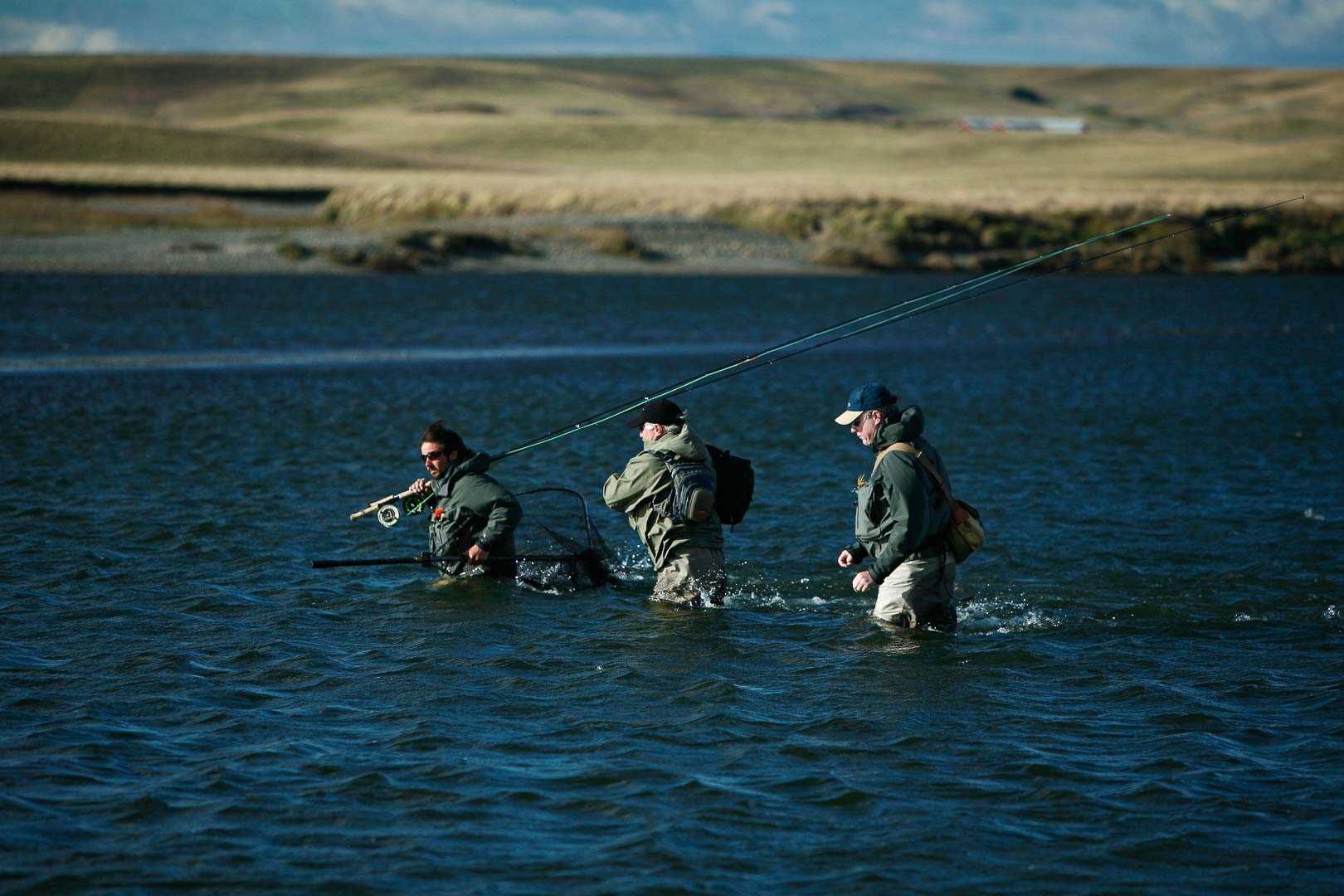
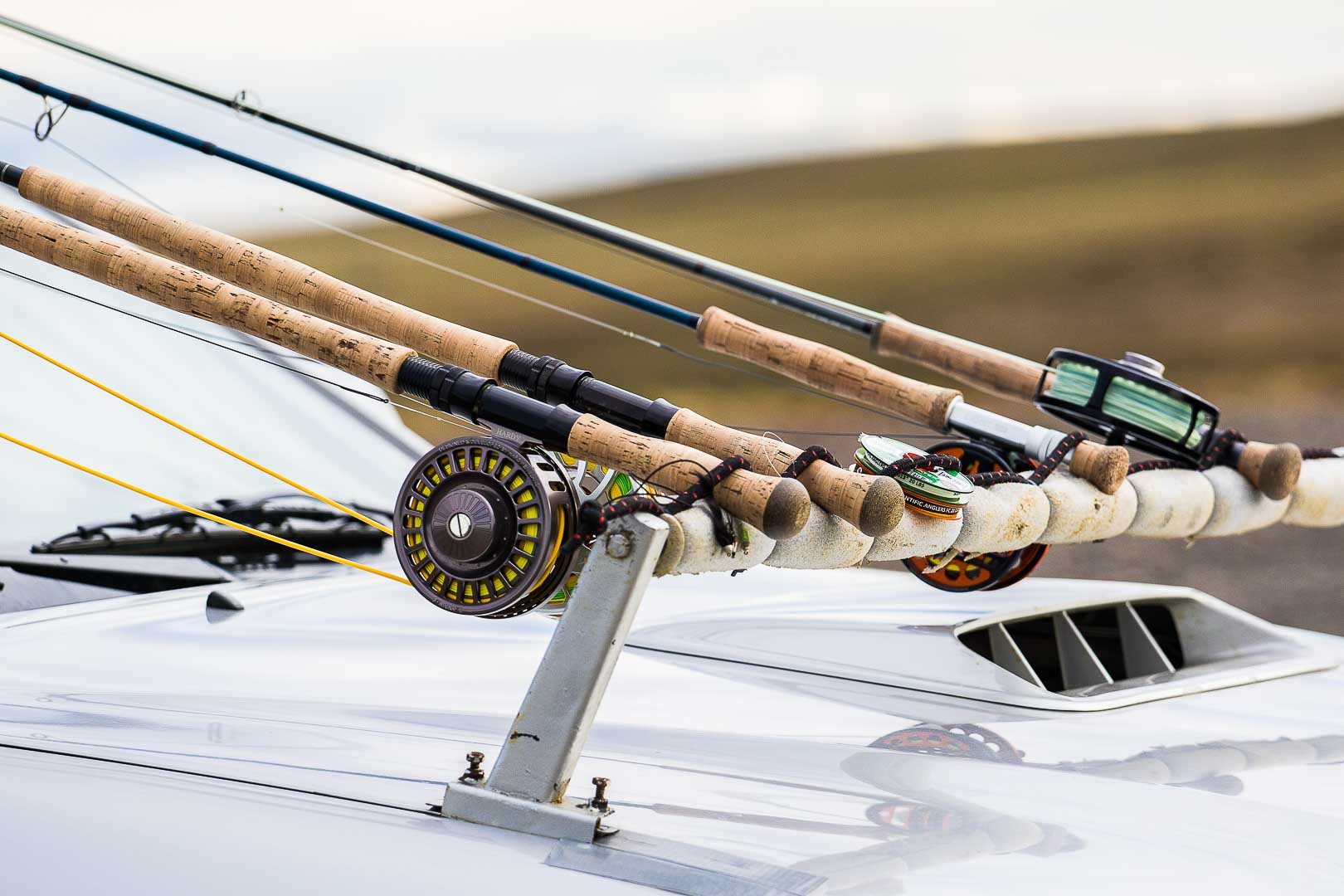
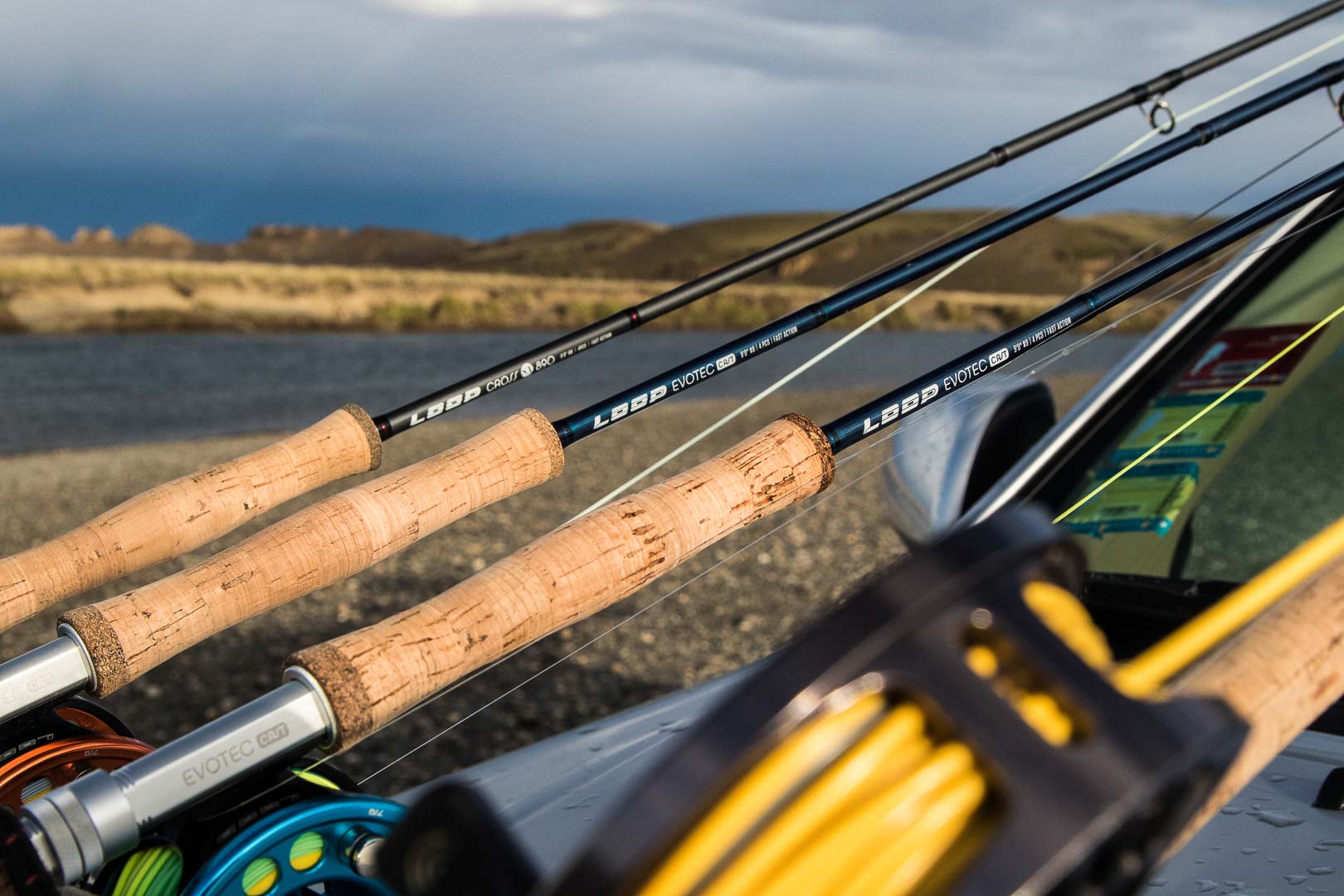
Tactically, January demands versatility. Anglers will fish a wide range of water, from deep classic bends to shallow runs with heavy structure. Fast to super-fast sinking tips and medium to fast sinking shooting heads are standard, though intermediate lines are becoming increasingly popular, especially for fishing shallower or wind-affected water more effectively.
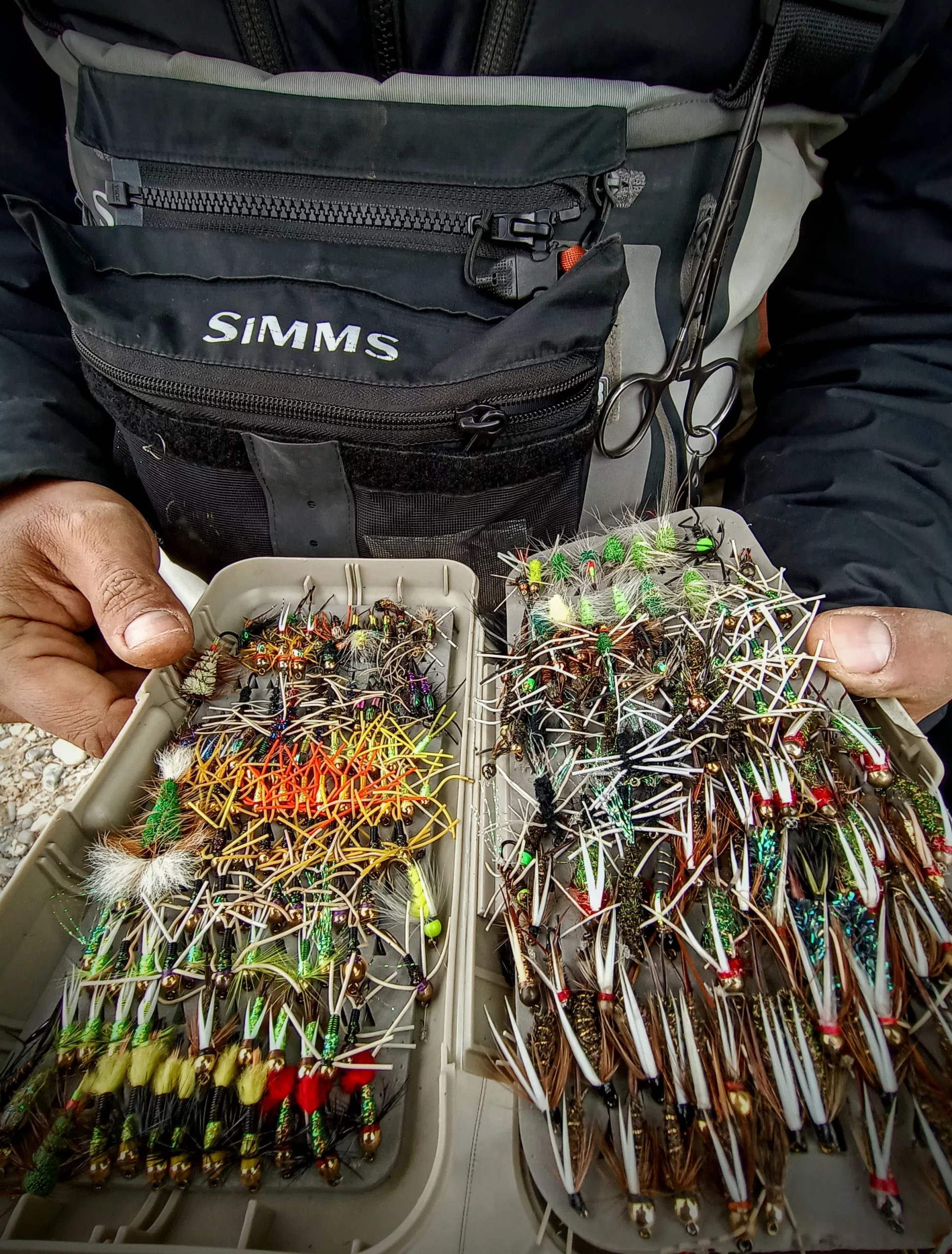
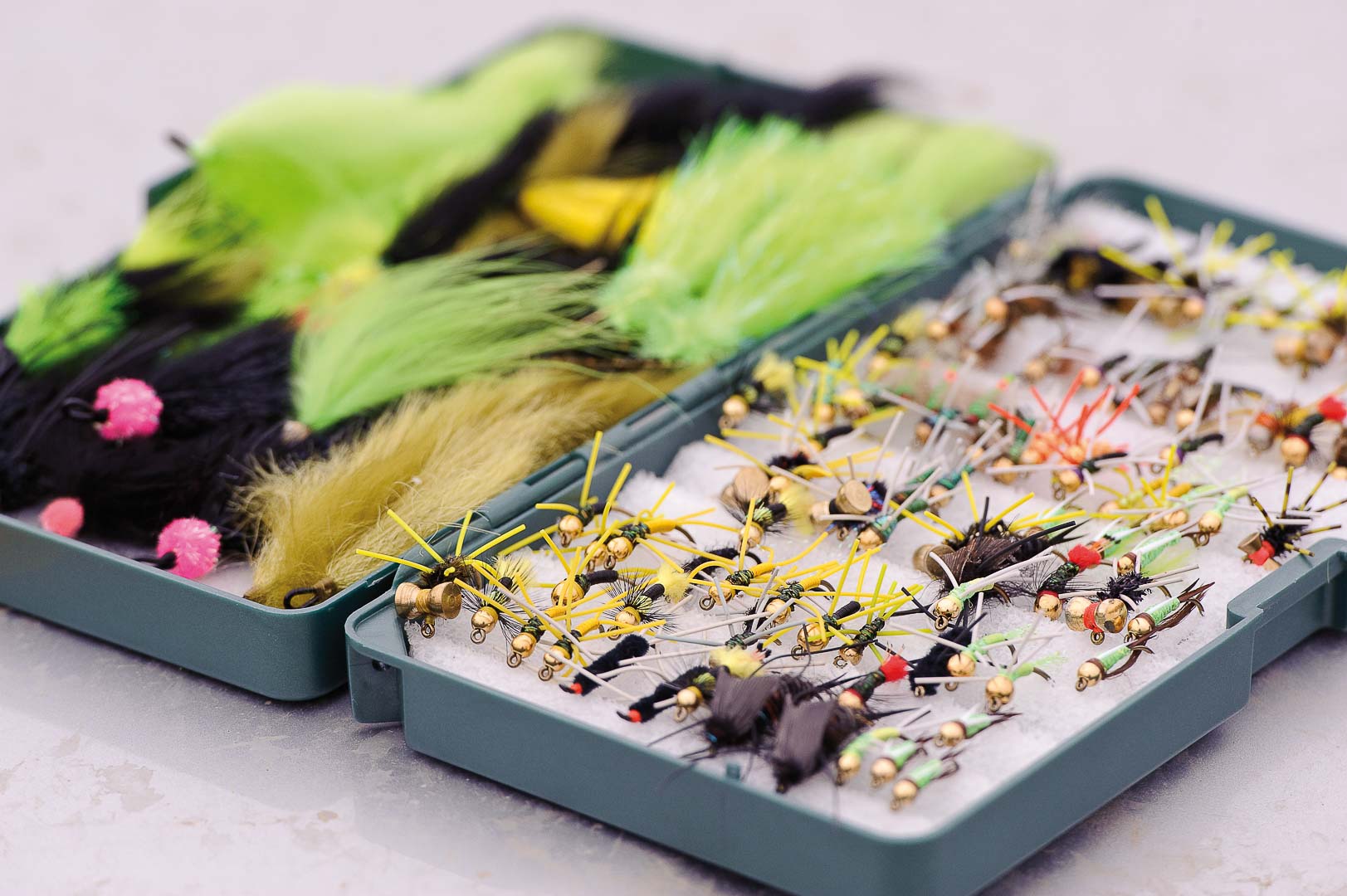
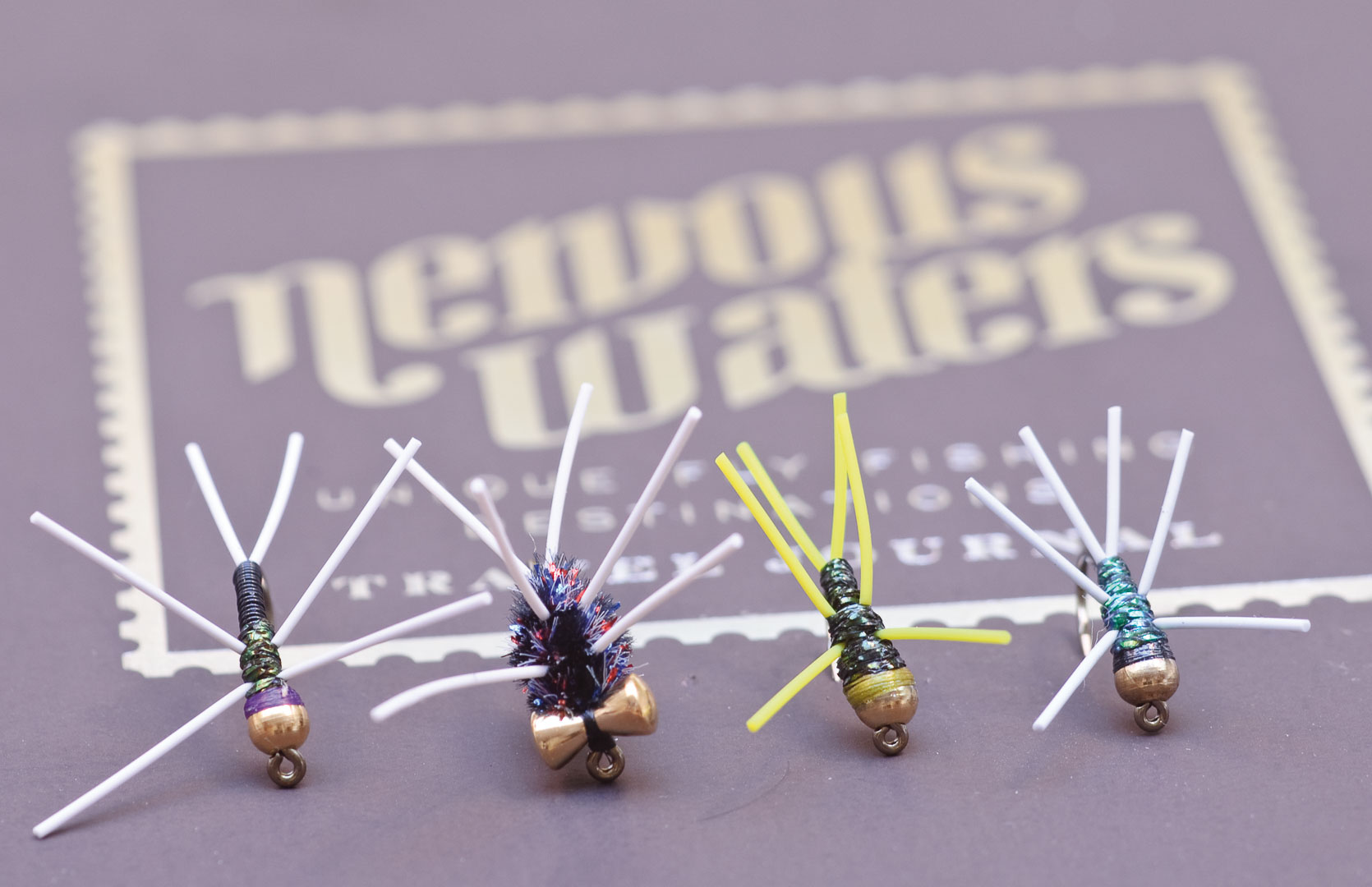
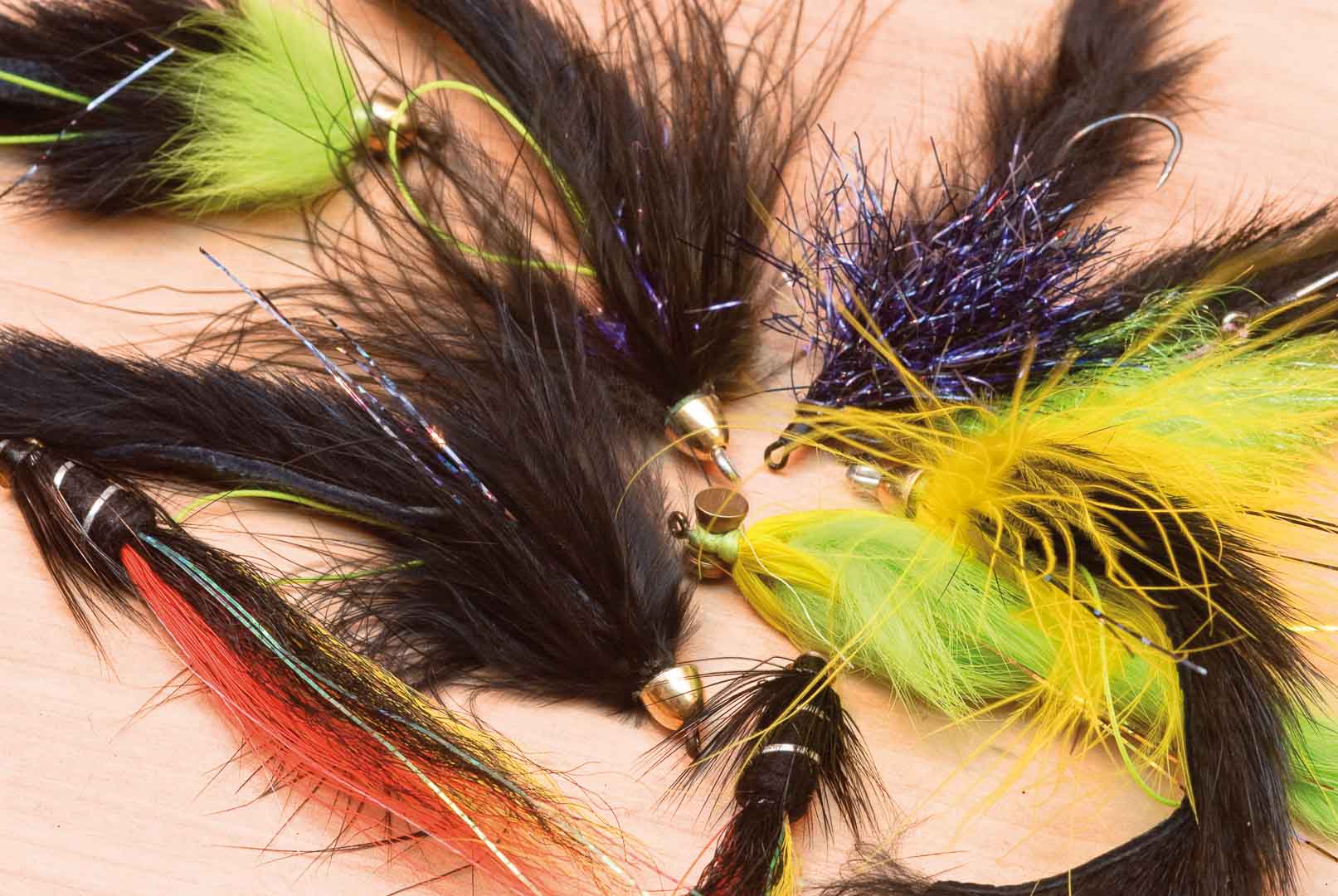
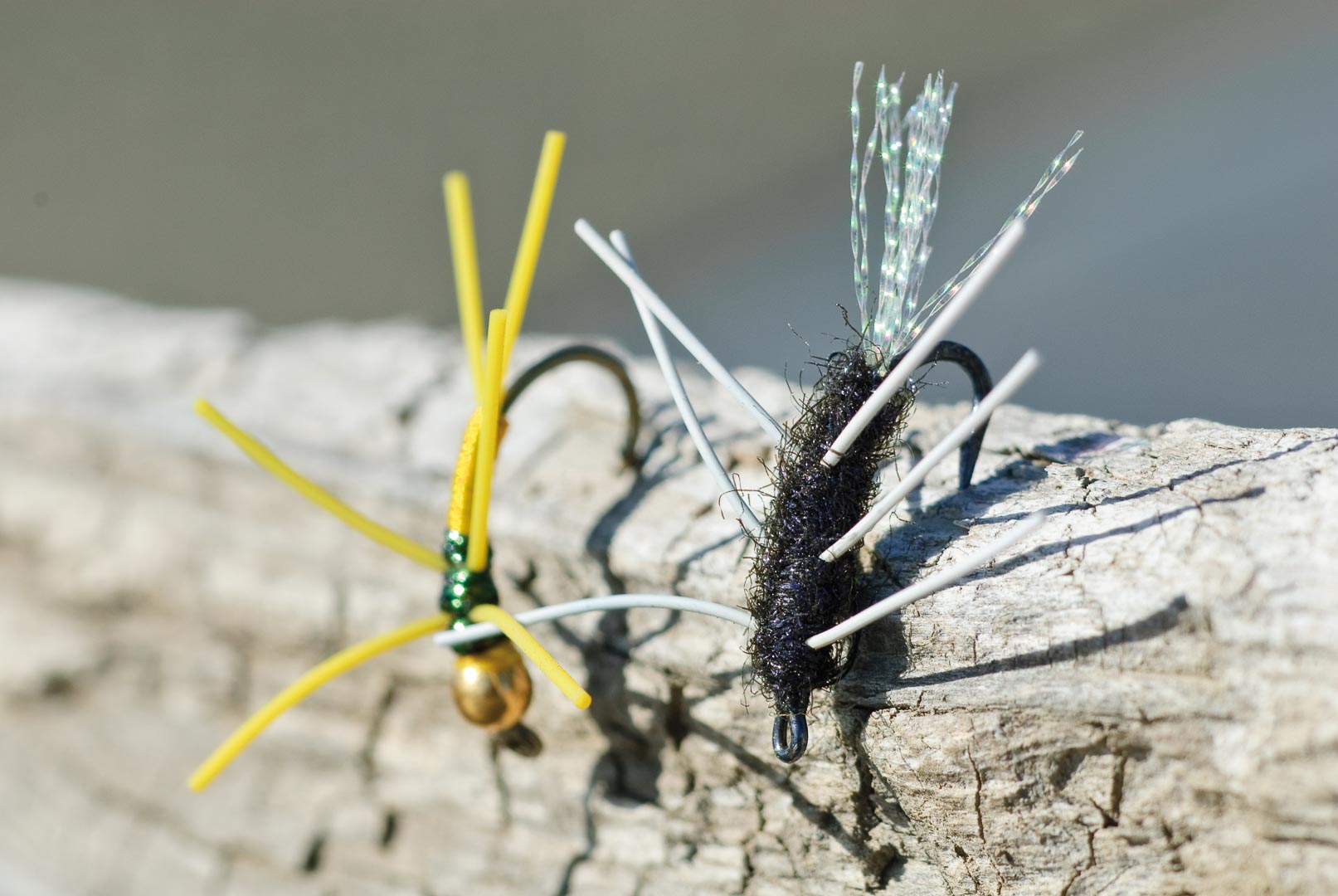
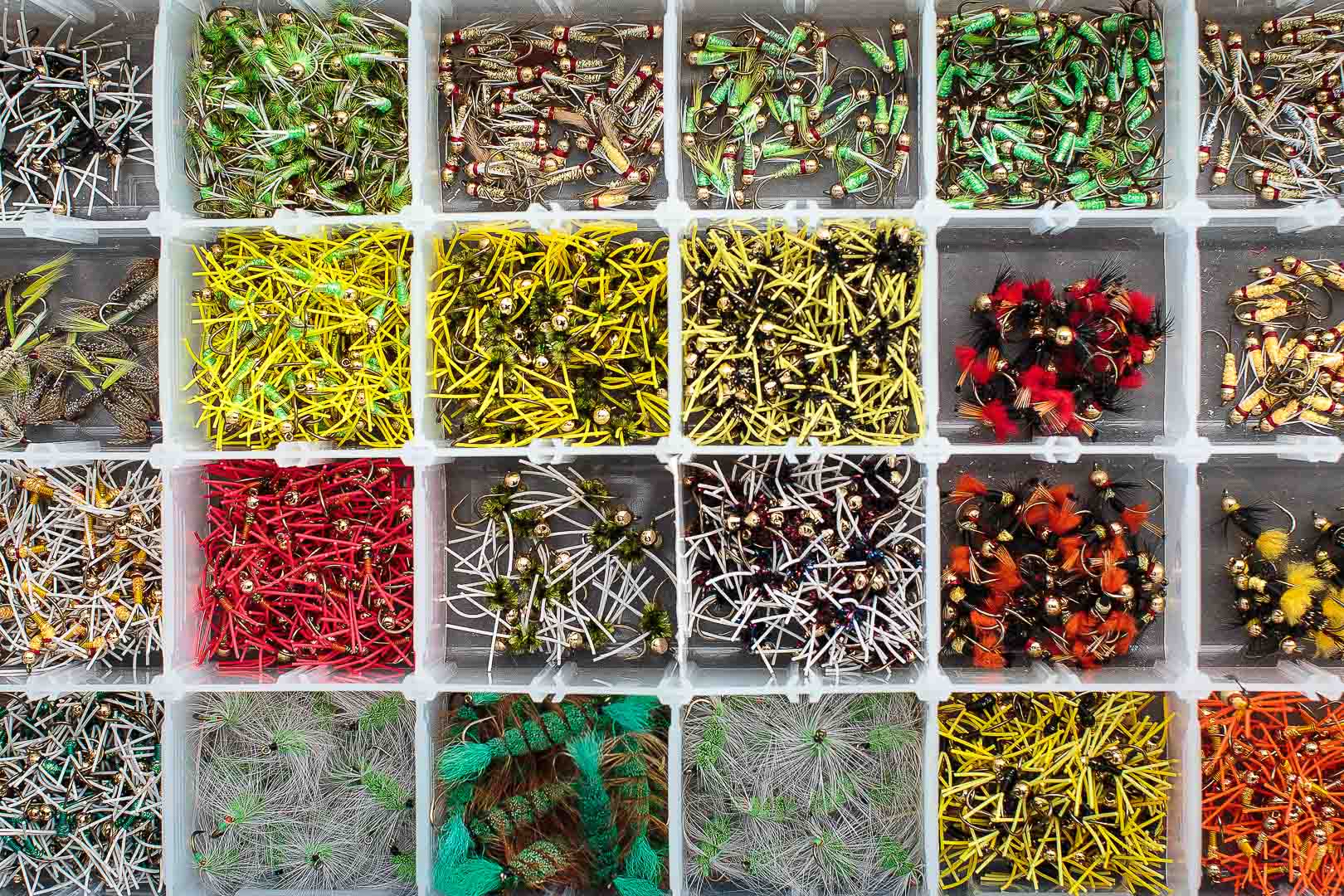
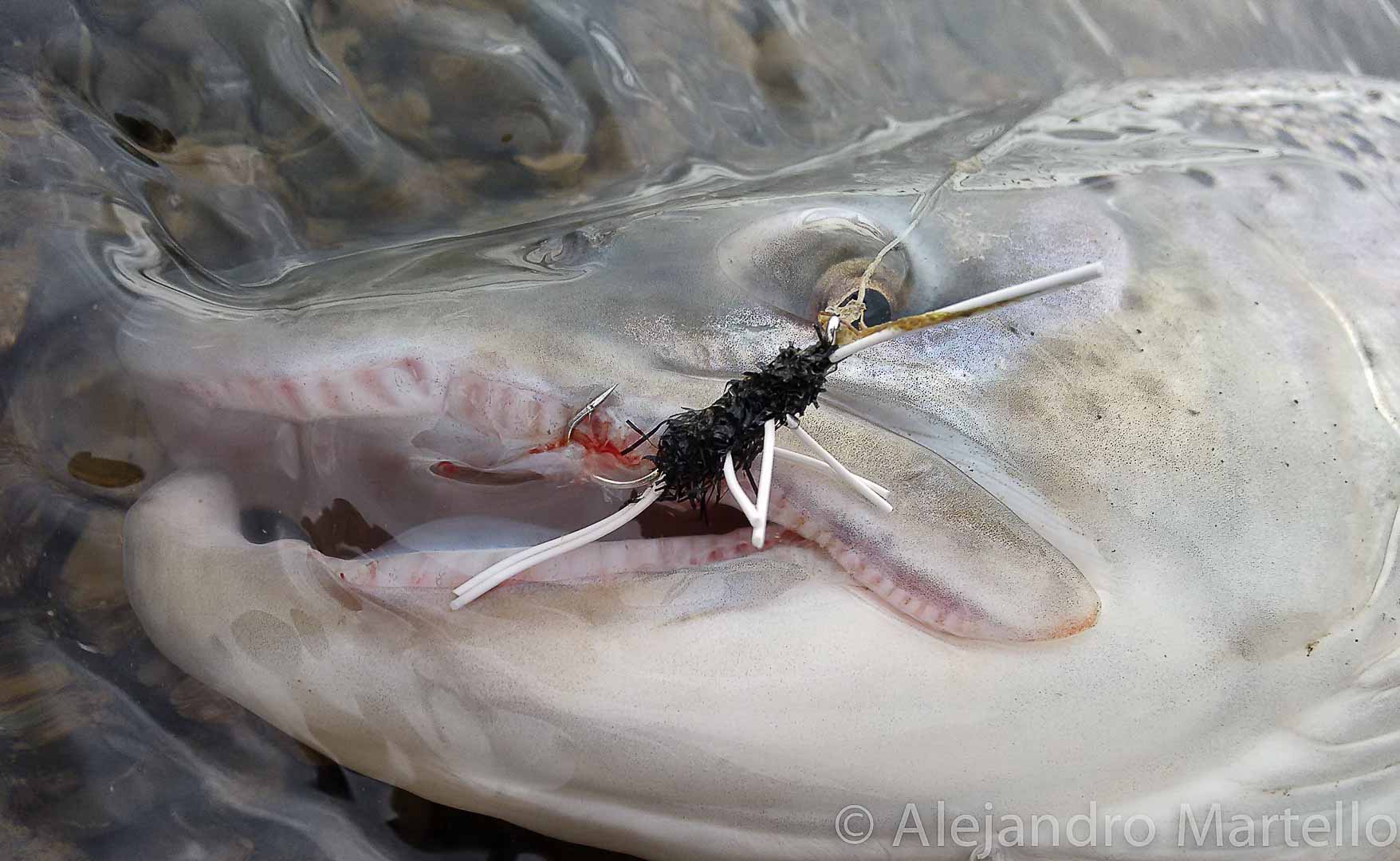
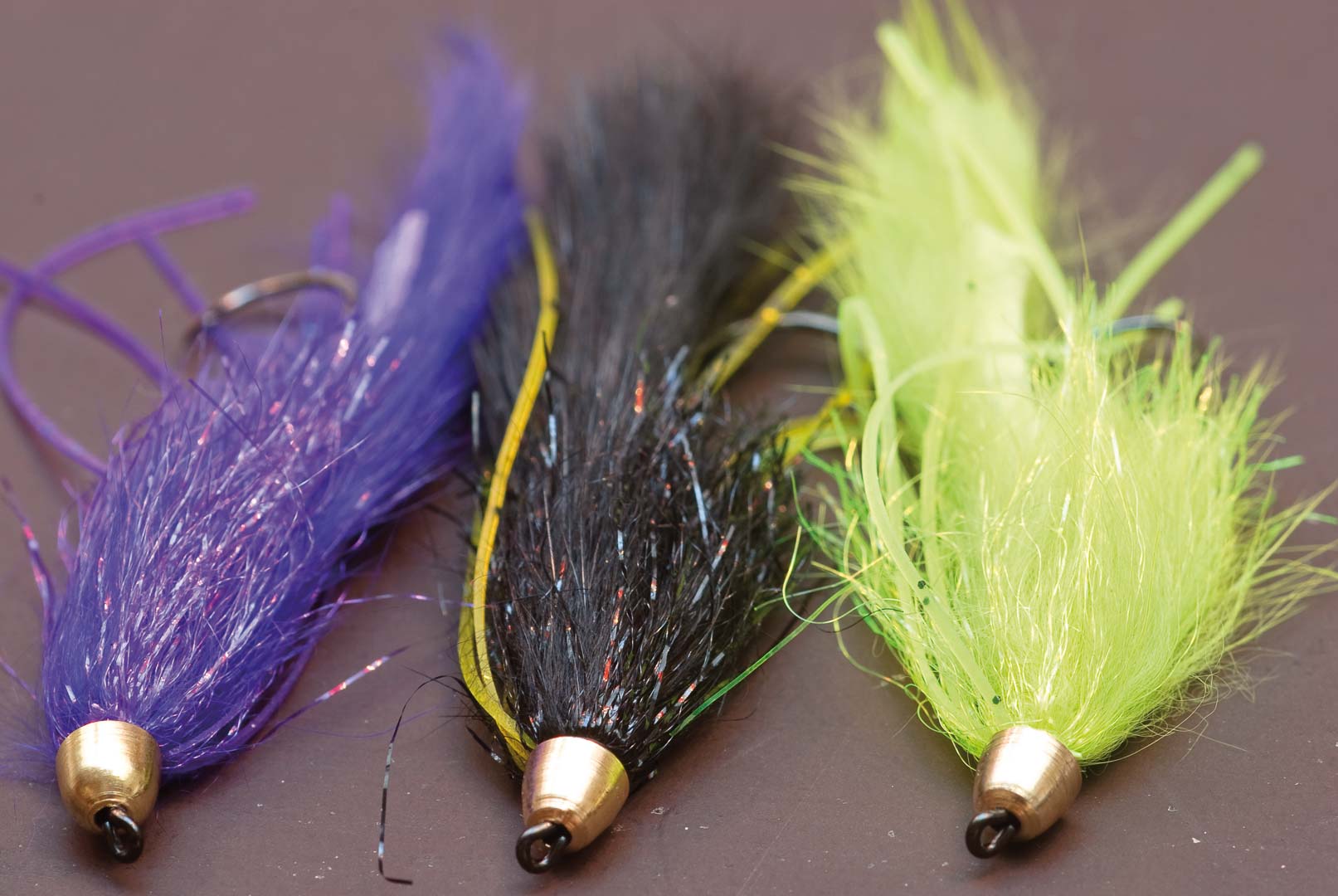
Fly selection leans toward larger patterns—rubber-legged flies such as Girdle Bugs, Yuk Bugs, and their many variations are staples. Streamers, leeches, and tube flies like the Sunray Shadow are also highly effective, particularly in shallower water. As conditions allow, smaller nymphs can also play an important role.
MID-SUMMER (February)
By February, the river continues to drop, flows slow, and the water becomes clearer and warmer—this being the warmest month in Tierra del Fuego. These conditions call for a more refined approach: lighter rods and lines, longer and finer leaders, and smaller flies. From the very first cast, fish tend to be more cautious, and starting with heavy tackle and large profiles can often be counterproductive.
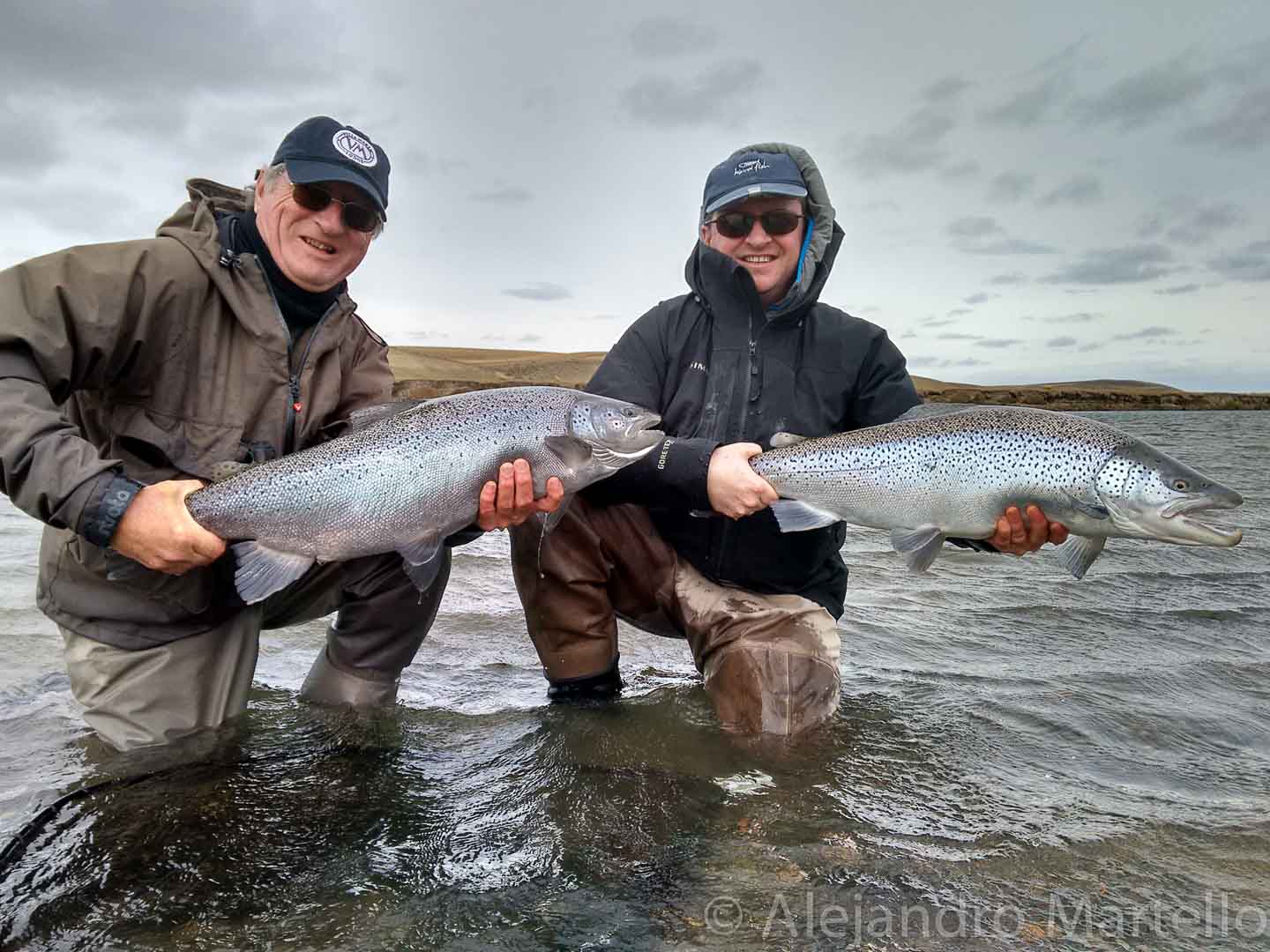
Fresh fish continue to enter the system on each tide—especially during the first half of the month—creating a healthy mix of newly arrived chrome fish and those that have been holding since late December and January. This combination often provides both numbers and variety in size.
As water levels drop, many of the shallow runs that produced in January become less productive, and fish concentrate in the main holding pools. Depending on light conditions, they may hold deep during bright midday hours and spread throughout the pool as light fades. This transition often leads to the “magic hour,” when cooler water and softer light trigger increased activity.
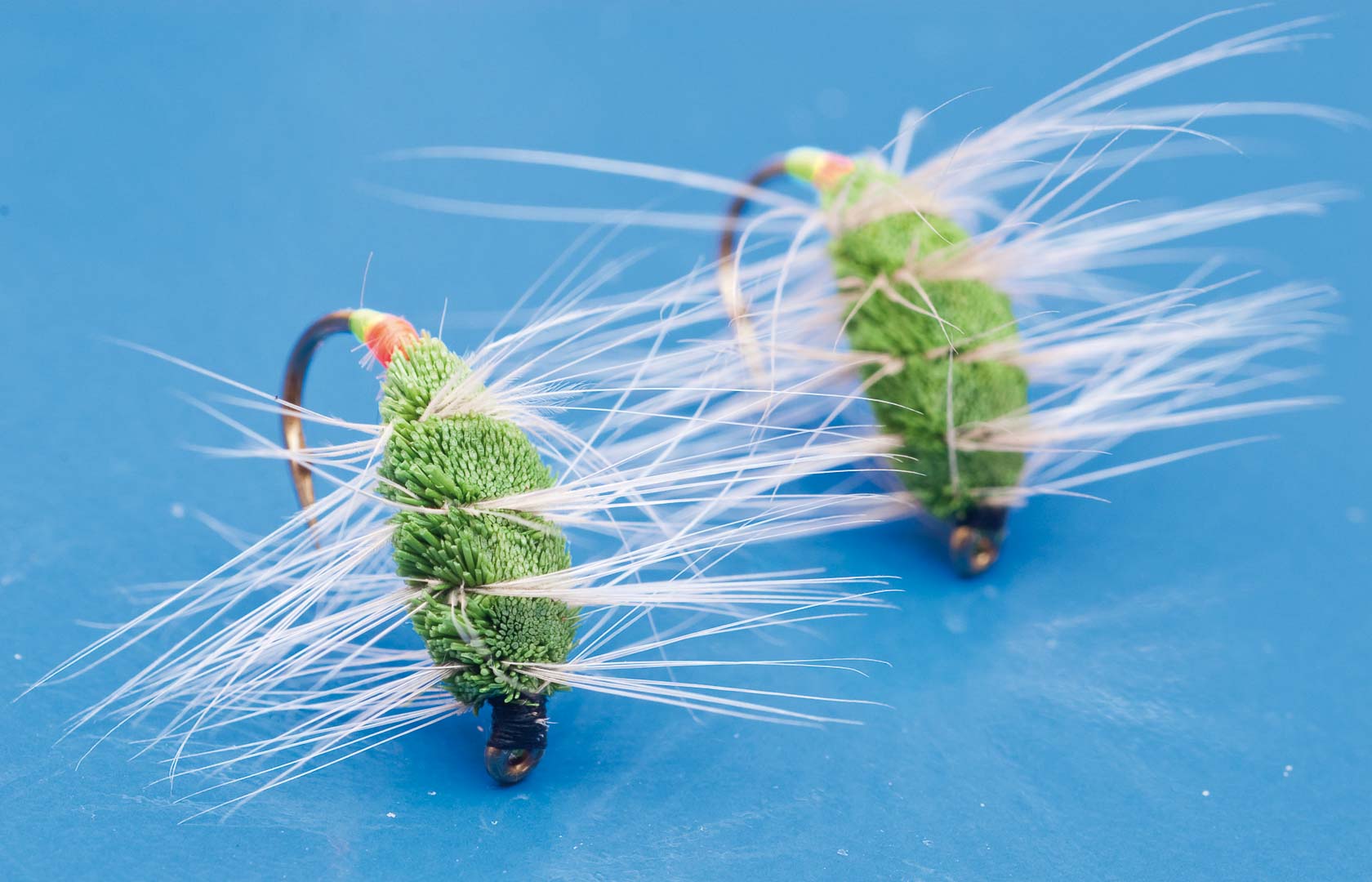
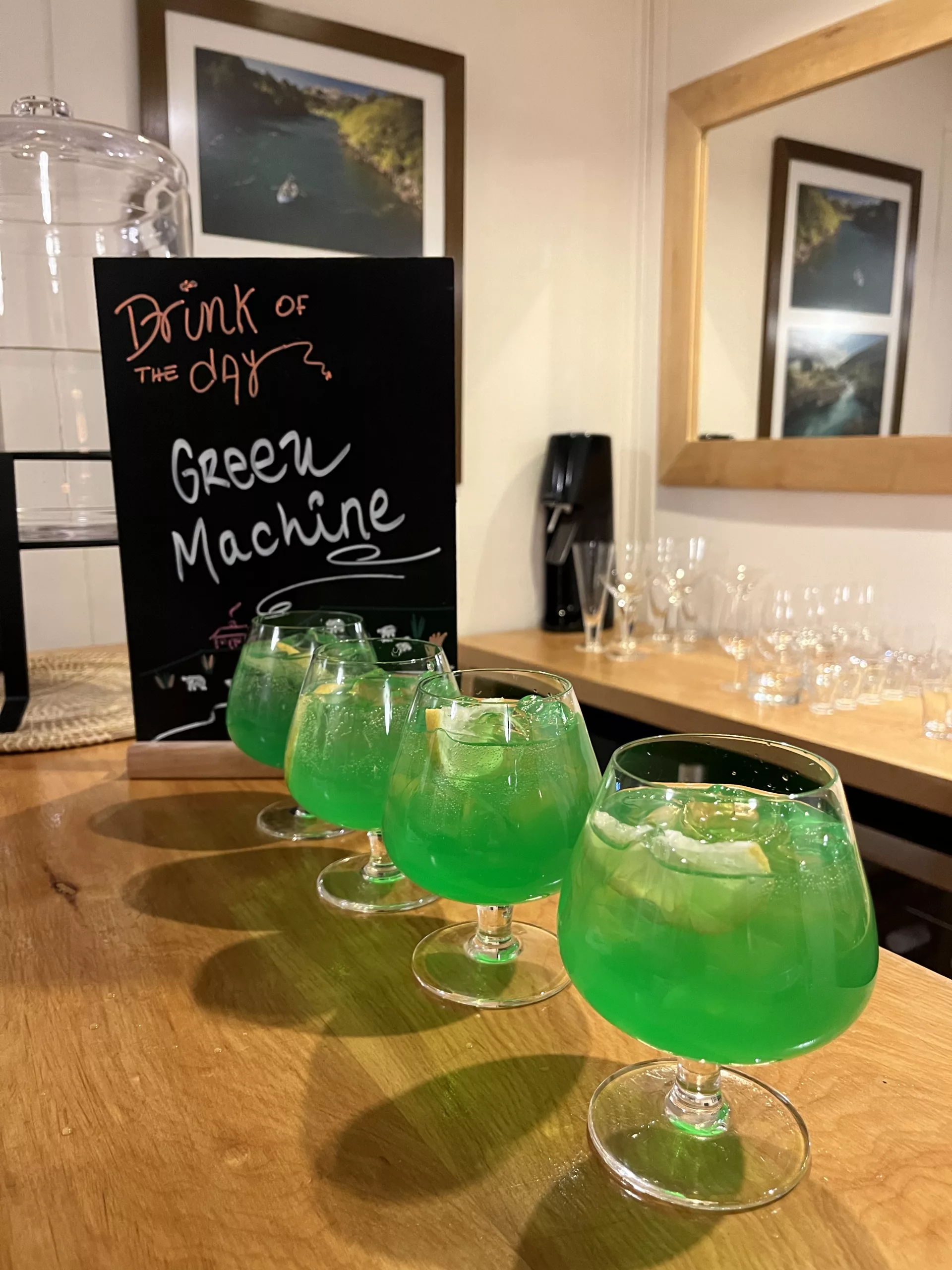
While larger streamers and leeches still have their place—especially late in the day—most fishing in February revolves around smaller rubber-legged patterns, nymphs, and classic dry flies such as Bombers and Green Machines.
LATE SUMMER (March)
March signals the transition toward autumn. Temperatures begin to drop, winds ease, and weather becomes more variable, with increasing chances of rain—and occasionally even snow in the higher Andes. These changes often bring fluctuations in river levels and influence fish behavior accordingly.
By this stage, the main push of fish has passed, though fresh sea trout continue to arrive in smaller pulses. As water levels rise slightly from late-summer lows, fish begin to move further upstream, concentrating in areas suitable for spawning.
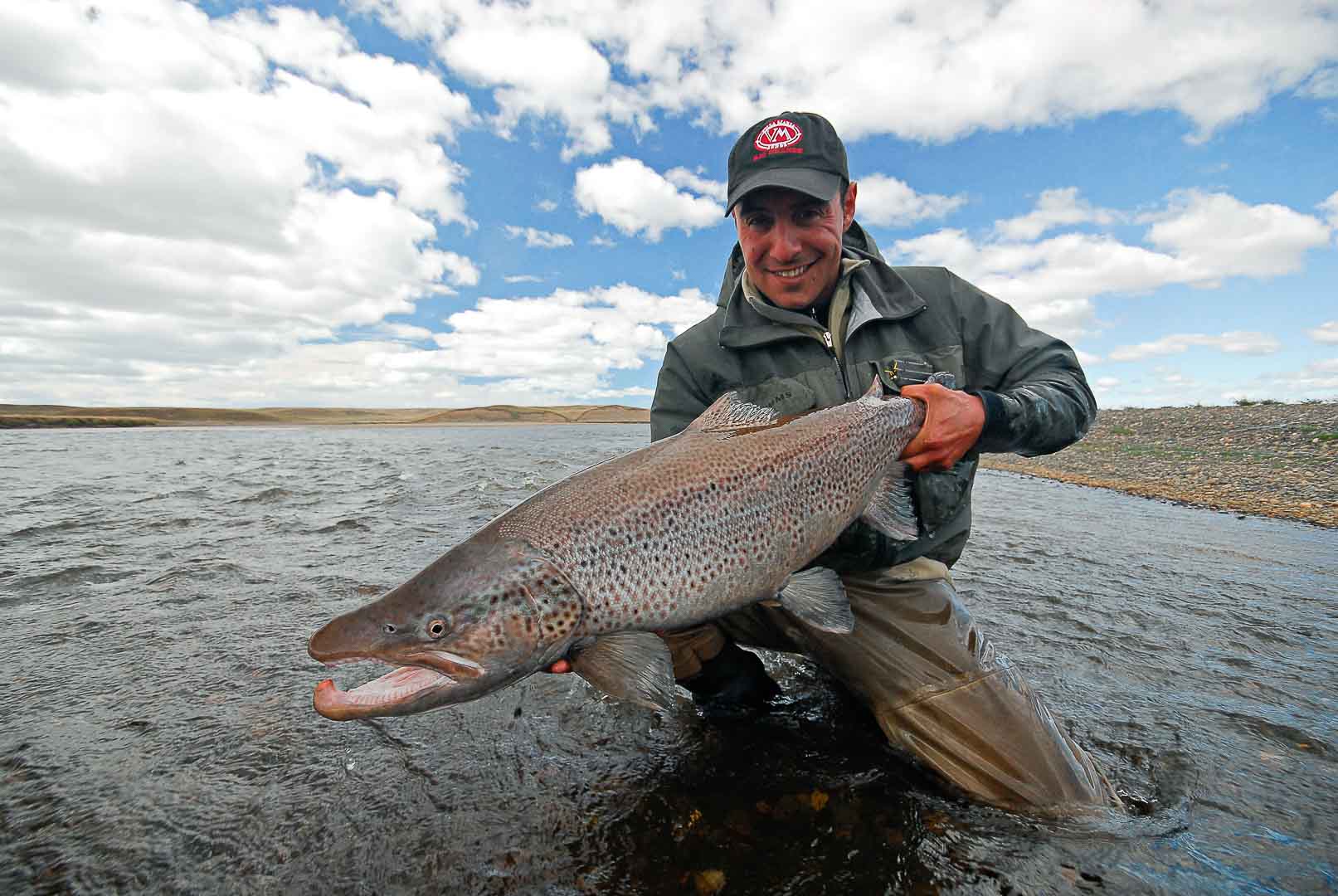
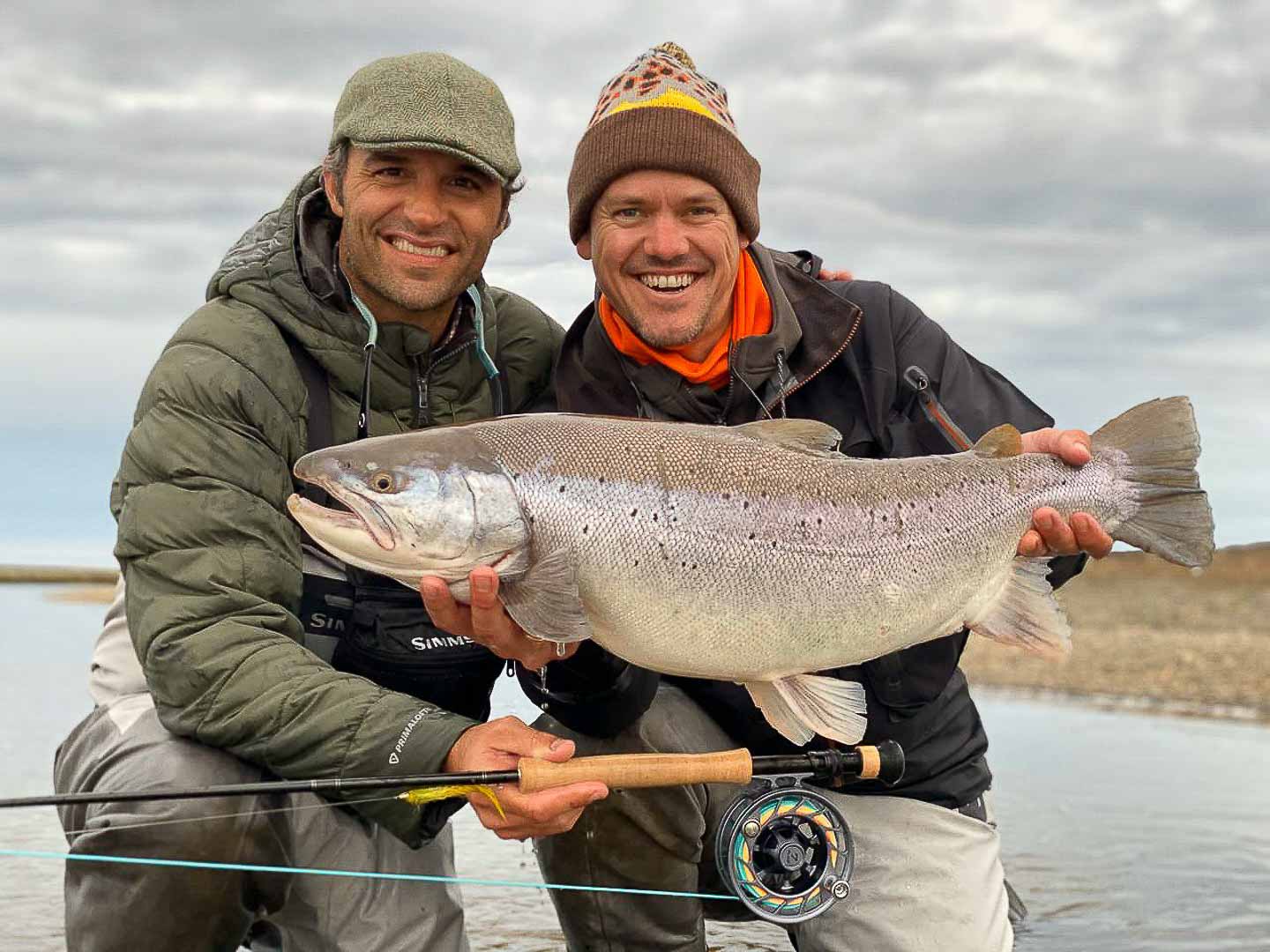
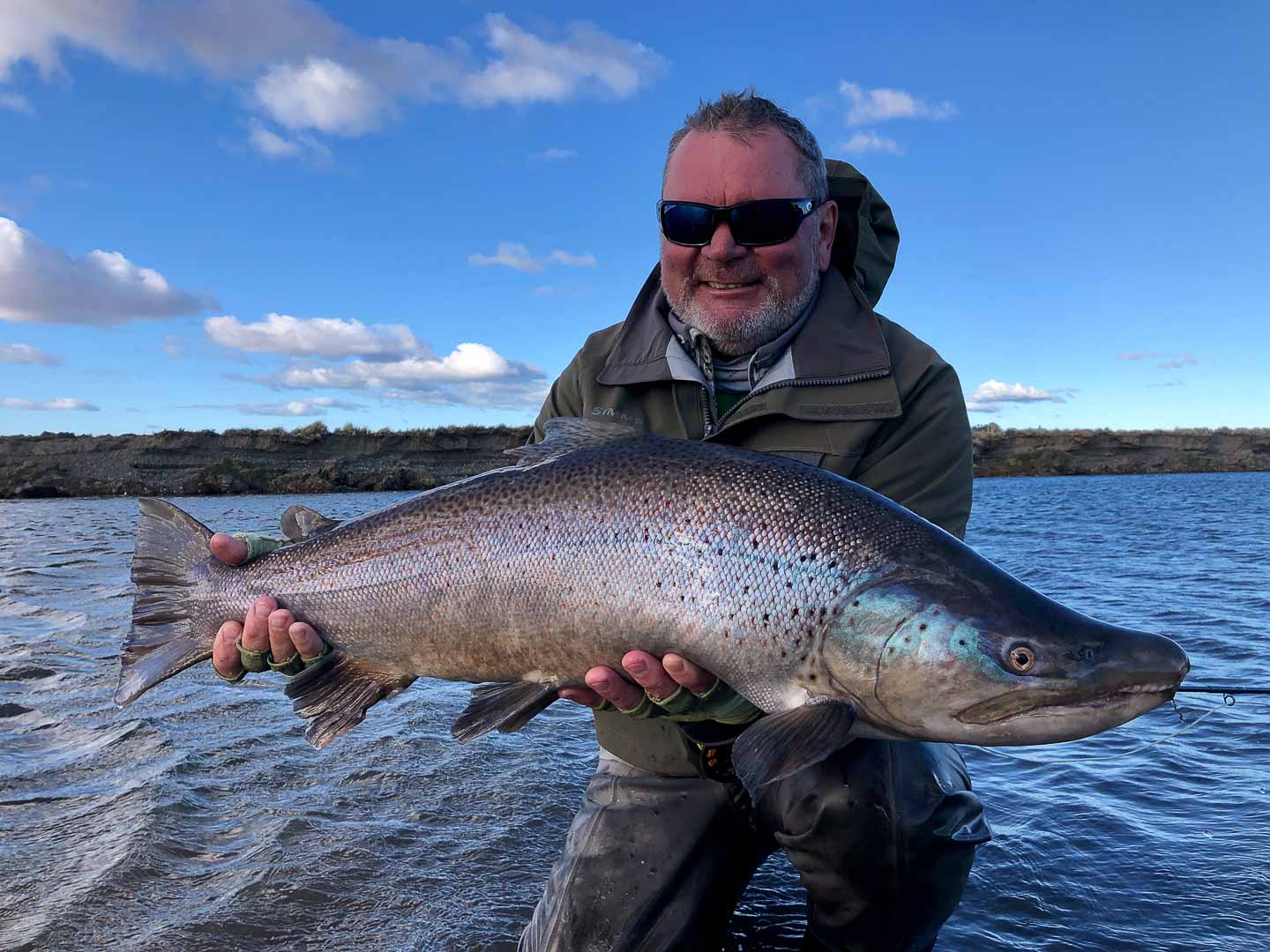
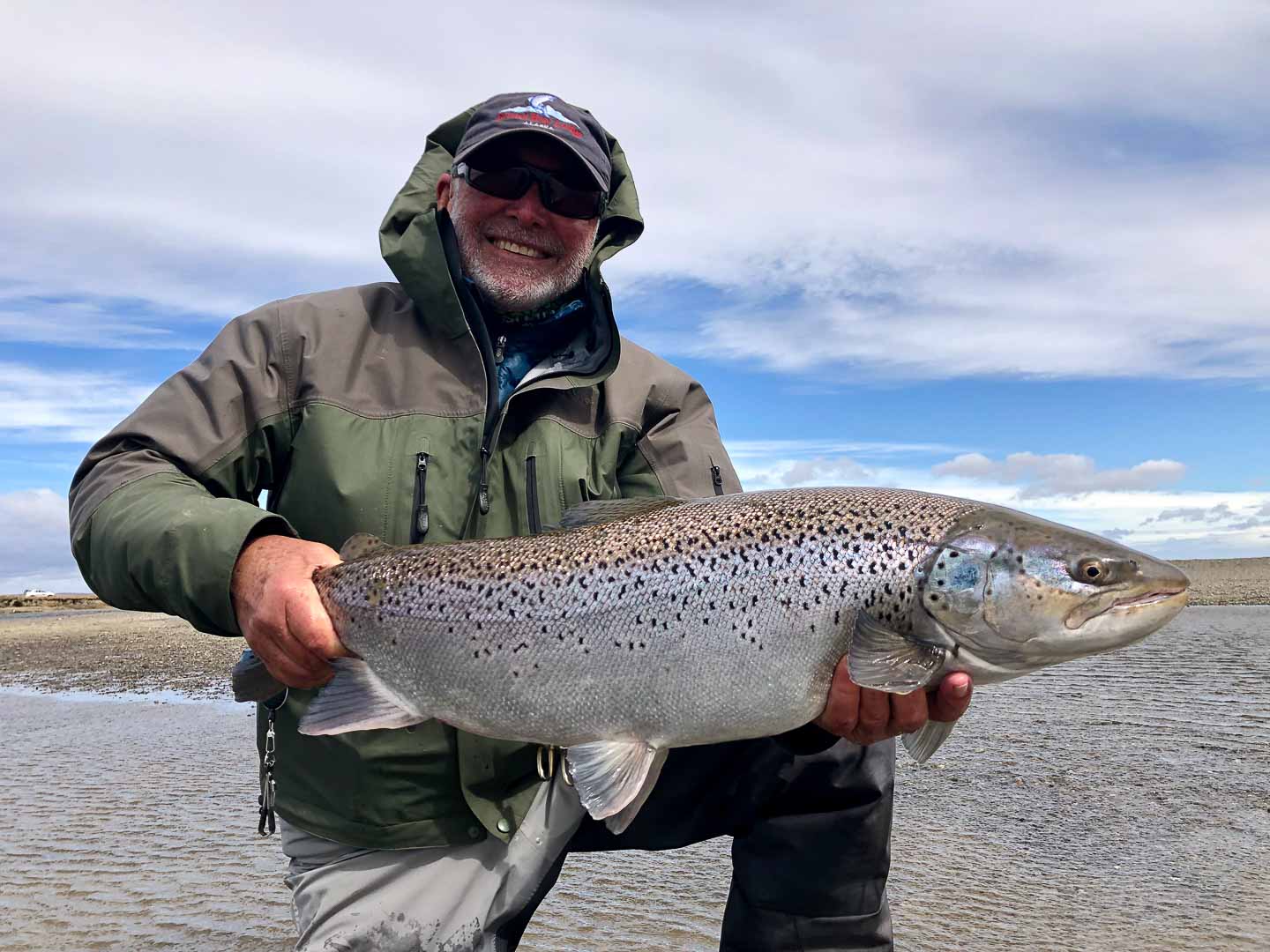
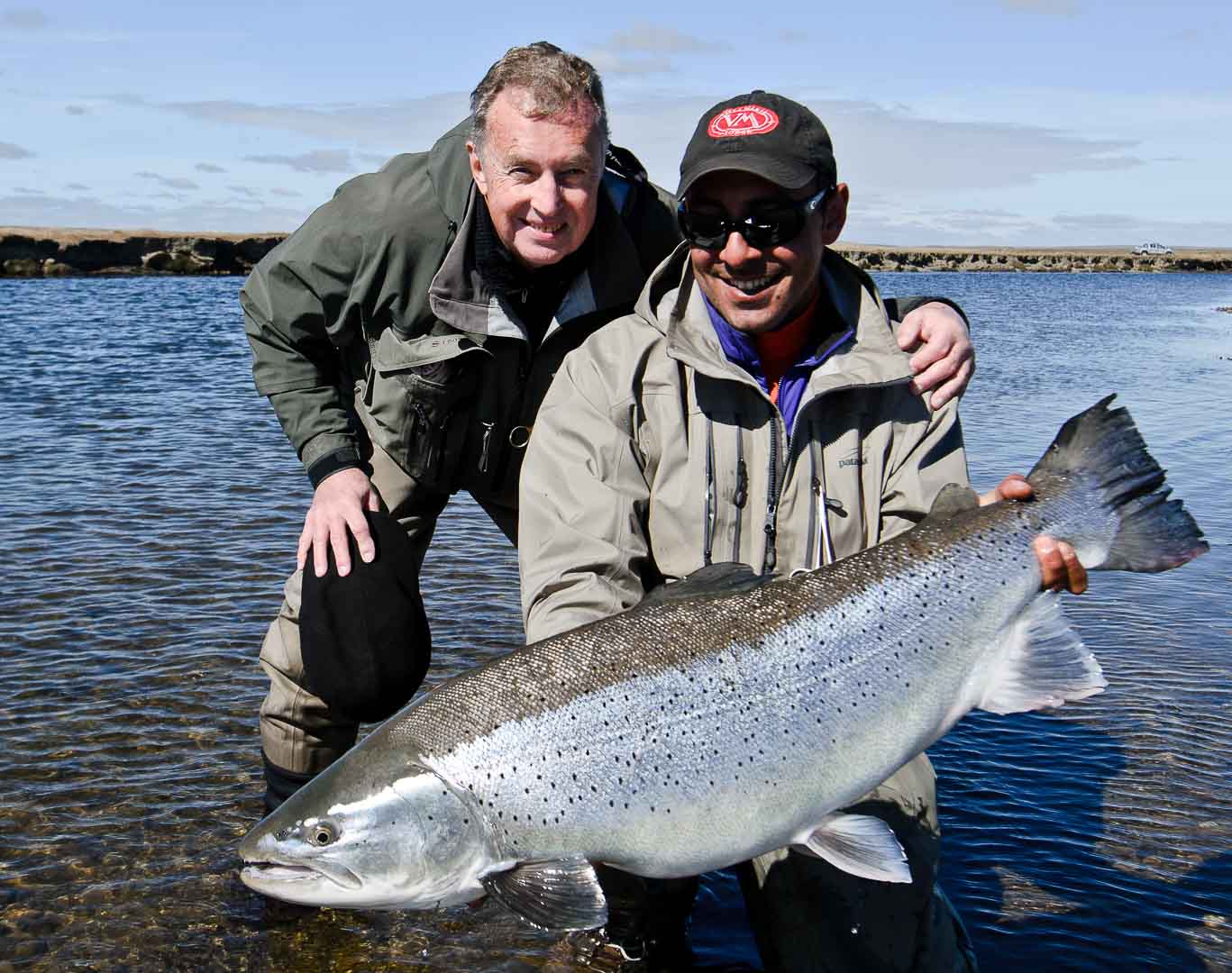
This period coincides with the “fall run”—typically fewer fish, but significantly larger in size. Some of the biggest sea trout of the entire season are caught during March.
Fishing tactics adjust to cooler water temperatures, particularly in the latter part of the month. Early mornings and late evenings may be slower, with peak activity often occurring during the warmer midday hours. As temperatures drop further, heavier lines, larger flies—often in brighter colors—and slower presentations become more effective.
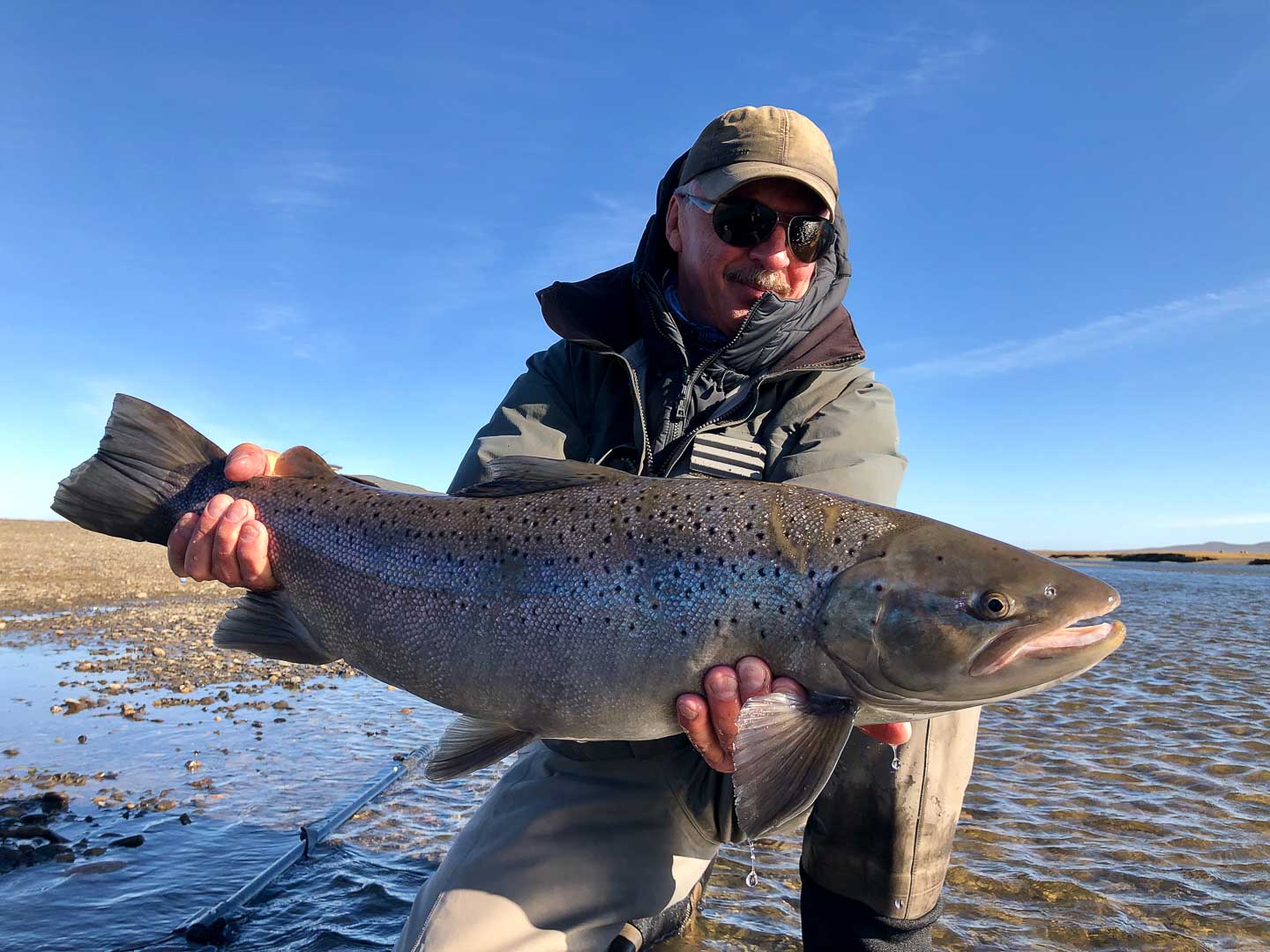
One of the defining features of March is the increased aggression of male fish. After months of relative passivity, large, colored males begin to establish territory and compete for spawning grounds. These powerful fish will attack flies with intensity, offering explosive takes, unforgettable fights, and some of the most rewarding moments of the season.
When asked, “When is the best time to come?” our answer is always the same: it depends on what you enjoy most—and how you like to fish.